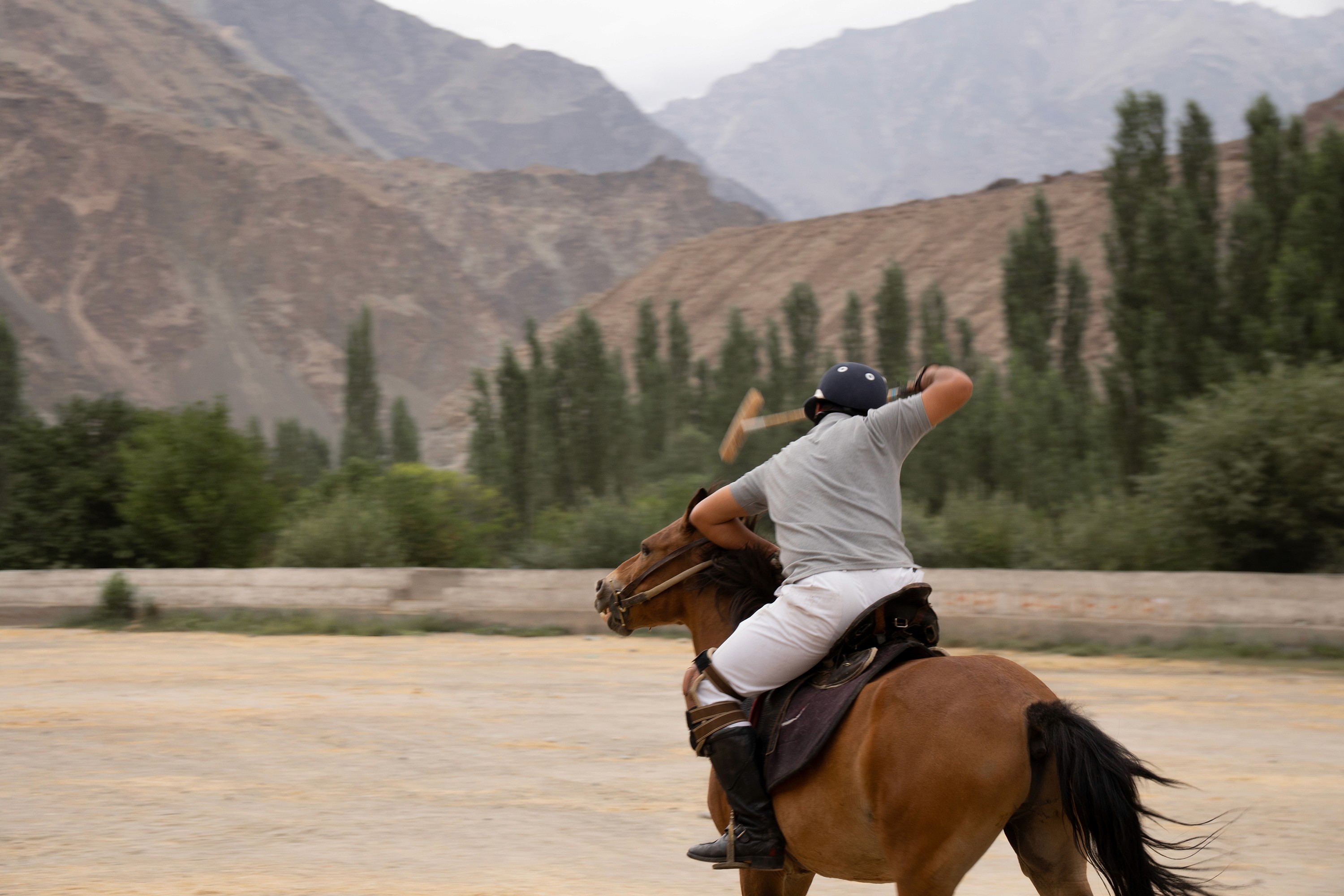
✦ Siem Reap is a walkable, slow-travel city that rewards long stays – compact enough to cover the Royal Residence, riverside and Old Market on foot ✦ Kandal Shopping Street (Hap Guan Street) is the best entry point into local Cambodian craft: rattan, agarwood, lacquerware and an excellent independent coffee stop ✦ Wat Bo Village and the Old Market/Pub Street area cover the full dining and nightlife spectrum, from Khmer home cooking at Tevy’s Place to craft cocktails at Calao ✦ For day trips and breathing space: Angkor Thom walls, Lotus Silk Farm canoe tours, and Tonle Sap sunset sails
✦
THE PLAN WAS to spend a half-year sabbatical away from the vice-grip of alarm clocks, of train schedules, office hours and long commutes. But Siem Reap, home to centuries-old Angkorian ruins, is one of those rare places that play a trick with time. Six months turned into two years in what felt like the blink of an eye, and before my husband and I knew it, we were entering our seventh year in the kingdom.
The city, seemingly made for slowing down, is the perfect antidote to big-city weariness, if you let it work its magic.
The routines that have kept us entranced all these years are not very different from the things that make a week steeped in Siem Reap feel restorative, satisfying and eternal.
It’s a walking town, with a small, compact center, and you can walk from the Royal Residence – whose front park comes alive in the early evening with joggers, Zumba classes and men playing a traditional game called sey, kicking shuttlecocks in the air – all the way to Psar Cha or the Old Market, along the banks of the river and under the shade of trees.


Photos: Armand McKenzie, Dick Hoskins, Pech Visoth
Along the way there are interesting detours, such as Hap Guan Street or what’s better known as Kandal Shopping Street, a short strip of independent art galleries, cafes and boutiques that showcase the country’s crafts.
Cambodia’s artisan traditions are deeply underrated, overshadowed by the craft and design reputations of its more affluent neighbours.
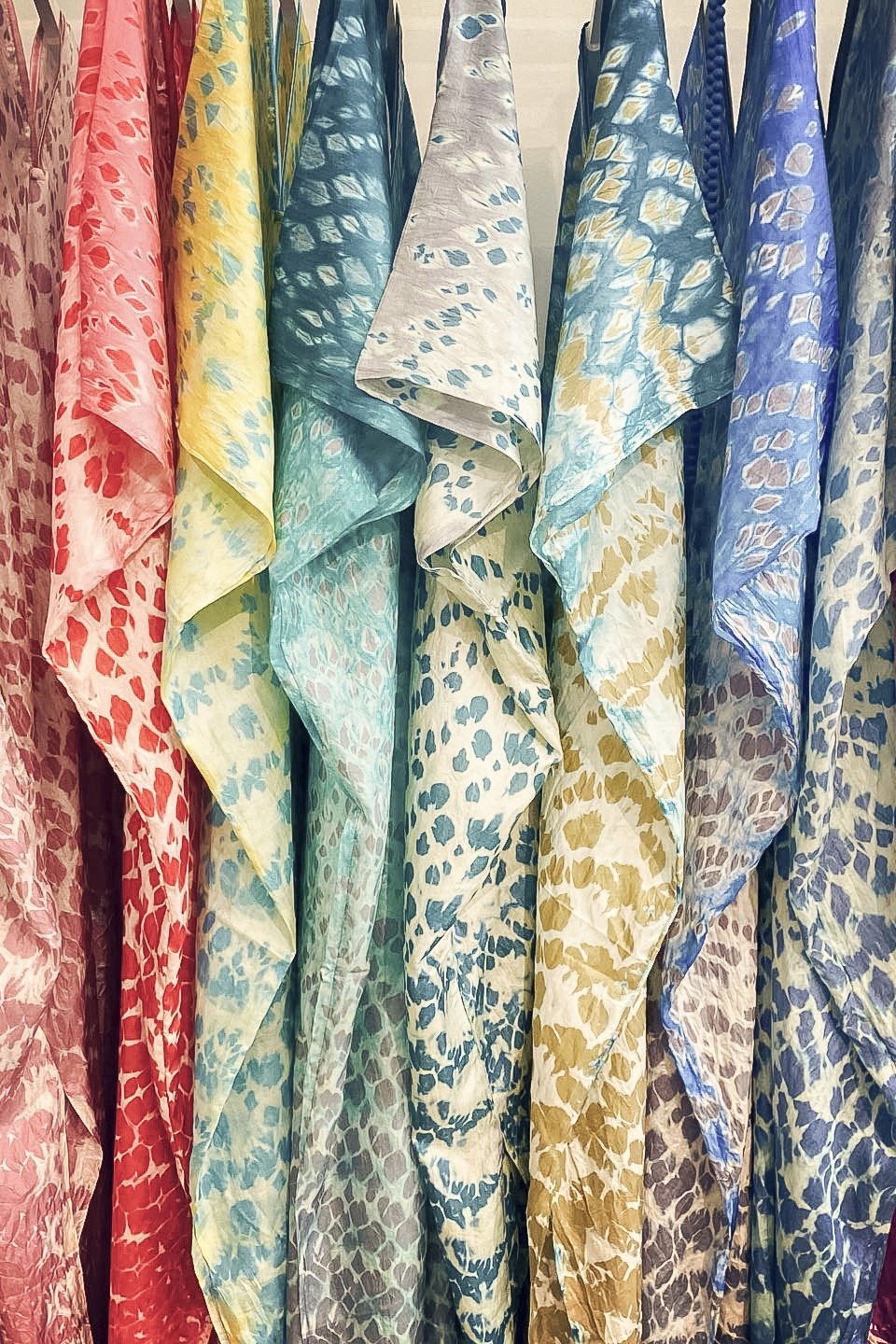
But walking into boutiques in Hap Guan – such as Manava, which produces handmade rattan bags and homeware using a weaving technique passed down the generations; Saarti, a scent specialist that uses Cambodian agarwood; and Louise Loubatieres, which stocks lacquerware and ceramics among other things – feels like diving into rabbit holes that lead to countryside villages, where women weave baskets, and into forests, where wild ingredients are harvested.
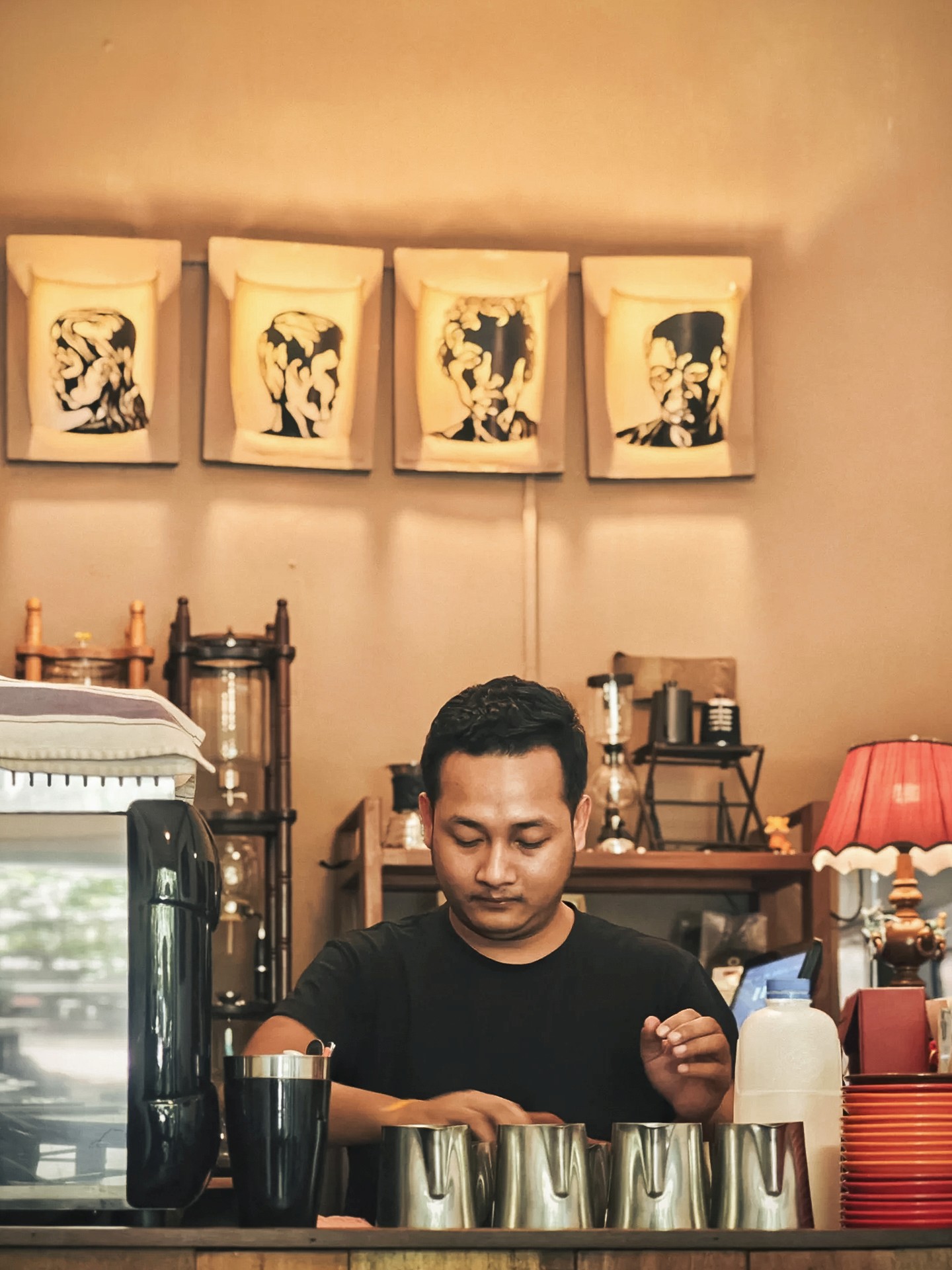
It’s easy to lose all sense of time here, but when you’re ready for a break, dip into The Little Red Fox, a cafe that buys its beans from Feel Good Coffee, an employee-owned enterprise that roasts chemical-free, organic beans sourced from Cambodia, Laos and Vietnam.


Photos: Manava, Saarti, Louise Loubatieres
Despite its smallness, Siem Reap is wonderfully cosmopolitan. At the opposite side of the river, in Wat Bo Village, a spread of boutique hotels, cafes, delis and restaurants take inspiration from everywhere and offer a varied spread.
Along Street 26 and Street 27 alone, there’s a New York-inspired bagel shop, a Parisian-themed bakery, a French-Khmer restaurant, a Shanghai-themed cocktail bar, a Cambodian vegetarian spot, and a gelateria.
A restaurant and social enterprise called Tevy’s Place serves everyday Khmer fare alongside Western comfort food. When you dine here, there’s a good possibility of being attended to by Tevy herself, a diminutive woman whose fighting spirit saw her through the darkest days of the genocide, or by a delightful Irishman called Cecil, who has helped grow this local institution from a small local eatery to a two-shophouse favorite.


Photos: Theam's Gallery, Little Red Fox (centre, right)
Further along the river, around the area of Old Market, the Night Market and the neon-lit Pub Street, the bustle goes on well into the night.
The commercial and entertainment district feels antithetical to the sanctity of the temples, but the bustle and fun – street food, market stalls and large restaurants that accommodate travelling groups – offers another side to Siem Reap as a destination.
Its most atmospheric corners can feel transportive to yet another world. Calao, for instance, an upstairs craft cocktail bar, is an Art Deco-themed, riviera-styled spot, but look out the window and the view is of rooftops tipped with naga tails and Garuda wings, a feature of traditional Cambodian architecture.


Photos: Calao, Louise Loubatieres, Theang Rathana, Saarti
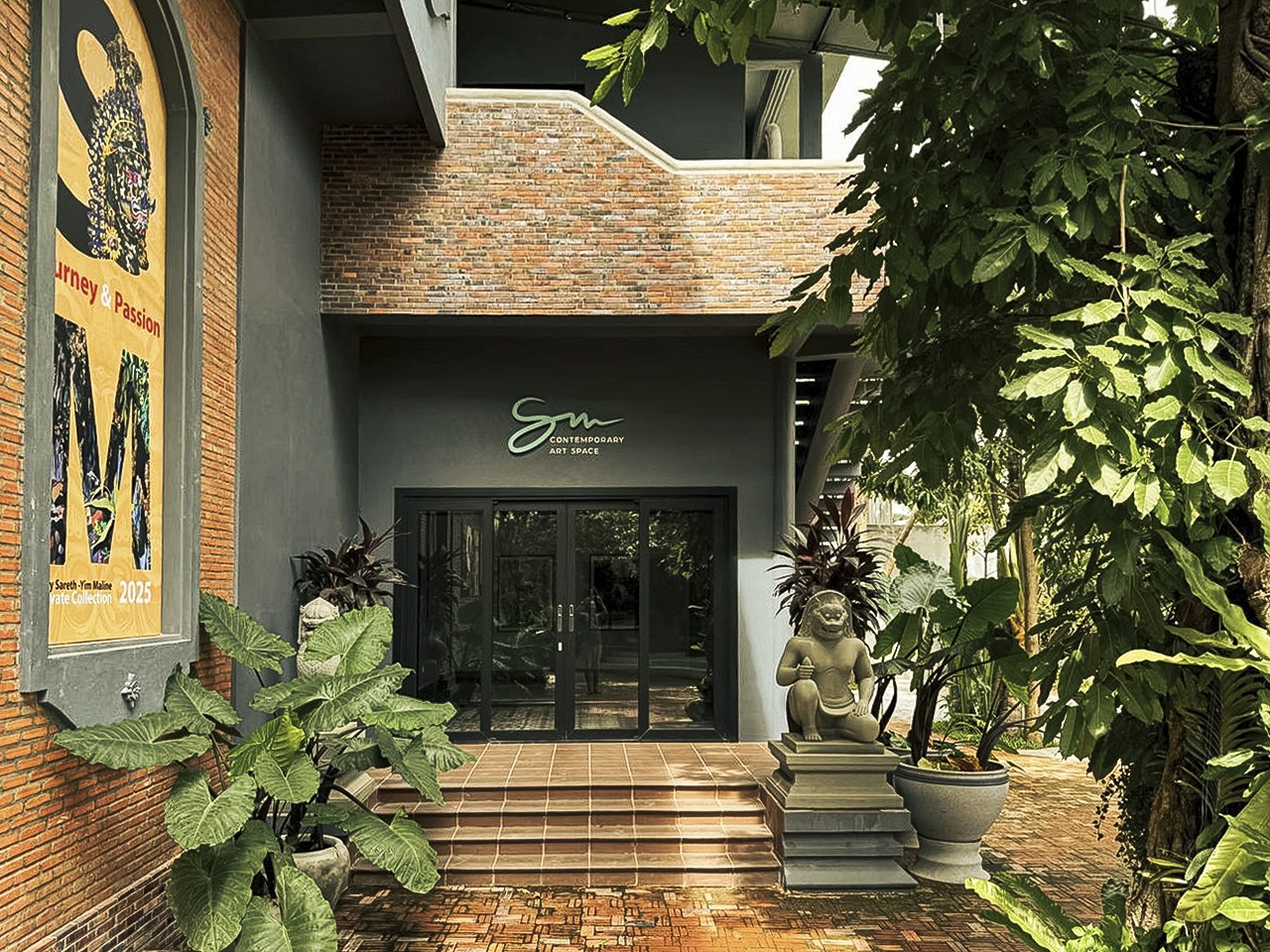
When the city starts to feel crowded, we head out to breathing spaces. A morning walk along the walls of Angkor Thom, the ancient walled city of temples, libraries and hospitals built by Jayavarman VII, widely considered to be the greatest of the Khmer kings. A visit to an artist’s atelier and workshop, such as Theam’s Gallery, or to the SM Art Center, a new contemporary museum founded by Cambodian artists Svay Sareth and Mon Boulet.
A slow, guided paddle aboard a local canoe through lotus fields courtesy of the Lotus Silk Farm, picking the blooms and snacking on seeds straight from the pods. And sometimes, an afternoon sail in the Tonle Sap, Southeast Asia’s largest freshwater lake – just in time for a spectacular sunset that somehow feels as new and breathtaking as the first time.


Photos: SM Art Center, Lotus Silk Farm, Theam's Gallery