✦ Magelang in Central Java is Indonesia’s ‘capital of slow living’. ✦ With a low population density and no train or bus stations, the landlocked area offers a slower, less congested pace of life. ✦ The city was once a colonial-era trading hub between Yogyakarta and Semarang built on the tobacco trade, and today blends heritage architecture with newer arrivals like padel courts and slow bars. ✦ ‘Slow living’ here doesn’t mean a life of relaxation, however, but space and the peace to focus on work amid communal obligations.
✦
“JUST PREPARE YOURSELF. I mean, really prepare yourself,” a friend from college, who’d moved from a city to a remote village, cautiously warned me after hearing that I’d be following in his footsteps.
“You’ll be expected to join regular village meetings, religious gatherings, and this is the toughest one… kerja bakti [do communal work]. My back still hurts from lifting up huge rocks.”
I shrugged, arrogantly, brushing off my friend’s warning as nothing but a minor hurdle in my big plan. Until the day arrived, when I found myself lifting up huge rocks at 7am, barefoot, sweating like a pig, building a wall for a village cemetery. All of my fellow villagers below the age of 70 were taking part – it is socially mandatory here – and I could tell they were used to the heavy duty. But not me.
I didn’t sign up for this, I told myself, as my knees shook while balancing on a wobbly bamboo scaffolding, building something for dead people I had never known or met.
For a brief moment, I missed Jakarta.
✦
Candirejo, the village I currently live in and built a cemetery wall for, is nestled in Magelang, Central Java. I moved here in 2023, leaving the megacity where I was born and built my entire professional career, for the sake of pursuing my childhood dream of running a public library in a village. Most people I know couldn’t comprehend my drastic decision. Why Magelang? Where is Magelang anyway?


Photos by Frutti Noventi
Honestly, at that time, I didn’t know much about Magelang, apart from some basic info I’d found online and in a few books. And for sure, nothing I’ve read has prepared me for village life here. Nevertheless, I think it’s safe to say that I’m fortunate to have made the leap of faith.
I fell in love with Magelang in 2013, when I first visited and wrote about it.
“The Ubud of Java” was the title I gave to my story. I know it sounds shallow, but I thought the comparative description was the easiest way to sum up the place. Like Ubud, Magelang has many temples and rice fields. And similar to Ubud, it boasts a handful of fine properties. Up north, the legendary MesaStila is considered the pioneer of wellness resorts in Indonesia. Moving down to the centre, you’ll find the only Aman outpost in Java.
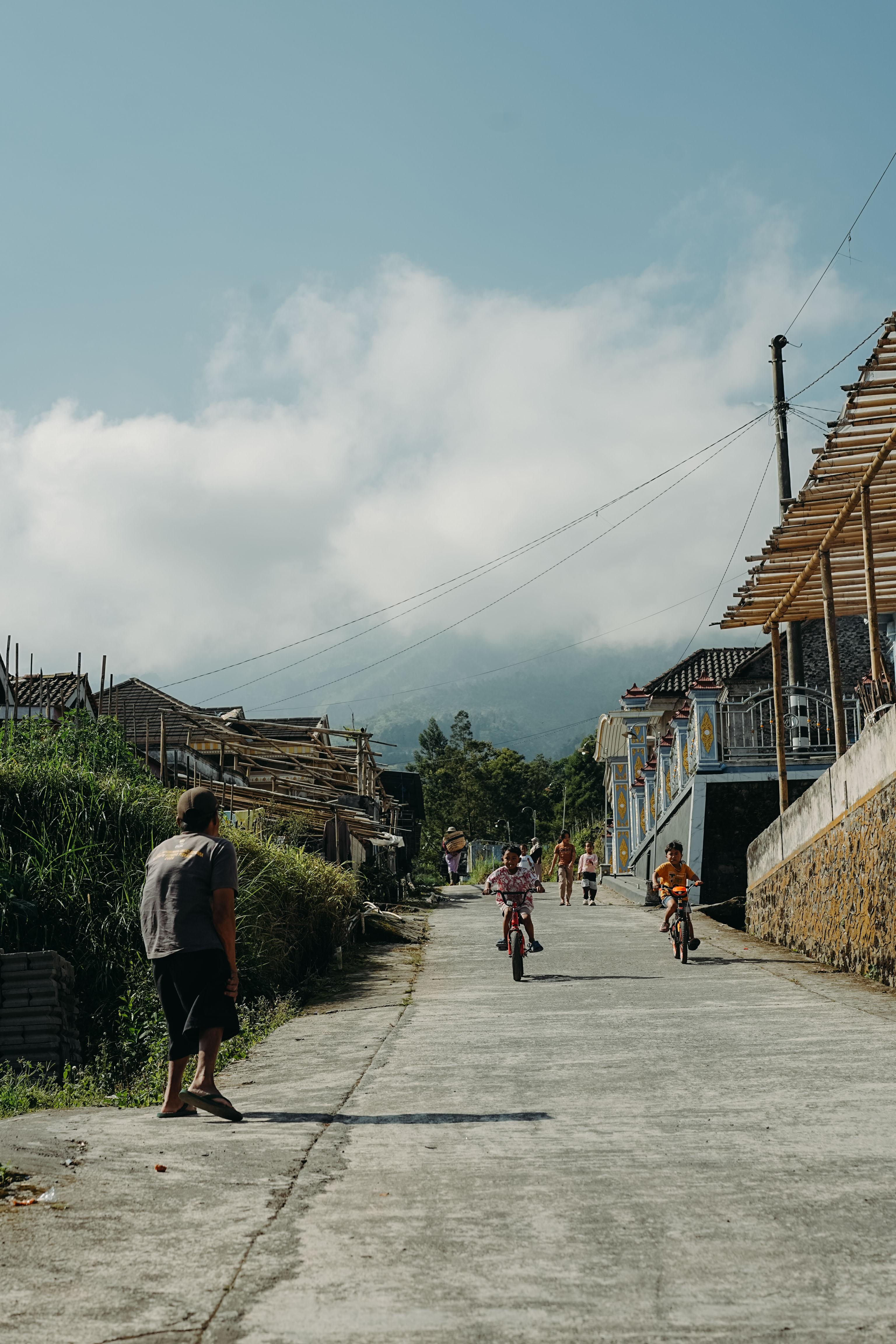
Not much has changed since that visit, thankfully. After more than a decade, Magelang has managed to preserve its rural charm. The landlocked region, tucked around 500km away from Jakarta, is still blessed with great beauty: handsome mountains overlooking vast terrace rice fields and meandering rivers; farmers herding buffalos; kids playing kites in savannah – basically the typical dreamy portrait of agricultural countryside you might find in Mooi Indie paintings.


Photos by Frutti Noventi
The landscape owes its beauty to the geographical setting. On a terrain map, Magelang looks like a huge bowl surrounded by five mountains, including Indonesia’s most active volcano (Merapi) which, in its last major eruption, devastated many parts of the region. “All the houses in this village,” my neighbour told me, “were covered in thick ash and all the trees died.”
A terrifying experience indeed, but the locals have a different take on the natural disaster: they see eruption as the reason why the soil here is so fertile, and why 70% of Magelang landmass grows crops.
For a farming society, it seems, every (hot) cloud has a silver lining. But for a former Jakarta city boy, it’s a warning to put all my important documents in an easy-to-pack folder in case I need to escape fast.
And escaping fast is not a hard thing to do. With a footprint nearly twice of Jakarta’s but a population that’s 90% smaller, Magelang has virtually no traffic jams, another thing I’m grateful for. I can have four appointments in a day and still have time (and energy) to pick up groceries, do laundry and get coffee in between – all on a weekday.


Photos by Frutti Noventi
No wonder Magelang feels no sense of urgency to modernise its public transportation – that efficiency in mass mobility is simply not needed. Everybody enjoys the pleasure of taking their time.
Horse carts and rickshaws still wander the streets, while vintage Volkswagen Safaris are the most popular vehicles for tourists.
I think the only time when people rush is during the annual Borobudur Marathon, when thousands of runners roam the streets around the world’s largest Buddhist temple.
✦
The busiest part of Magelang is the city (Magelang City, officially), the second smallest city in Indonesia. Vibrant with commercial activities, it is here you can find the only shopping mall with an XXI cinema, and the only Starbucks outlet, which arrived here 20 years after it first came to Indonesia. Padel is just starting to become a trend, as well as slow bars serving fancy beverages. At the end of last year, a chain hotel by Indonesia’s starchitect opened its doors.
Beyond all things hip, the city – once described by the late celebrated architect Romo Mangun as “paradise” due to its urban planning – has always been a trading hub because of its strategic location in the centre of Central Java, in particular between Yogyakarta in the south and Semarang in the north.

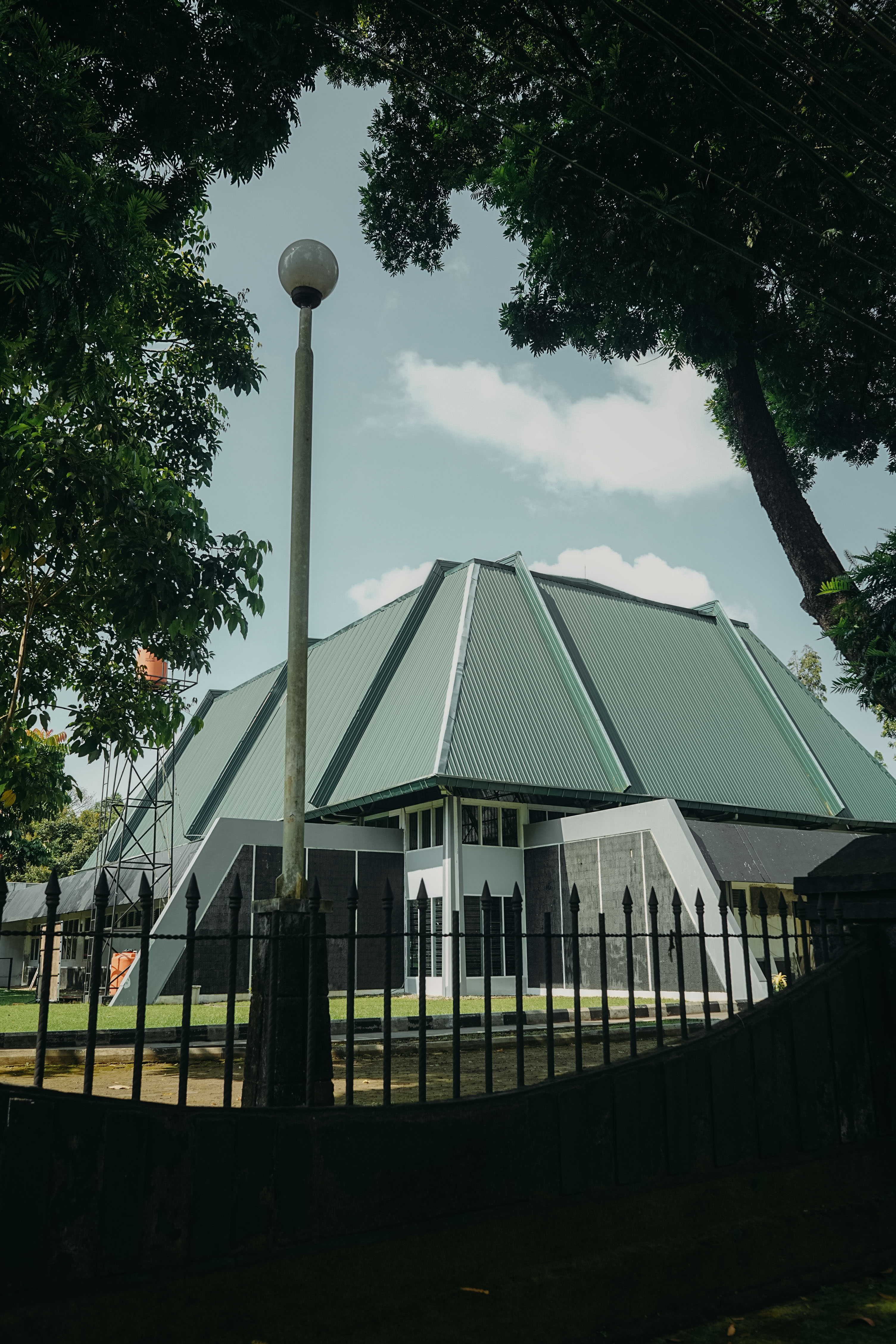


Photos by Frutti Noventi
For the same reason, the Dutch constructed their second-largest garrison here during the colonial era. And many of the local tycoons built their fortune on this historical trading route, mostly processing tobacco.
Ong Hong Djien, who owns an impressive art museum here, is a well-known tobacco grader.
One time he told me that Magelang has the second largest number of art collectors in Indonesia after Jakarta, and tobacco is the main reason behind that surprising statistic.
✦
While tobacco and temples are what Magelang has long been famous for, the region more recently added a new accolade to its reputation. Kompas, the country’s biggest news outlet, crowned Magelang and its surrounding areas the “capital of slow living”, based on assessments on 22 variables including living cost and security. Soon after the news broke, my new home base became a national sensation.
Magelang, a far-flung region with no airports or train stations, one that is always prepared for the next eruption, had somehow found itself in the spotlight as the place to live peacefully.


Photos by Frutti Noventi
That said, different people have different definitions on what slow living is. Most typically, it is pictured as relaxing all day while enjoying coffee and streaming your favourite shows. That’s not the case here – at least, not what I’ve been witnessing over the past three years. Most of my neighbours work their ass off on a daily basis: farming since dawn, feeding cattle, handling all domestic chores.
I tend to interpret slow living as a life with less stress. Here, in contrast to Jakarta, the pollution level – air, water, light and sound – is very low, while greenery is abundant.
Magelang is a liveable and humane place in the sense that I don’t need to fight for every inch of space.
Thus, I can work at the library for up to 10 hours during the day, sleep well at night, and wake up fresh the next morning for another long day.
Unless, of course, it’s time for kerja bakti. There’s always something to build or fix in the village.


Photos by Frutti Noventi