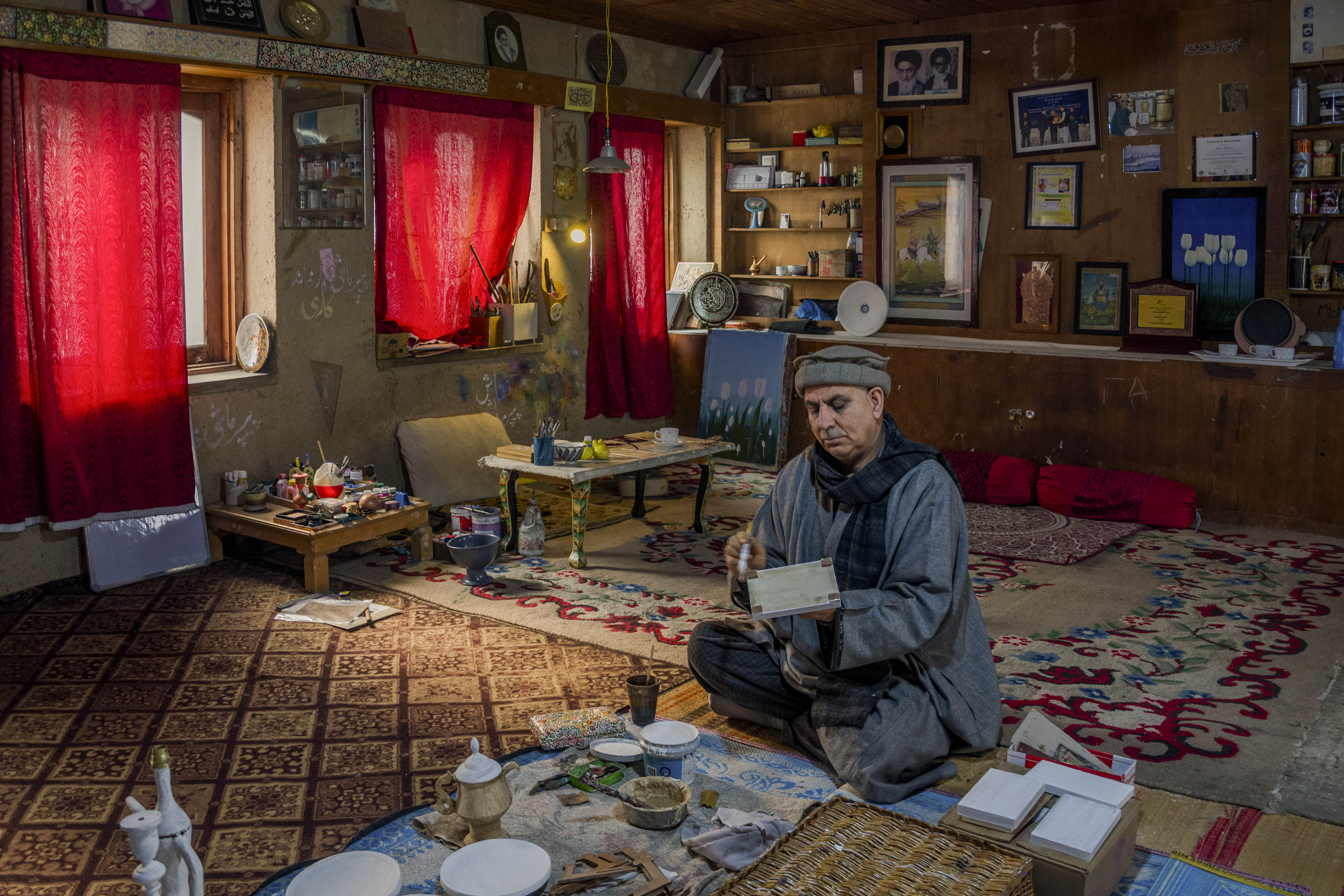
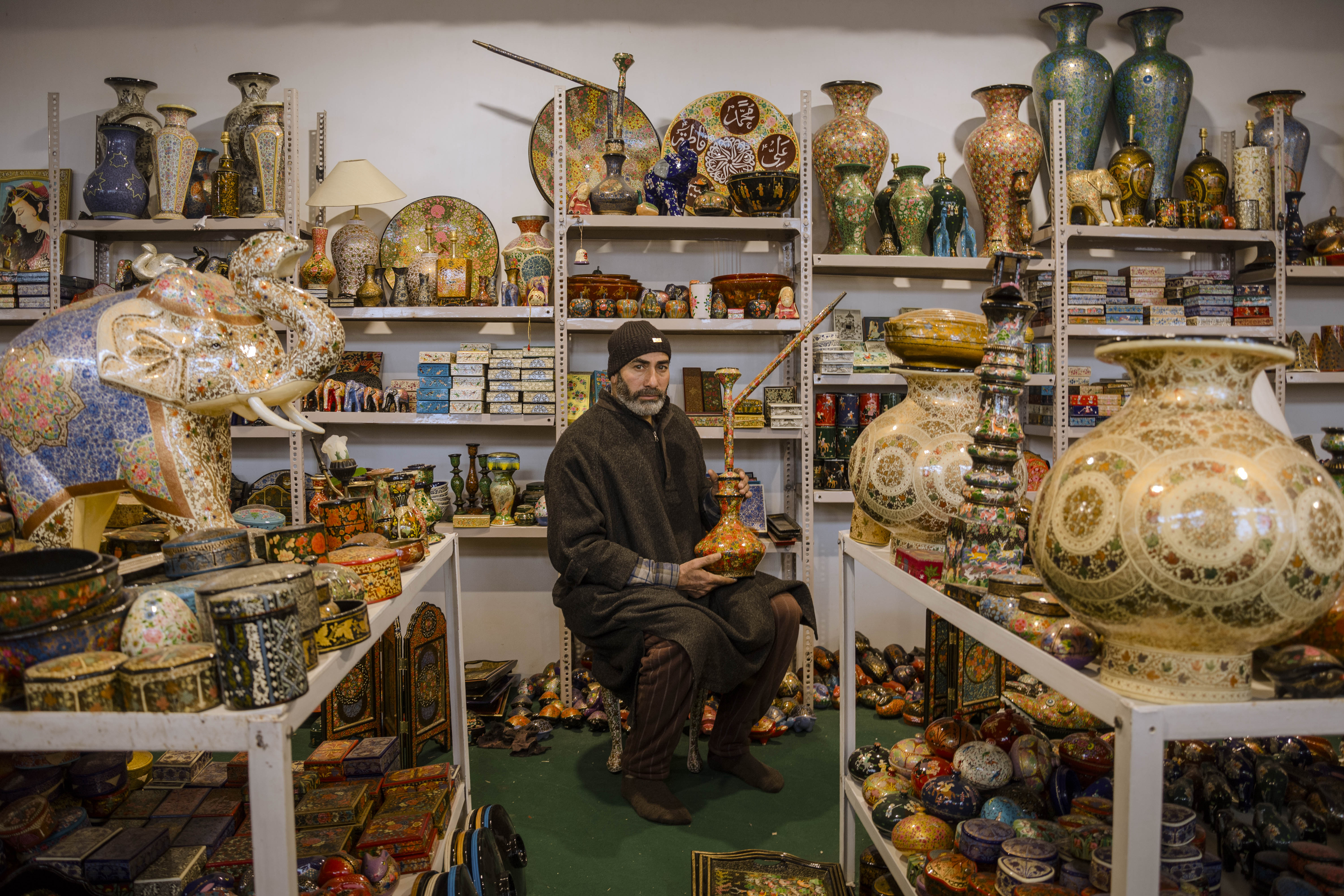
On a winter morning in Srinagar’s old city in Kashmir, 65-year-old Syed Maqbool Hussain strokes a brush across a freshly decorated vase as a crackling radio plays a folk song.
✦
A seventh-generation artisan, Maqbool belongs to a family that has guided Kashmir’s papier-mâché tradition through centuries of change – from Mughal patronage and Persian influence, to global tourism and shifting markets.
“This work teaches patience,” he says, without looking up. “Nothing can be rushed.”
Indeed, given the discipline needed for manufacture, it’s remarkable how well the ancient craft has endured. More than that, the industry is in the middle of a transformation – via new materials, digital marketplaces and a younger generation of artisans determined to expand what the craft can be.
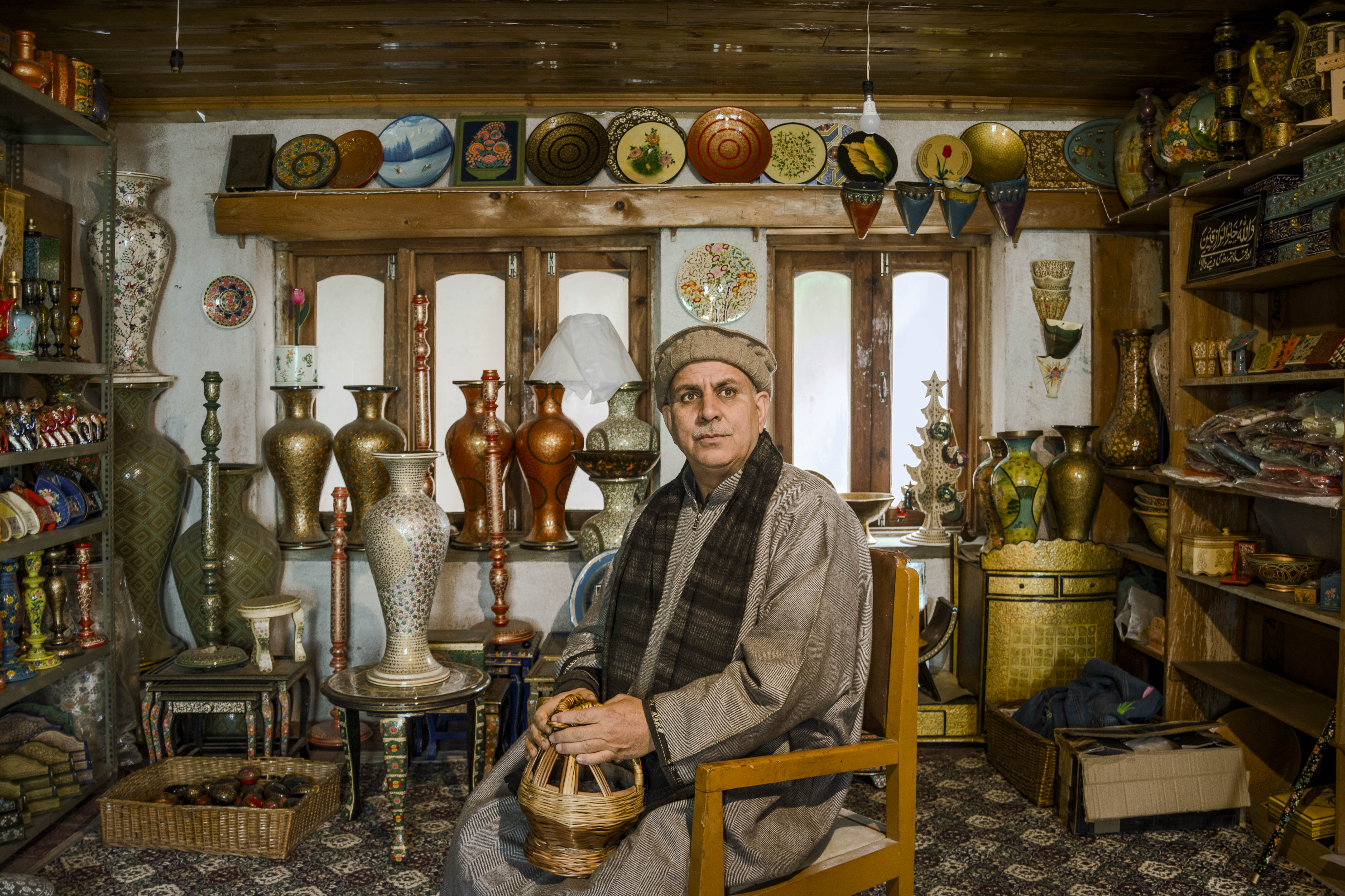
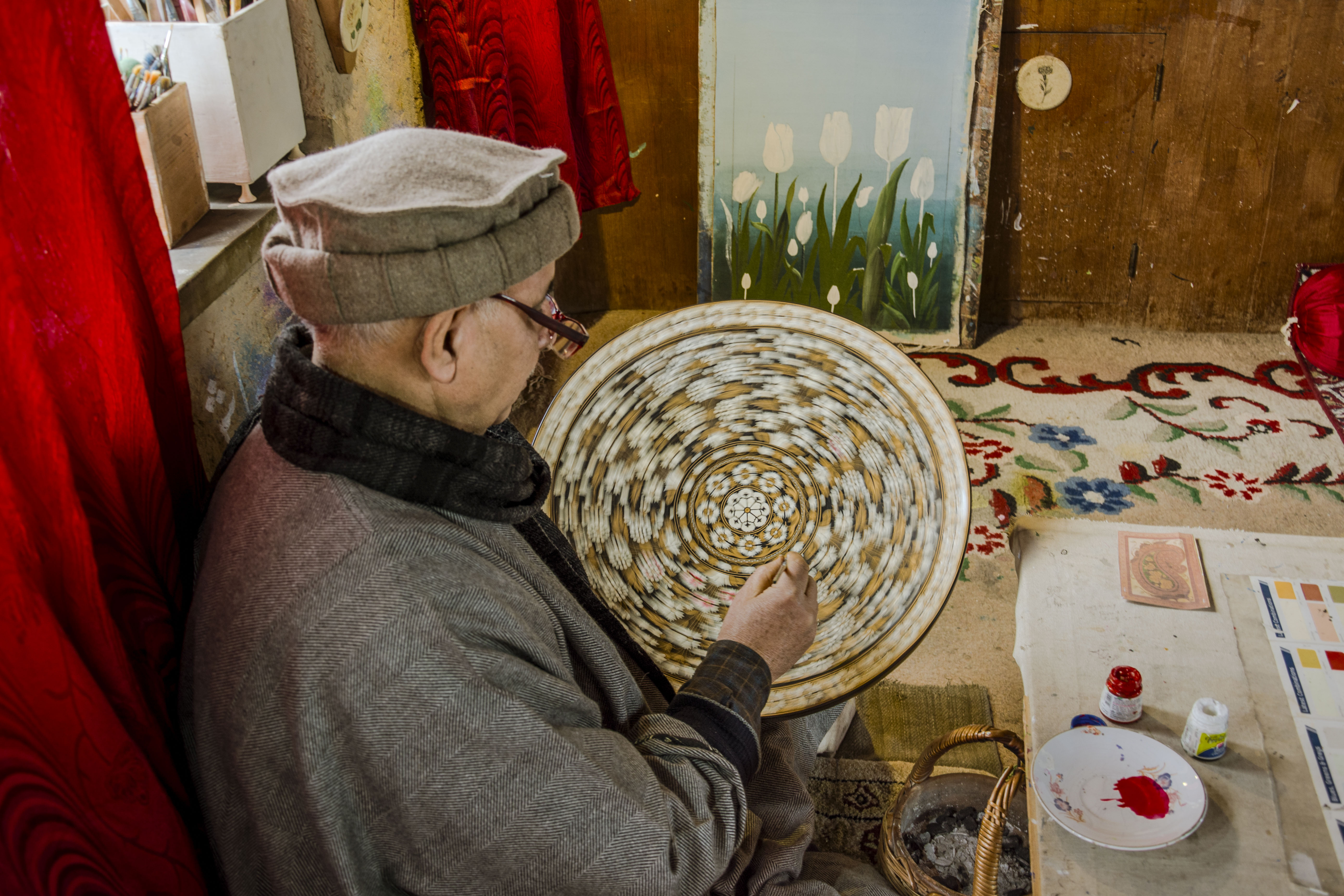
Photos: Aakash Gulzar
From objects to interiors
The technique arrived in Kashmir in the 14th century, brought by the Persian Sufi saint Mir Syed Ali Hamadani. It later took root as a distinct visual language blending Persian and Central Asian influences with indigenous aesthetics.
The process – locally known as kari-munaqqash – happens in two stages: sakhtsazi, in which waste paper is soaked, beaten into pulp, shaped in moulds and coated with lime and natural glue; and naqashi, where the dried surface is polished with a stone called a kirkod before being painted.
For centuries, the results were primarily decorative objects – pen holders, jewellery boxes, trays, bowls – sold as souvenirs. But that is changing.
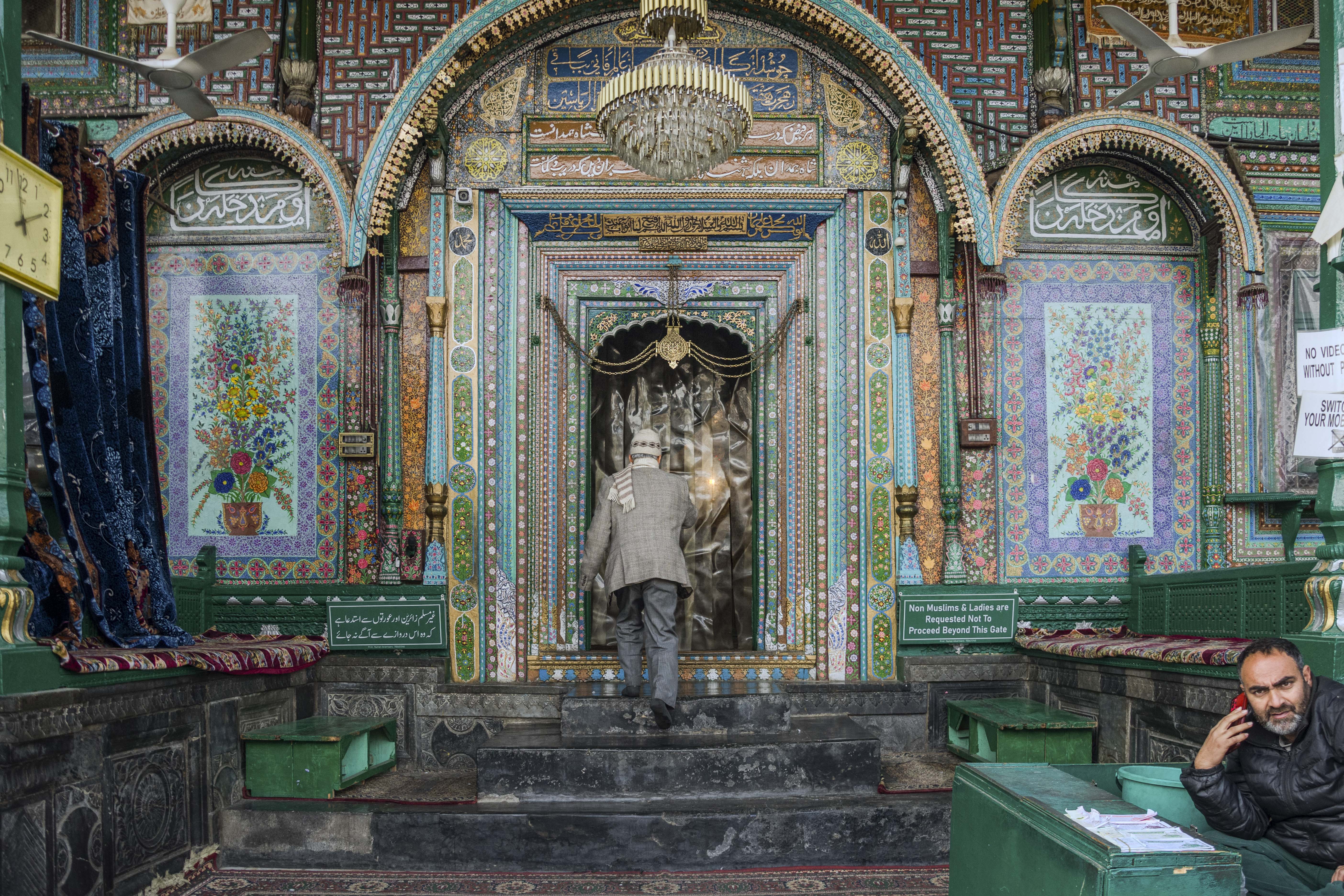
Over the past two decades, conservation and restoration projects have reintroduced papier-mâché into the interiors of shrines, mosques, hotels and heritage buildings.
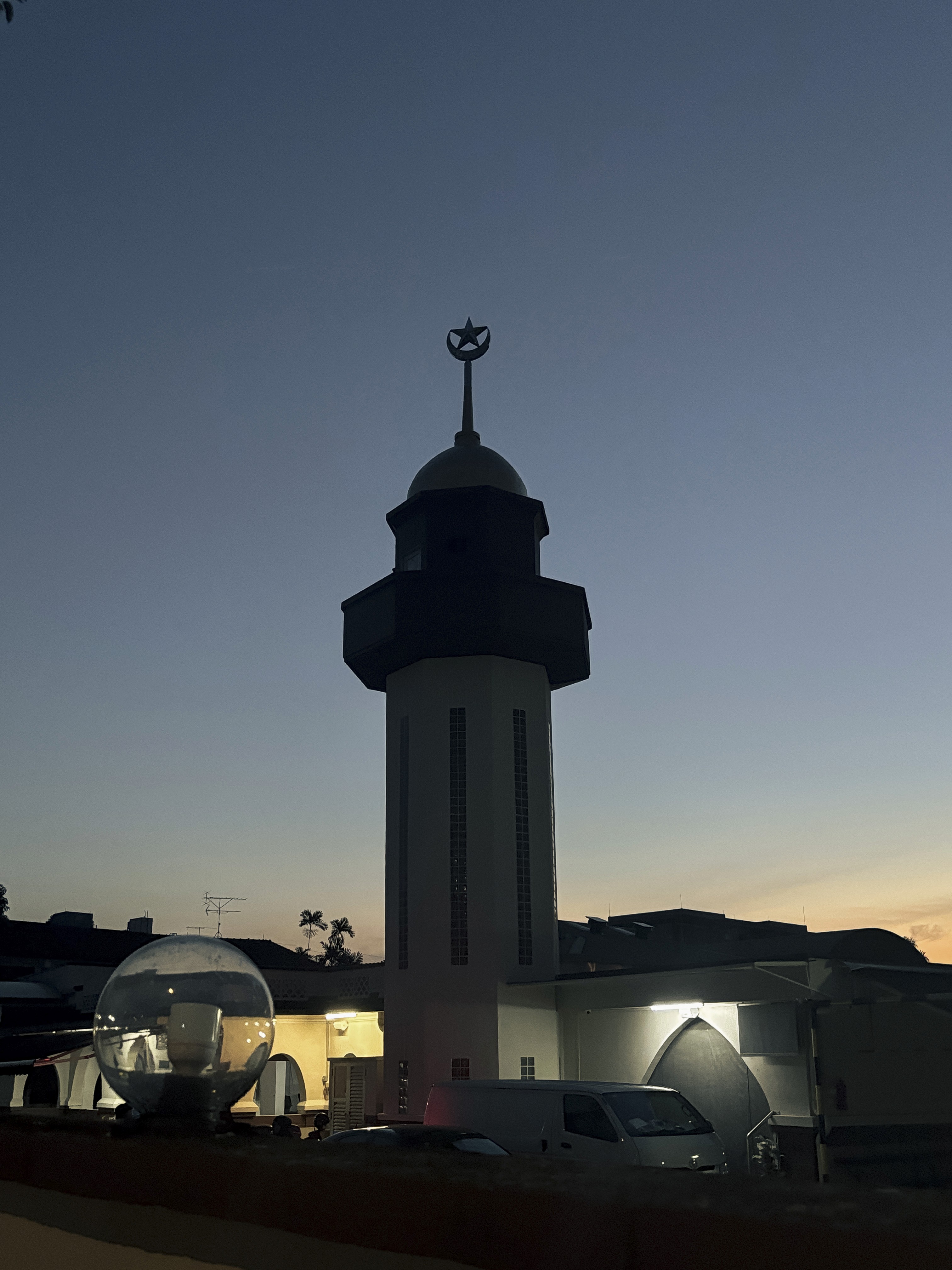
In 2025, the renovation of the Hazratbal shrine – one of Kashmir’s most revered Muslim religious sites – saw traditional papier-mâché motifs reintroduced as part of a broader effort to restore its interior, drawing renewed attention from pilgrims and visitors.
Similar detailing has since appeared across imambadas, mosques, hotels and cafés designed to evoke traditional Kashmiri aesthetics.
“For a long time, papier-mâché was only made into souvenirs or small decorative objects,” says Srinagar-based architectural historian Sameer Hamdani, author of City of Kashmir, an exploration of Srinagar’s history and culture.
He describes the practice as a “mystical discipline” – rooted in repetition, restraint and devotion – whose reentry into living spaces represents something more than décor: a reclaiming of cultural memory.
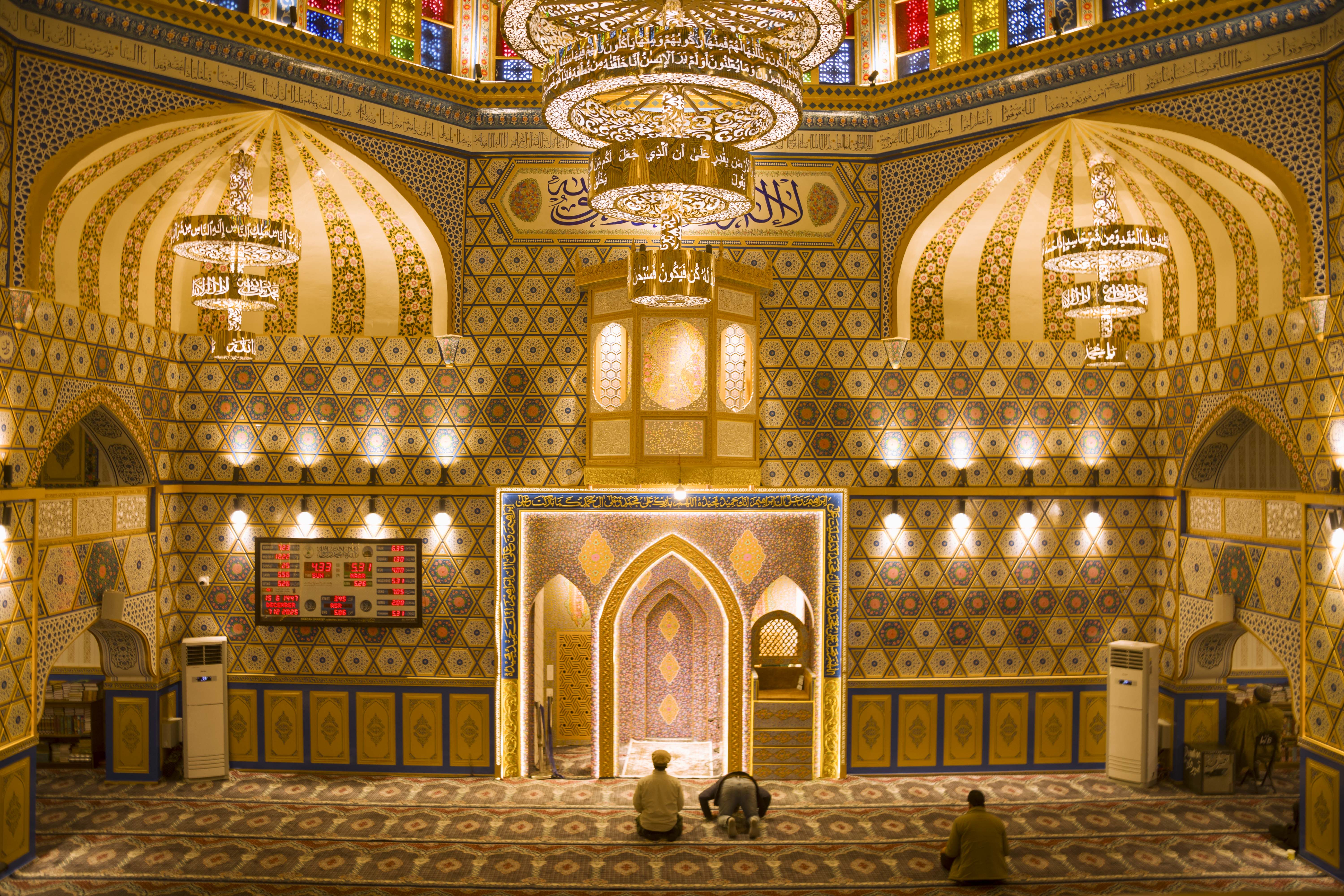
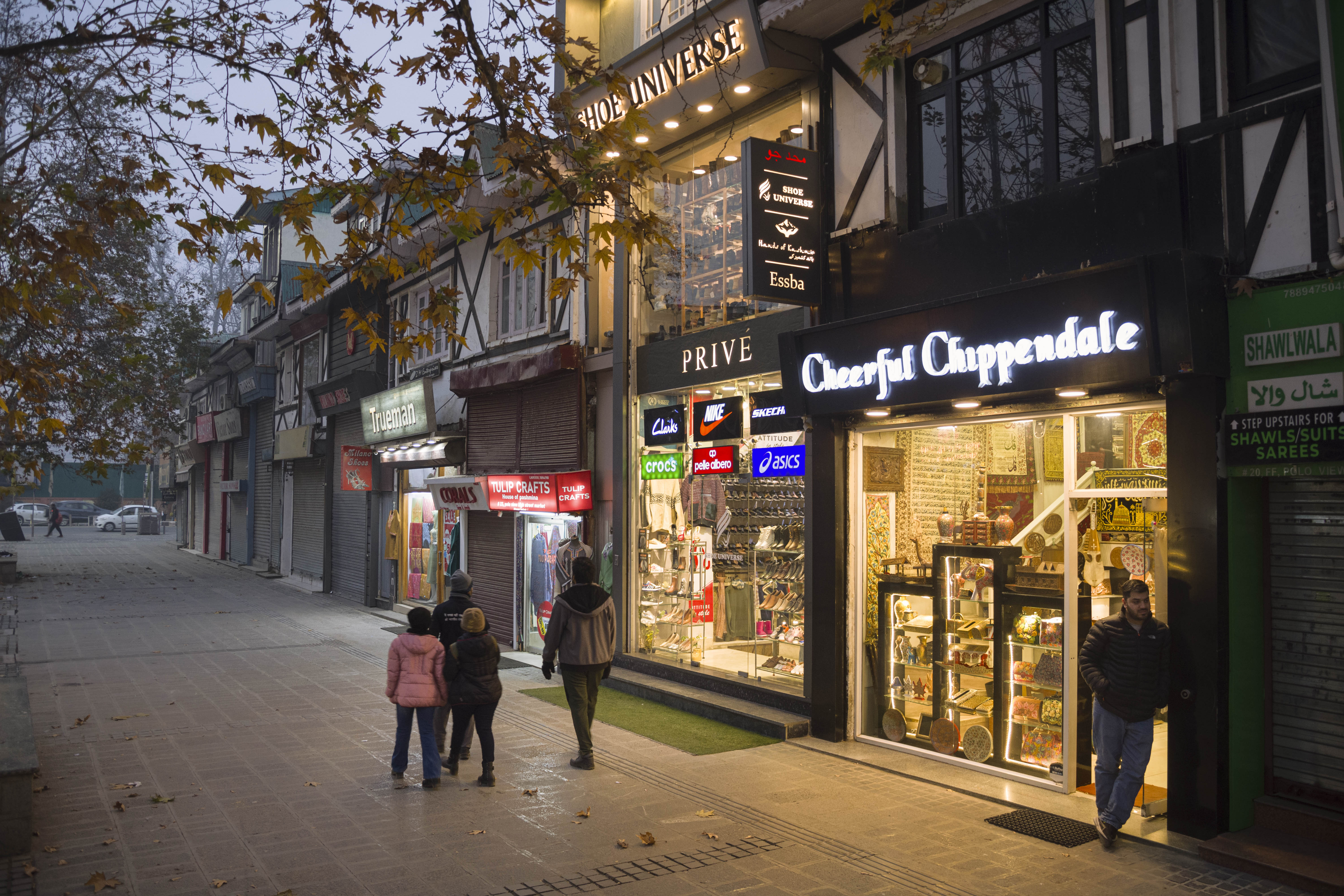
Photos: Aakash Gulzar
New surfaces, new methods
Fifty-year-old artisan Iqbal Hussain Khan is pushing the craft further still. Where papier-mâché was once confined to lightweight objects shaped from paper pulp, Khan now applies traditional brushwork to steel vessels, tea sets, leather jackets, doors and furniture – adapting preparation techniques to prevent cracking and fading on hard, non-porous surfaces.
“To survive, traditional art must experiment with contemporary trends. That’s how both art and business thrive,” he says.
Khan reaches customers directly via WhatsApp, bypassing middlemen and the seasonal rhythms of tourism. His commissions include shrines, mosques, private residences and city cafés – spaces where papier-mâché was once rarely seen.
Photos: Aakash Gulzar
A new generation, new platforms
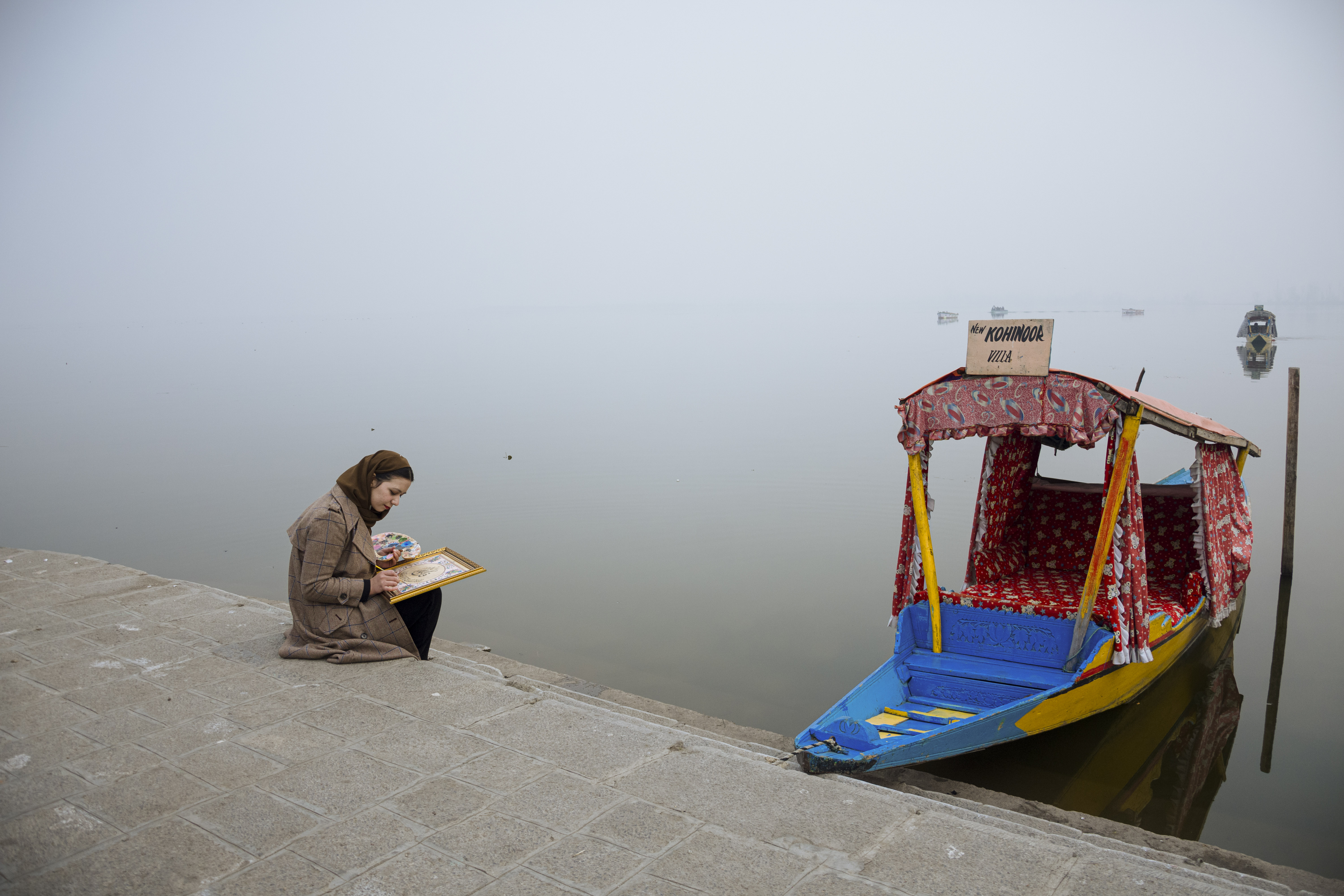
But the most significant shift may be generational. Falak Iqbal, a 24-year-old self-taught Srinagar-based artist, is experimenting with contemporary typography, unconventional surfaces and hybrid forms that blend papier-mâché with other materials. She recently collaborated with fellow artist Mehak Farooq on interior work at the Hazratbal shrine.
“Young people are curious again,” she says. “Digital platforms have changed everything. They’ve expanded demand and connected artisans directly with global buyers.”
Social media has also reconfigured how the craft is produced.
“It’s no longer just about making the object,” Falak explains. “It’s about imagining how art will be perceived through a screen.”
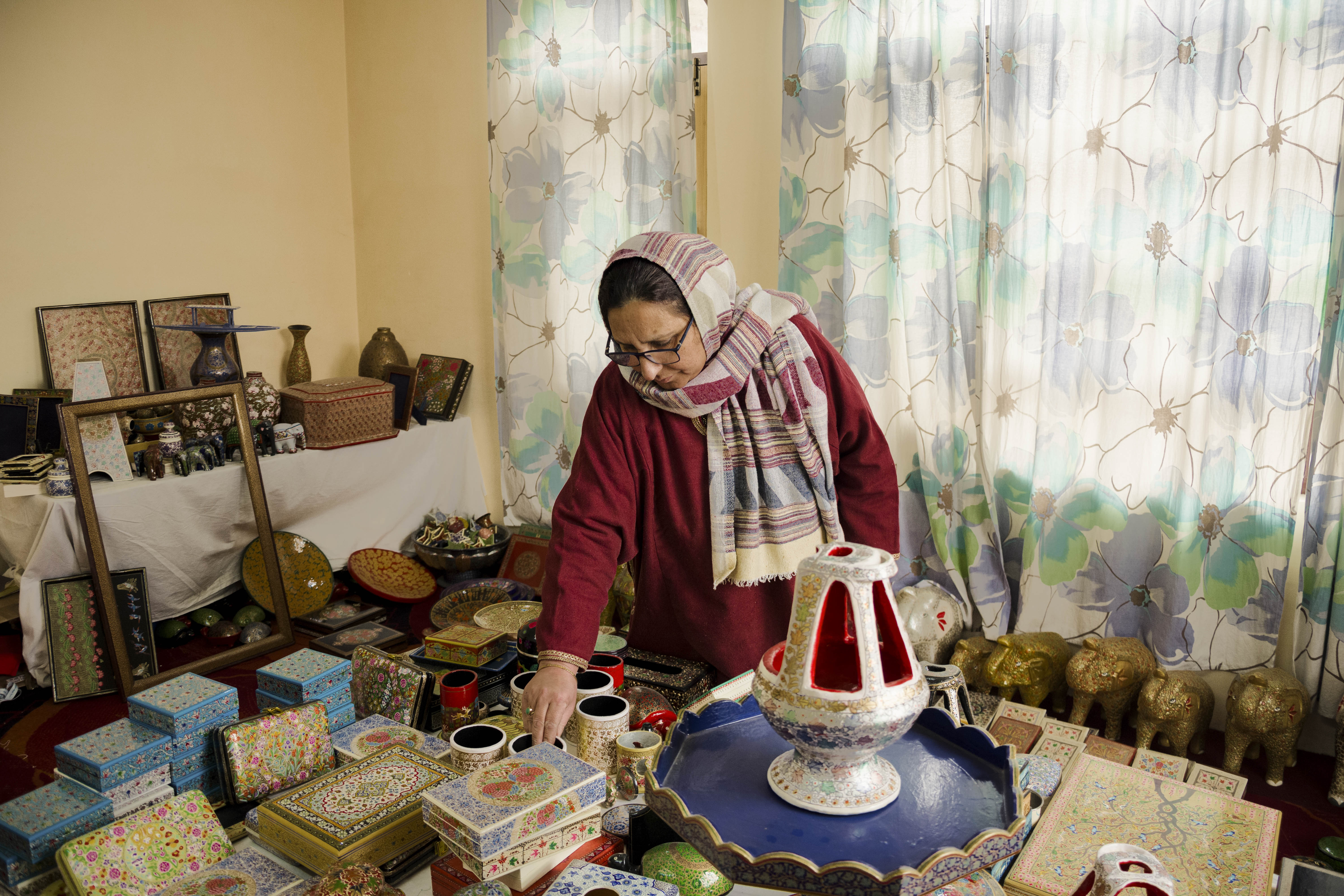
Meanwhile, Masrat Jan, a state award-winning artisan who began learning the craft as a teenager – unusual for a male-dominated art form – is helping to grow the pool of artisans. Based in Srinagar’s Lal Bazar, she now trains young women, many of whom sell their work through Instagram and WhatsApp. “I teach girls so they can support their families,” she says.
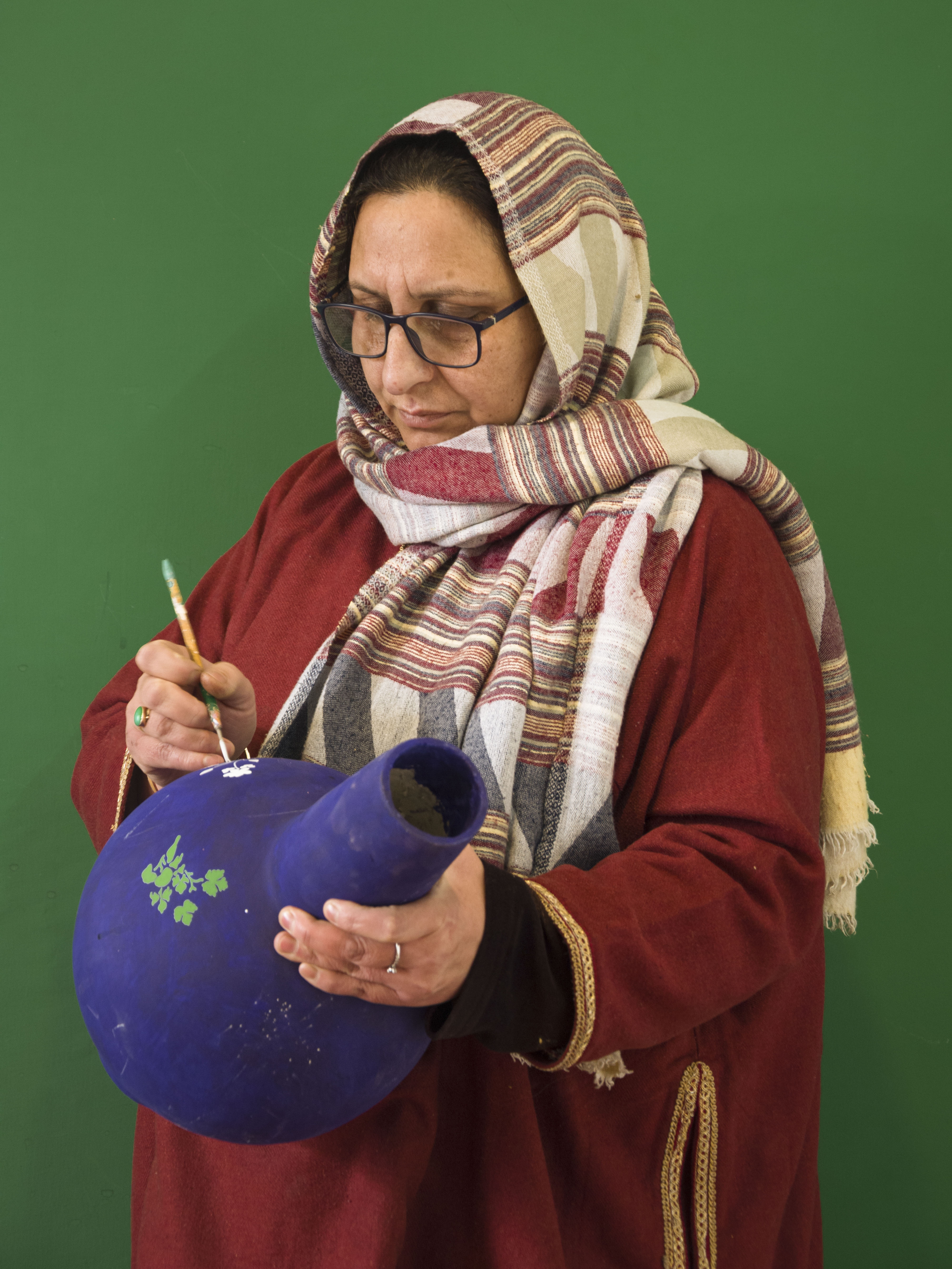
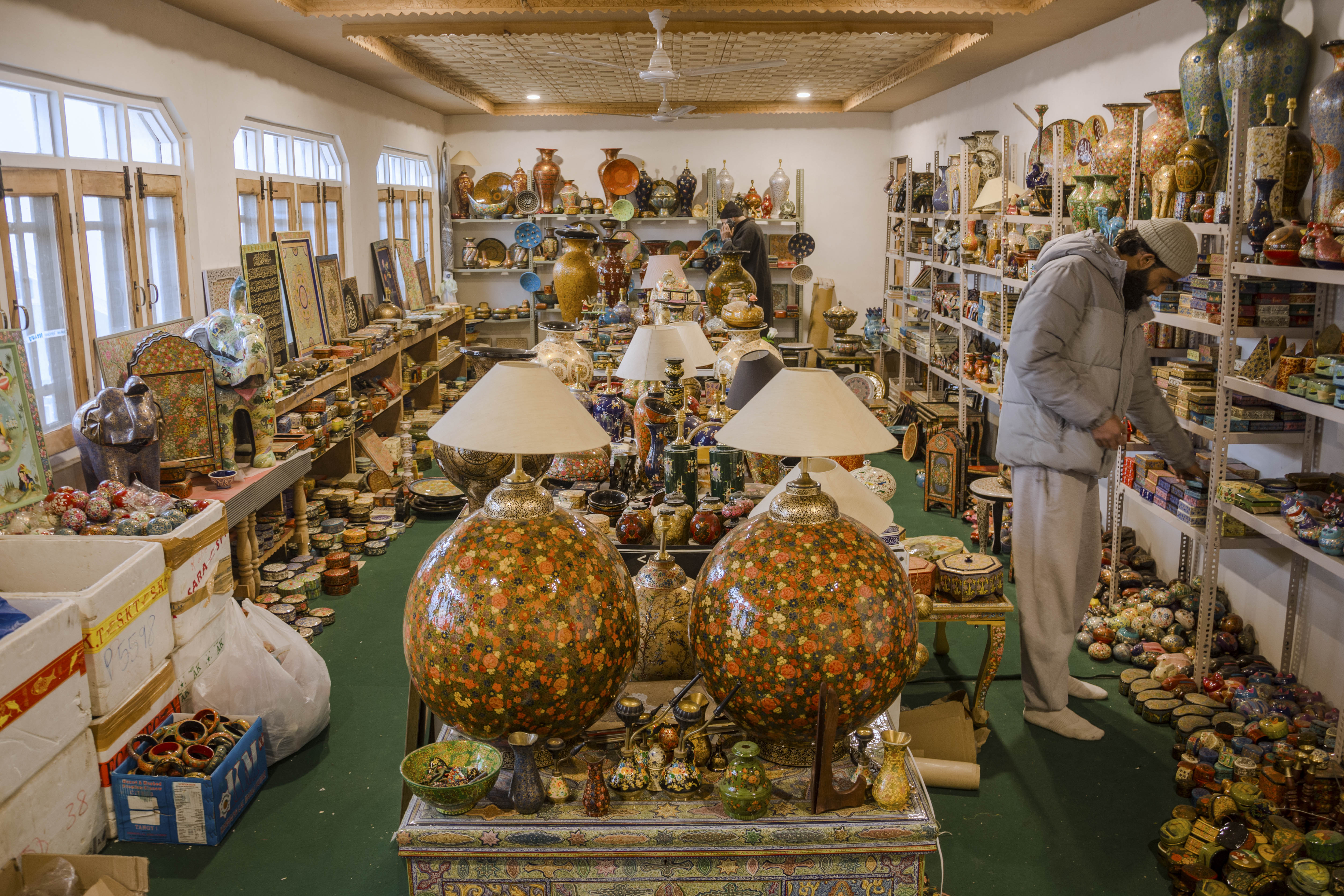
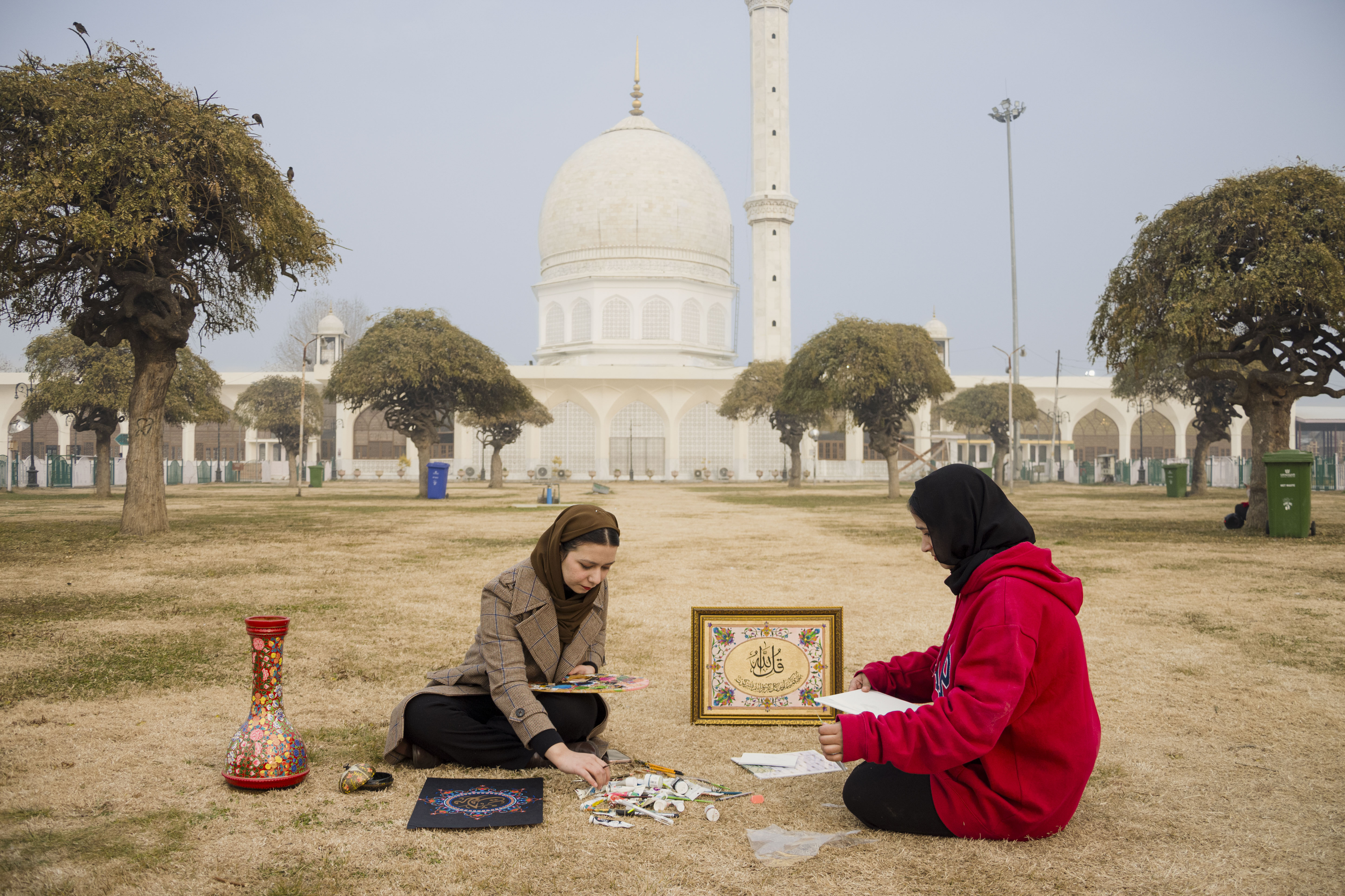
Photos: Aakash Gulzar
Young social media creators like Muneer Mushtaq, who runs the Instagram account Realside Stories, have helped amplify their reach. And the made-to-order model that has emerged – allowing buyers to commission specific shapes, colours or inscriptions – reduces unsold inventory while giving artisans greater creative control.
Earlier this year, Kashmir’s Directorate of Handicrafts and Handloom said that it had trained more than 8,000 new papier-mâché artisans in recent years, and the craft currently holds Geographical Indication (GI) status.
Papier-mâché is now the most exported product in the non-textile handicraft segment from Kashmir, though exports across the handicrafts sector remain well below the government’s target of $344 million annually by 2029.
The gap that remains
That said, innovation is not evenly distributed. Artisans like Maqbool, who continue to rely on small traditional objects, have seen little of the new prosperity. He earns less than ₹300 per day, with monthly income rarely exceeding ₹10,000.
“My daughter asks me to become an ATM guard,” he says quietly. “At least it’s stable.”
The risk cuts both ways: alongside handmade revival, the craft is also being replicated through screen-printed designs on fibreboard – visually similar but, as critics note, stripped of its soul. And a 50% US import tariff imposed in 2025 has made handcrafted products more expensive for American buyers, adding fresh pressure to small workshops.
Still, in Alamgari Bazaar and beyond, the next generation is working.
For them, papier-mâché isn’t a relic to be preserved under glass – it’s a living practice, finding its way onto new surfaces and screens, and into new spaces.
Says Maqbool, setting his brush aside: “This work is our legacy. As long as my hands can hold a brush, I will keep working.”
✦
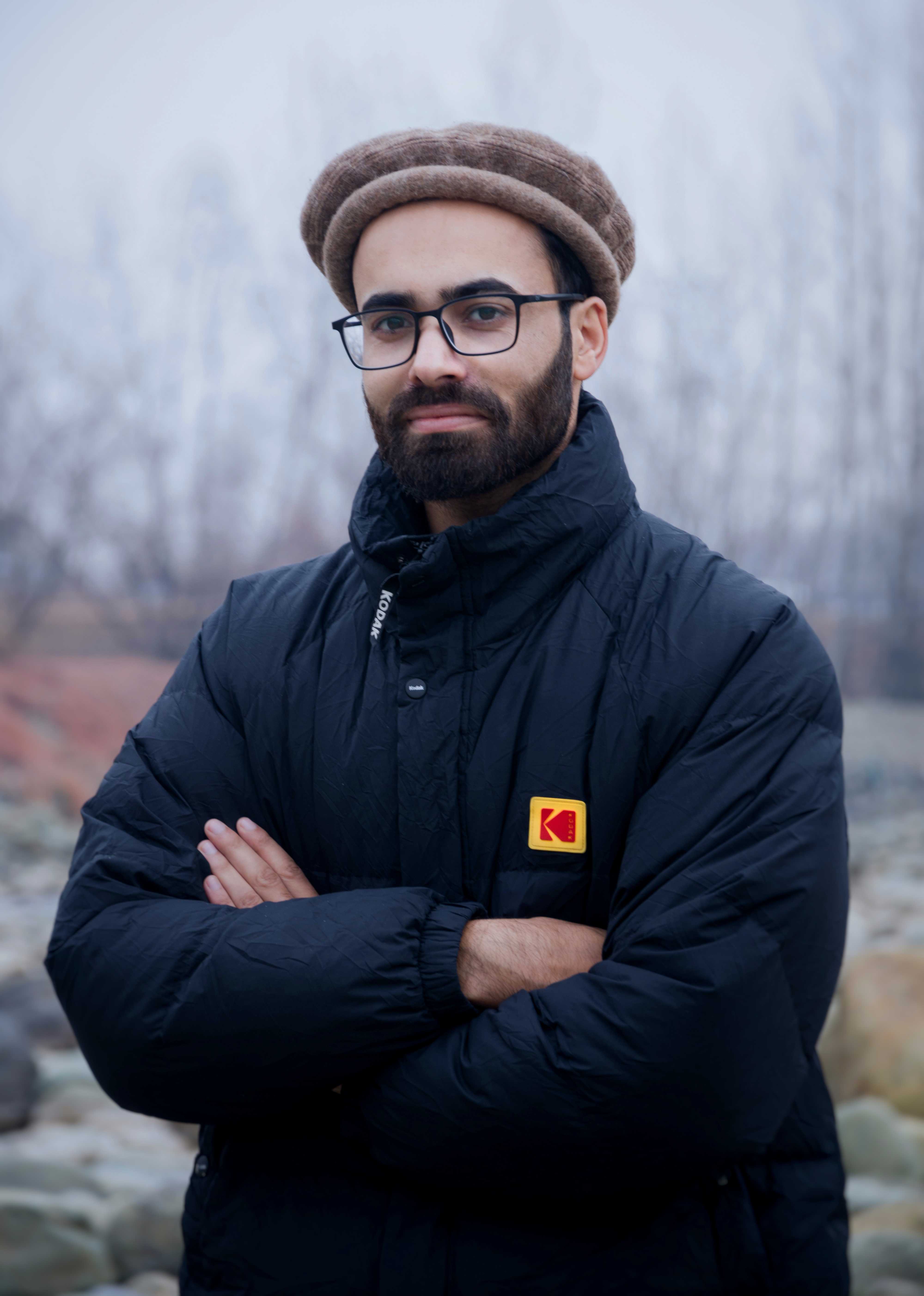
This story’s photos are by Aakash Gulzar, a documentary photographer from Bandipora in Indian-administered Kashmir, who is an alumnus of the VII Foundation. His practice explores themes of isolation, contrast and the intricate relationship between people and the natural environment. His work has been featured in publications such as VII Academy, Ian Parry Grant, Earth Partner, Der Greif, Perimetro, Outlook Traveller, Wire and others. Find him on Instagram at aakashgulzar.