In a world driven by speed and scale, where mechanisation dictates the pace of labour, Ong Chin Chye’s dragon joss-stick factory in Penang is a blip in the system.
✦
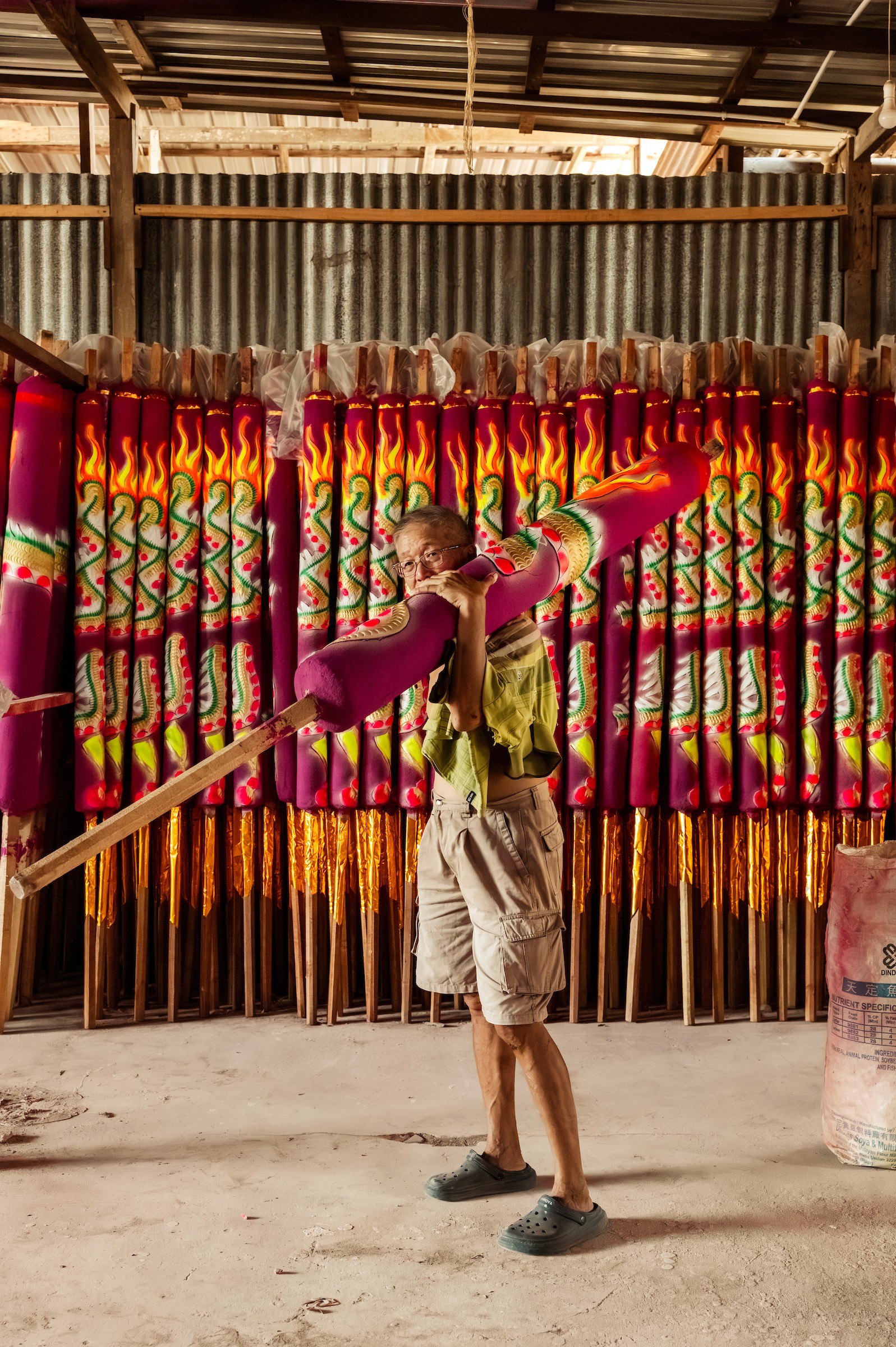
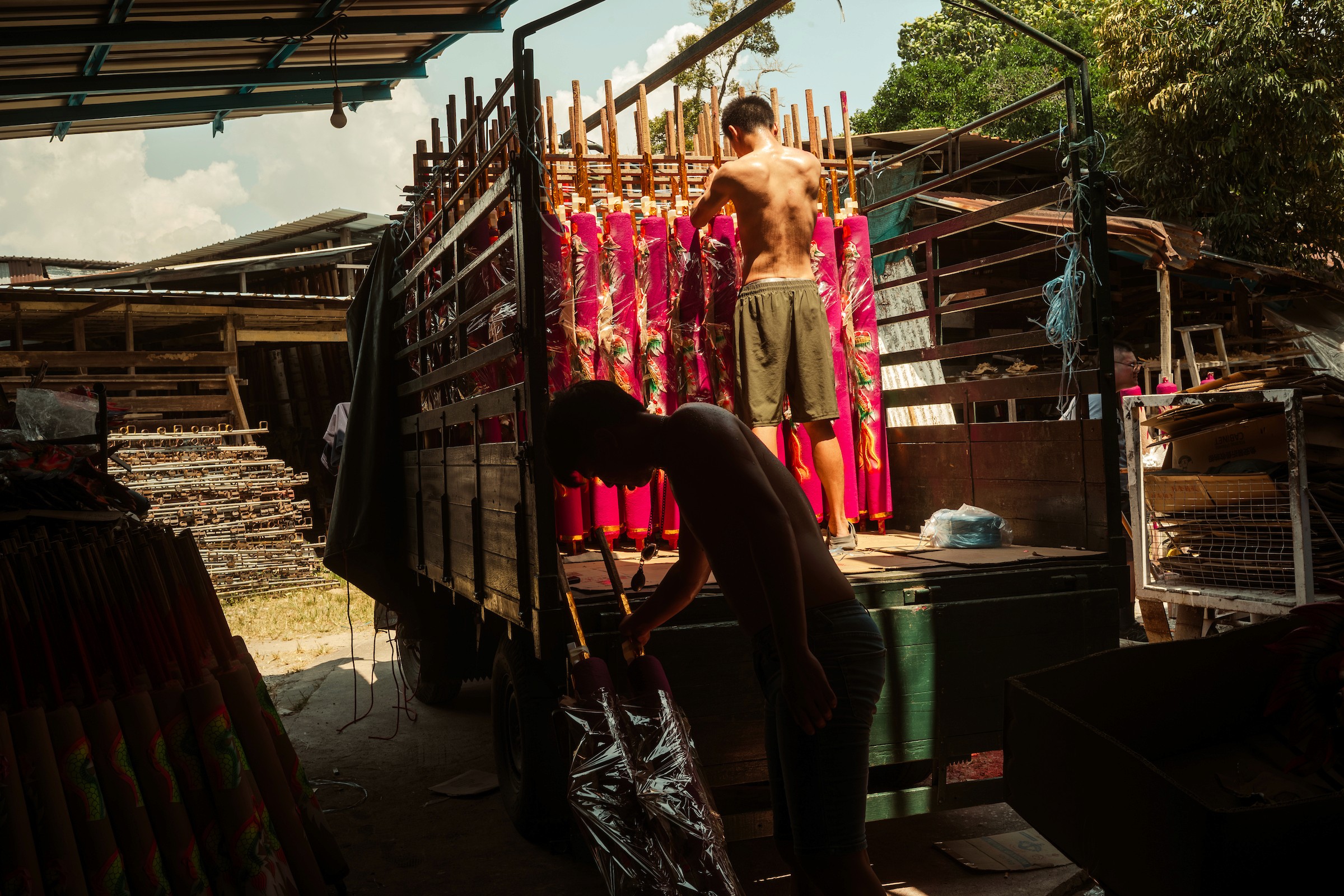
Tucked into a tiny village on the mainland, this jumble of sheds produces incense sticks in sizes ranging from foot-long table-top versions to monoliths measuring up to 18 feet in length – completely by hand, with no machines in sight.
Sixty-six-year-old Ong, who began learning the trade as a teenager, took over the workshop when he was 22, inheriting a business that has been in his family for more than six decades and was established by his grandfather.
His factory is one of the last traditional ones standing in an industry where large-scale commercial operations are fast replacing artisanal makers; an operation precariously sustained by knowledge passed from one generation to the next.
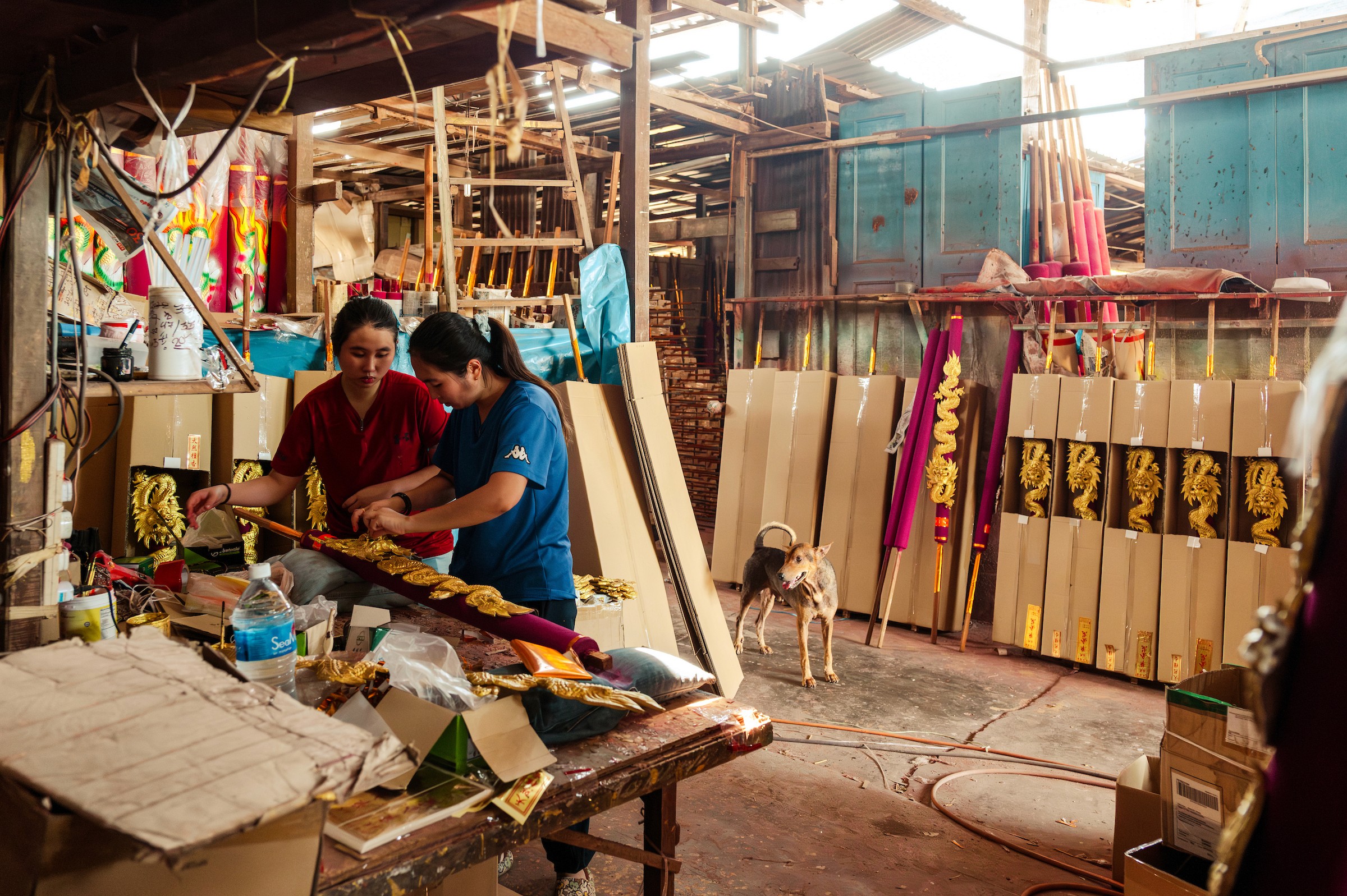
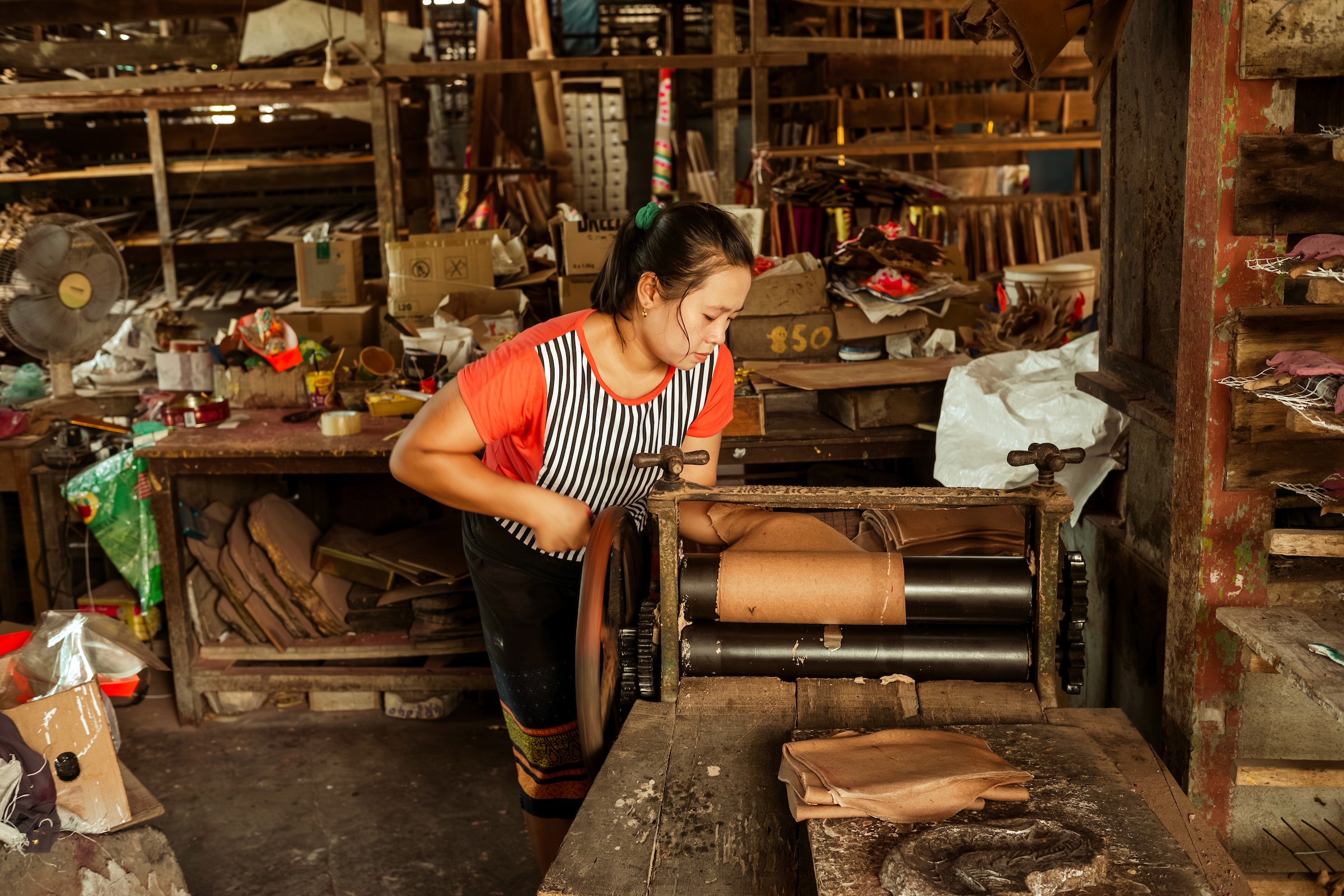
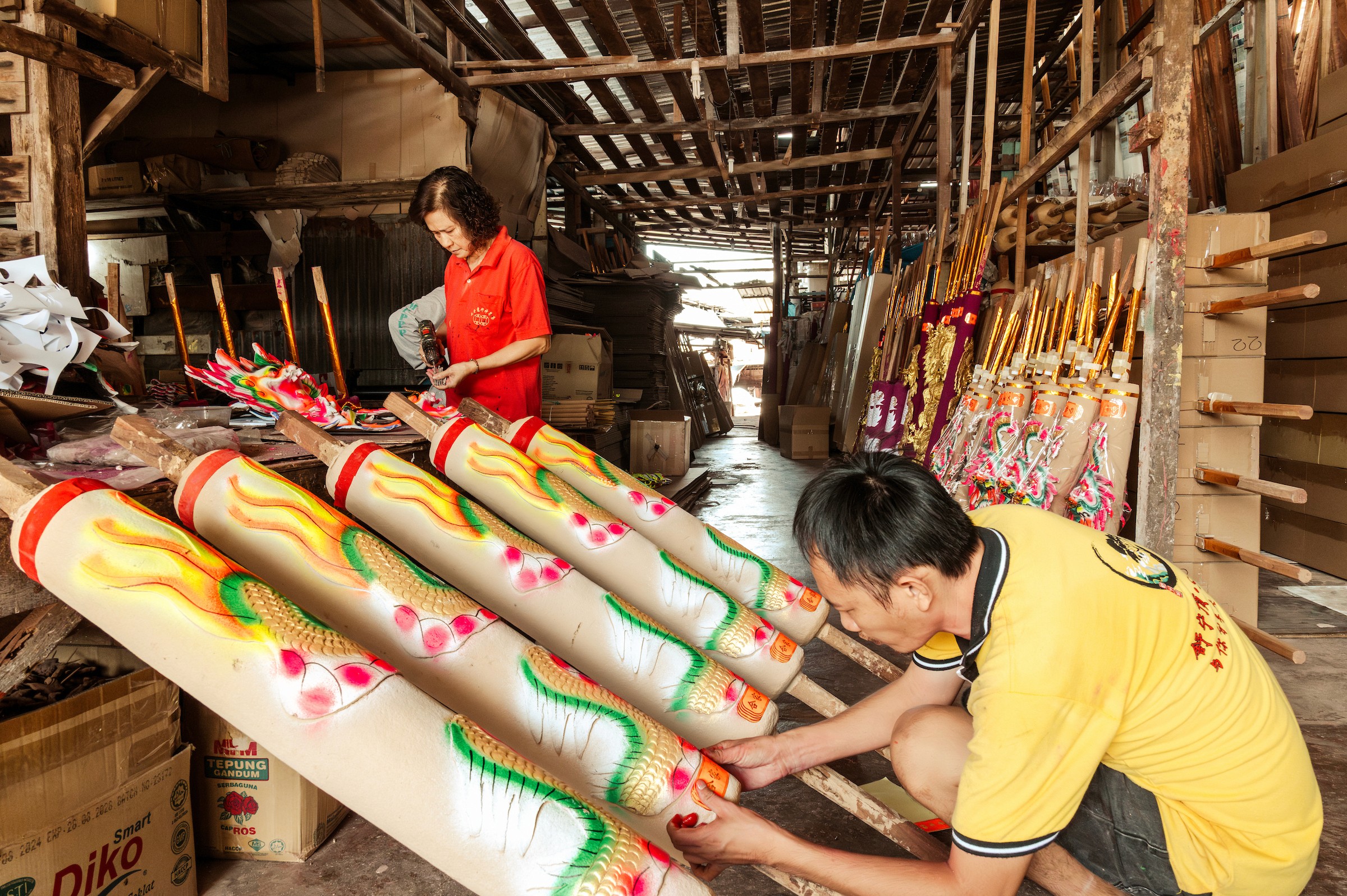
Ong’s team of around 20 workers brings together people of all ages: older hands so familiar with the making that their fingers move in a blur; younger workers who learn by watching and repeating, absorbing the craft through practice rather than instruction.
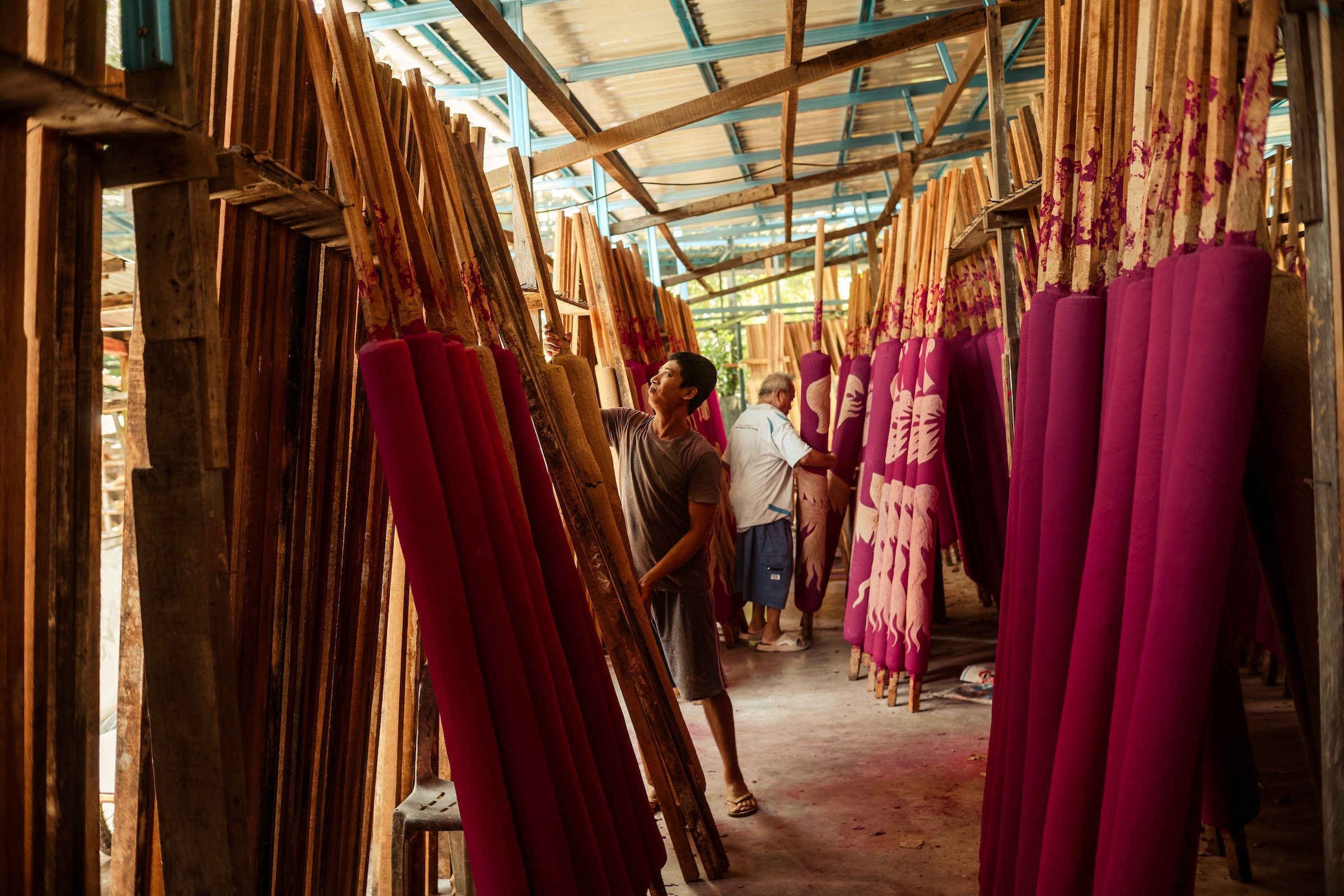

This inter-generational rhythm intensifies in the weeks leading up to the Chinese New Year, when orders surge and time becomes scarce. I visited the factory twice during this period, watching the team’s pace quicken as the work stretched longer into the day.
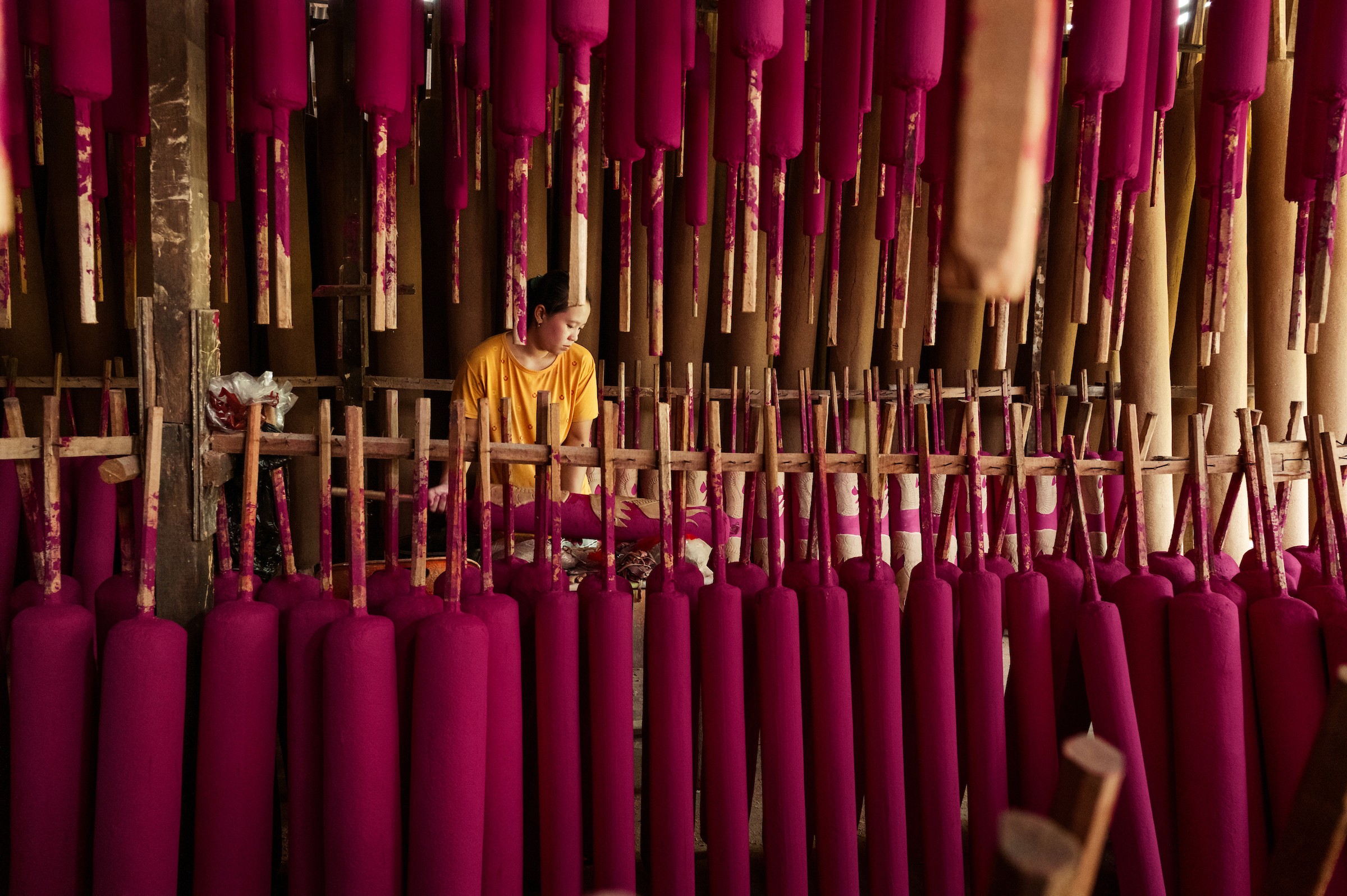
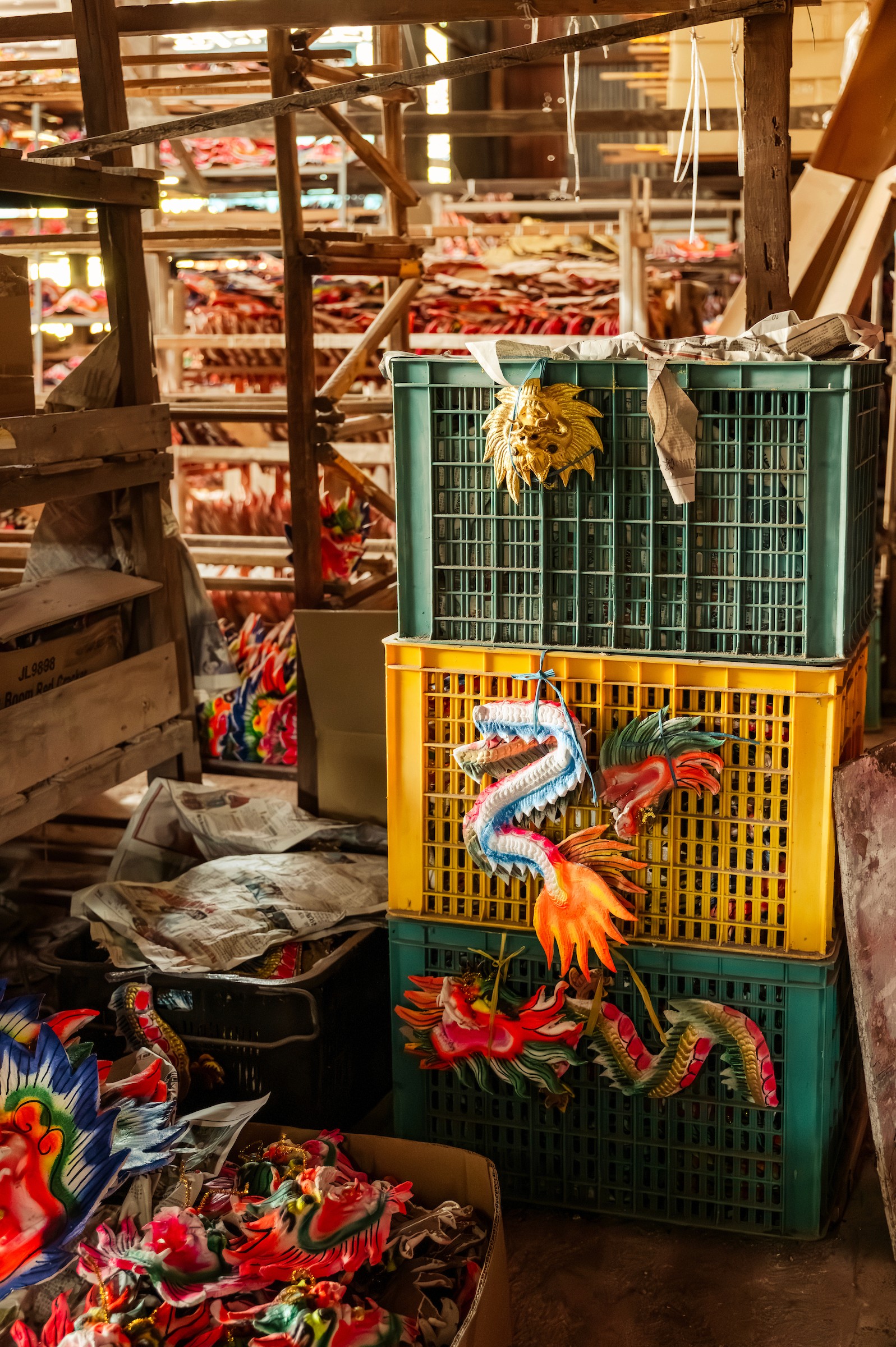
Produced in more than 50 designs, the joss sticks range in colour, fragrance, girth and length, each with a different meaning and use. Their prices vary from RM8 to RM800 depending on the size and intricacy of decorations.
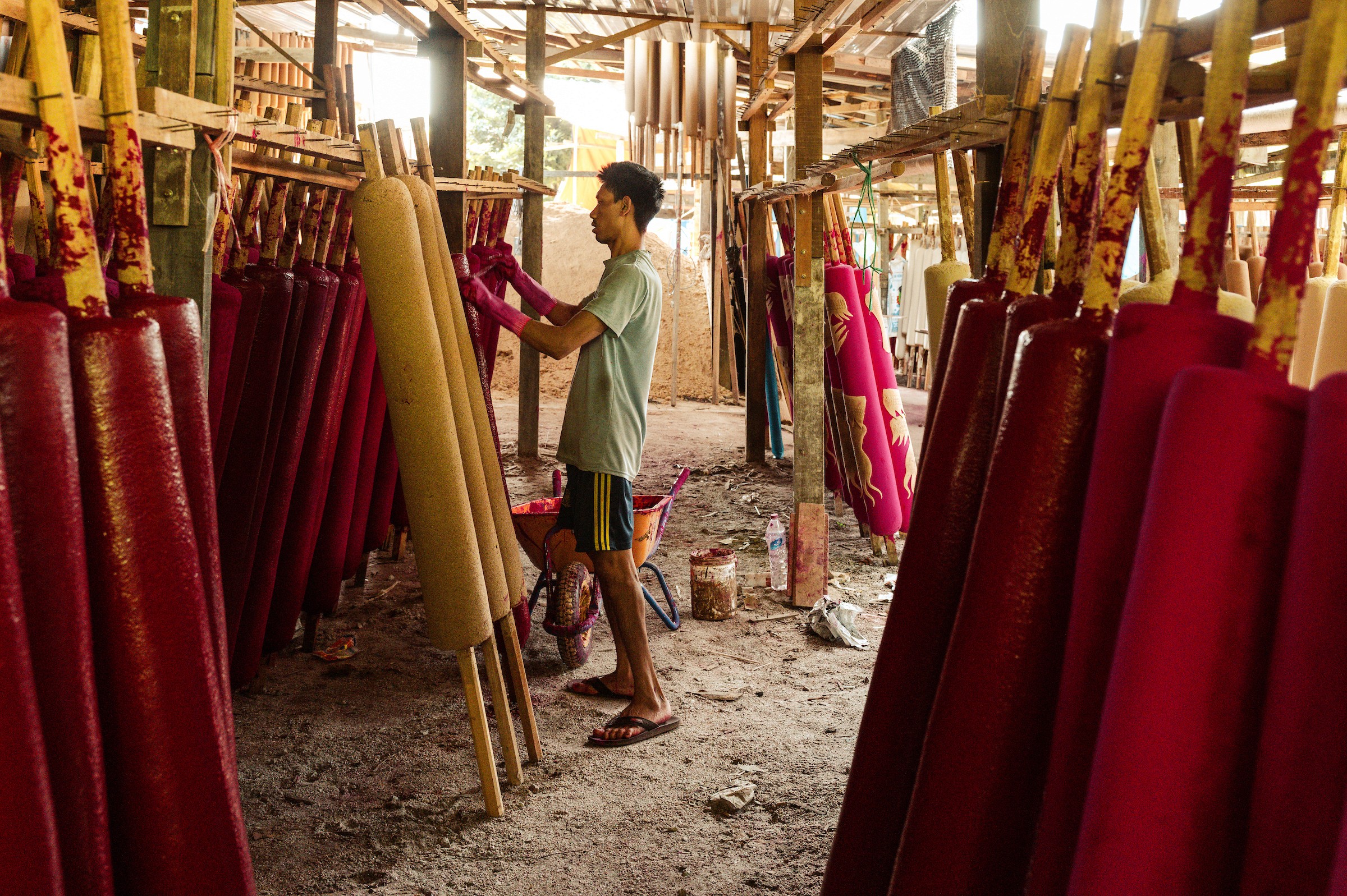
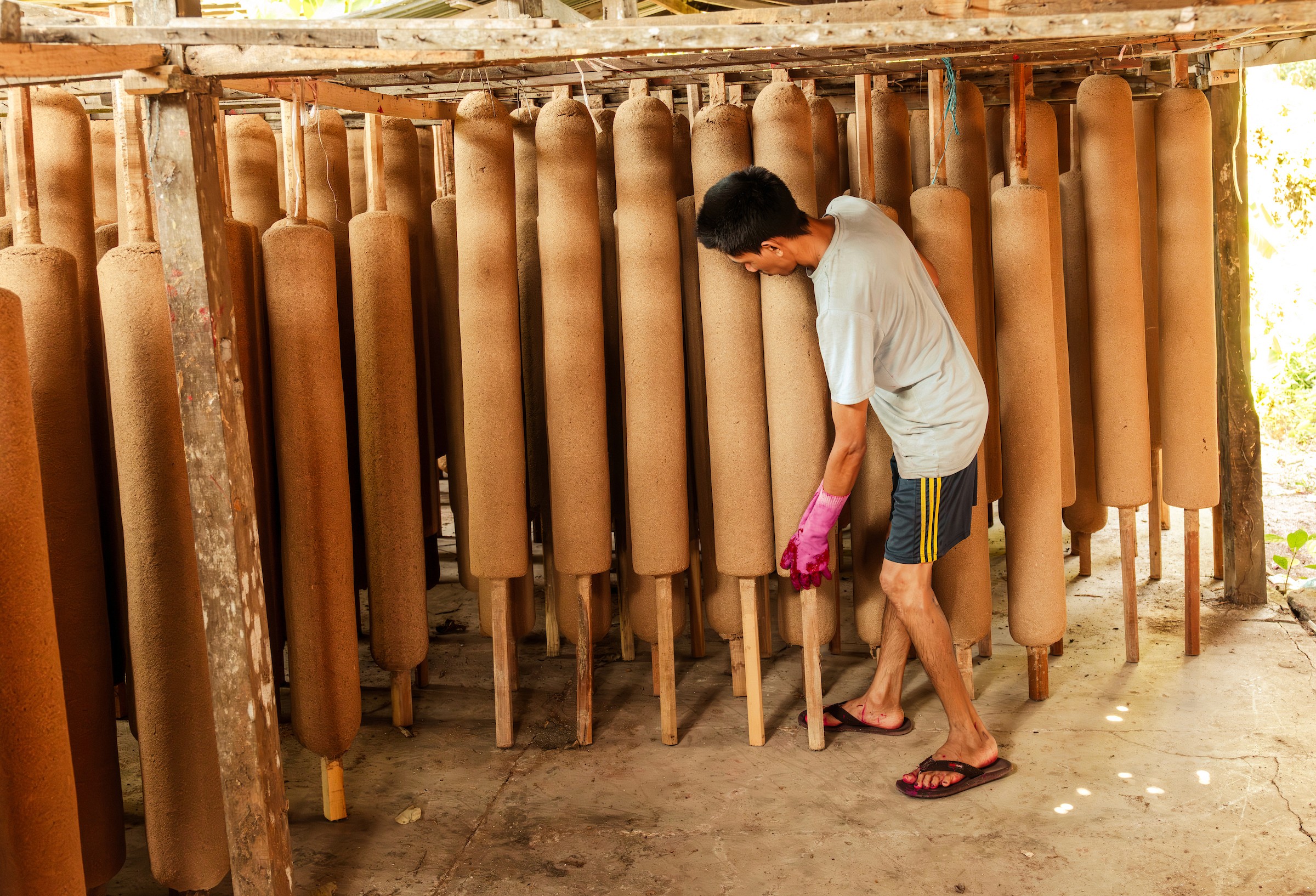
Every joss stick is made with layers of wood glue, wood dust and eucalyptus powder mixed with water. After one layer is applied, it is sun-dried and the process repeated until the layers are thick enough for that design’s purpose. (The thicker a layer is, the longer it burns and the more presence it has visually.) This all takes place with mesmerising flow and precision, highlighting a pursuit that demands patience as much as skill, and is steered by nothing – no guidelines, no templates – but memory.
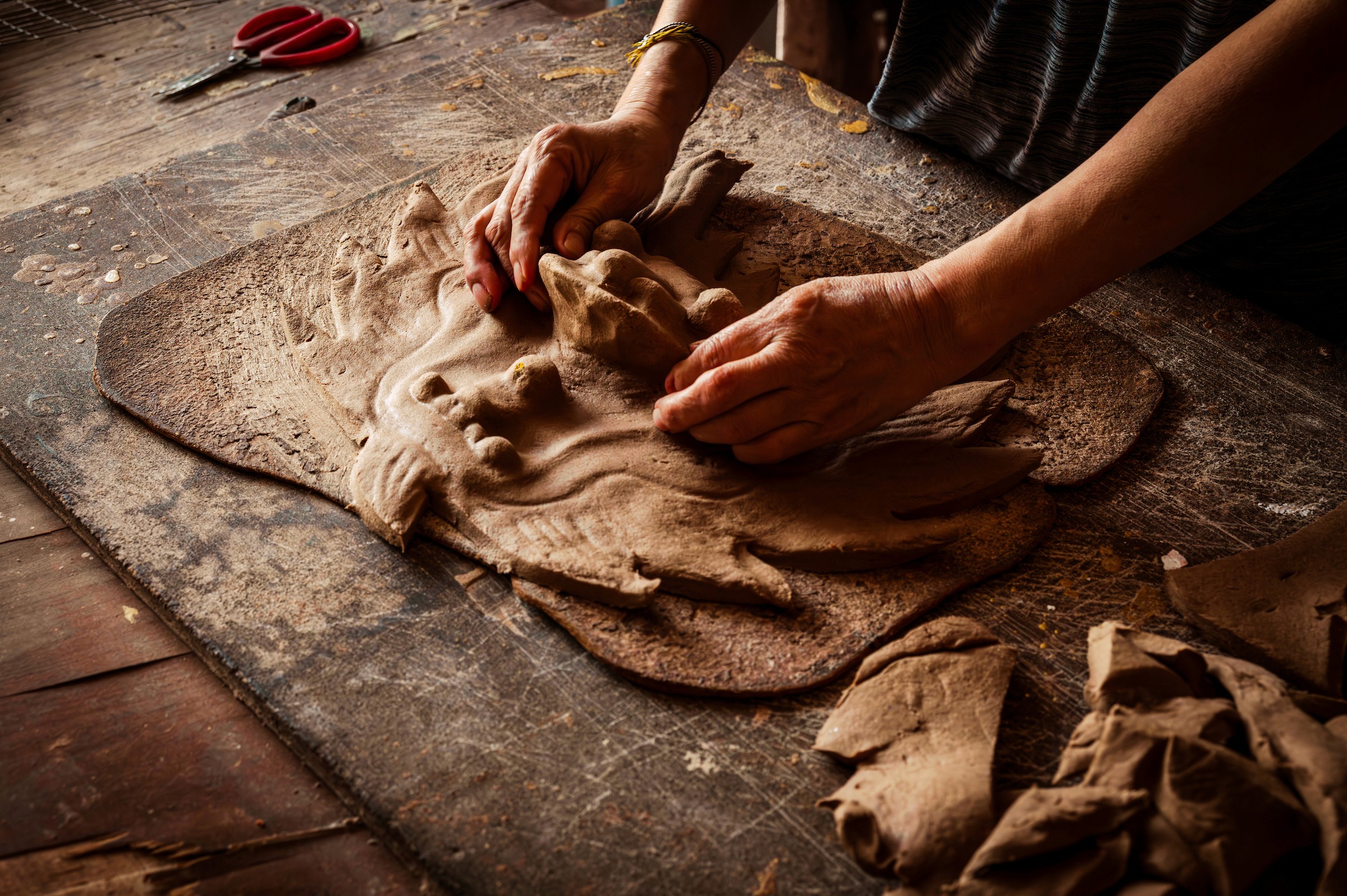
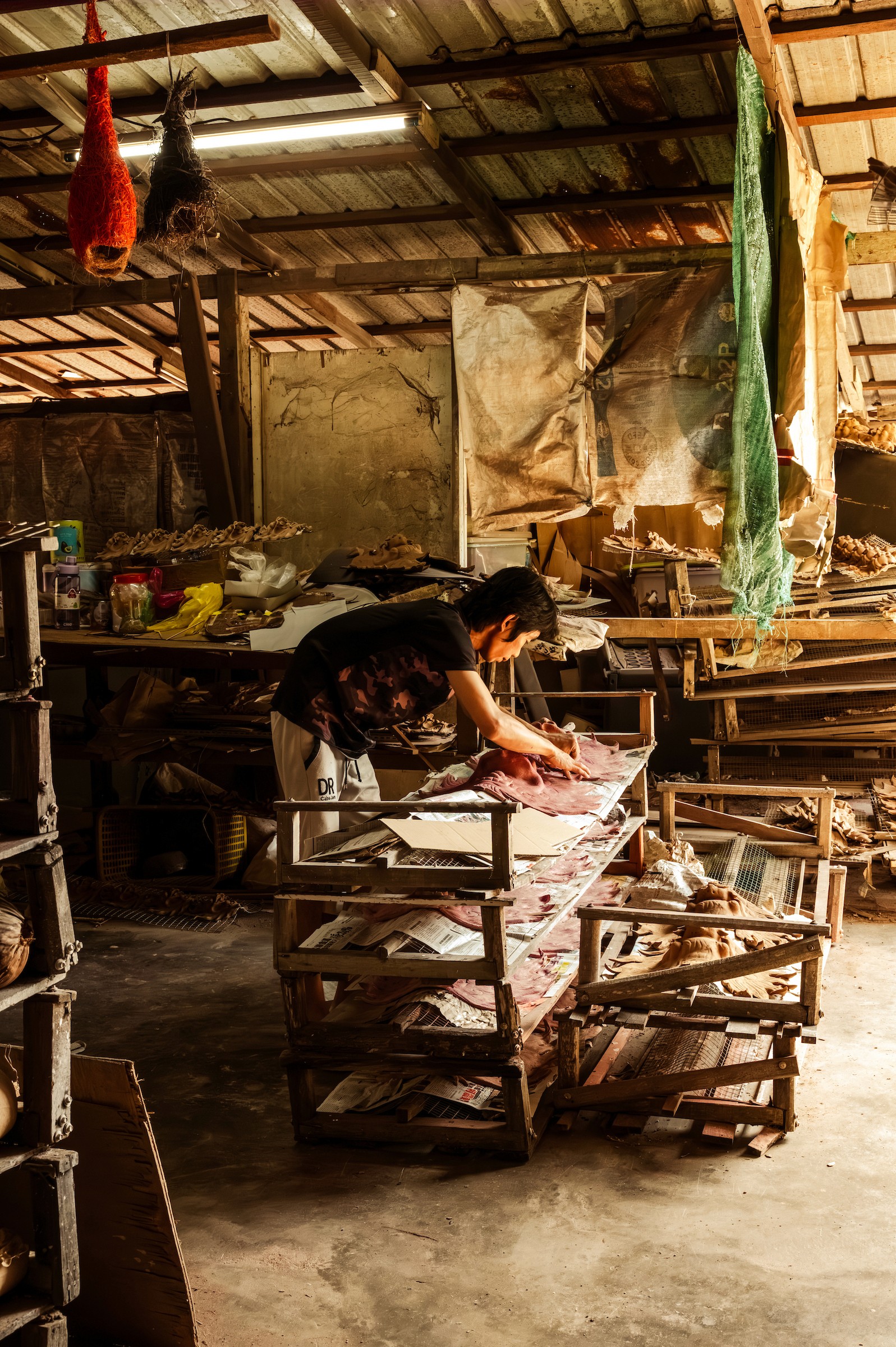
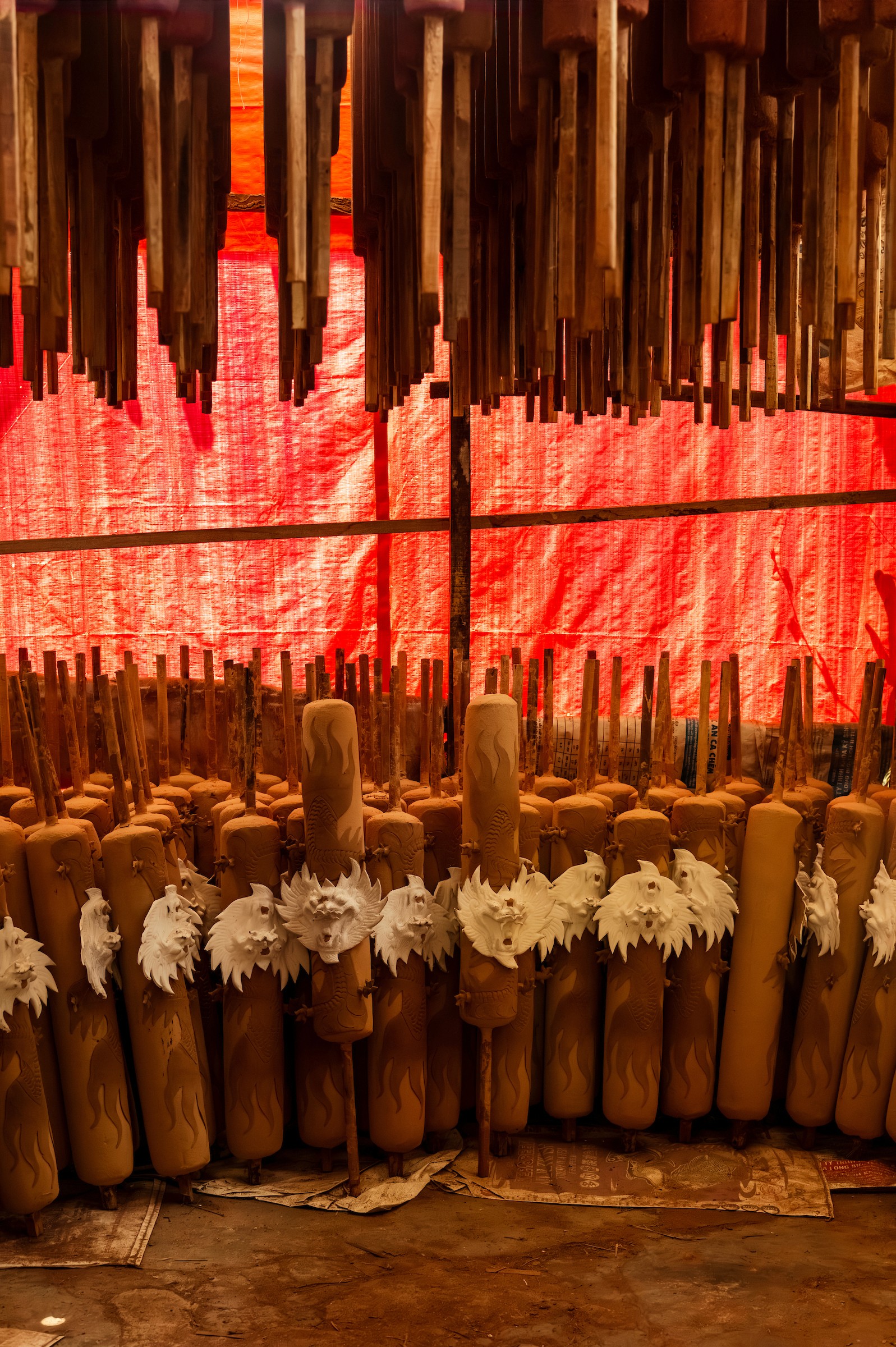
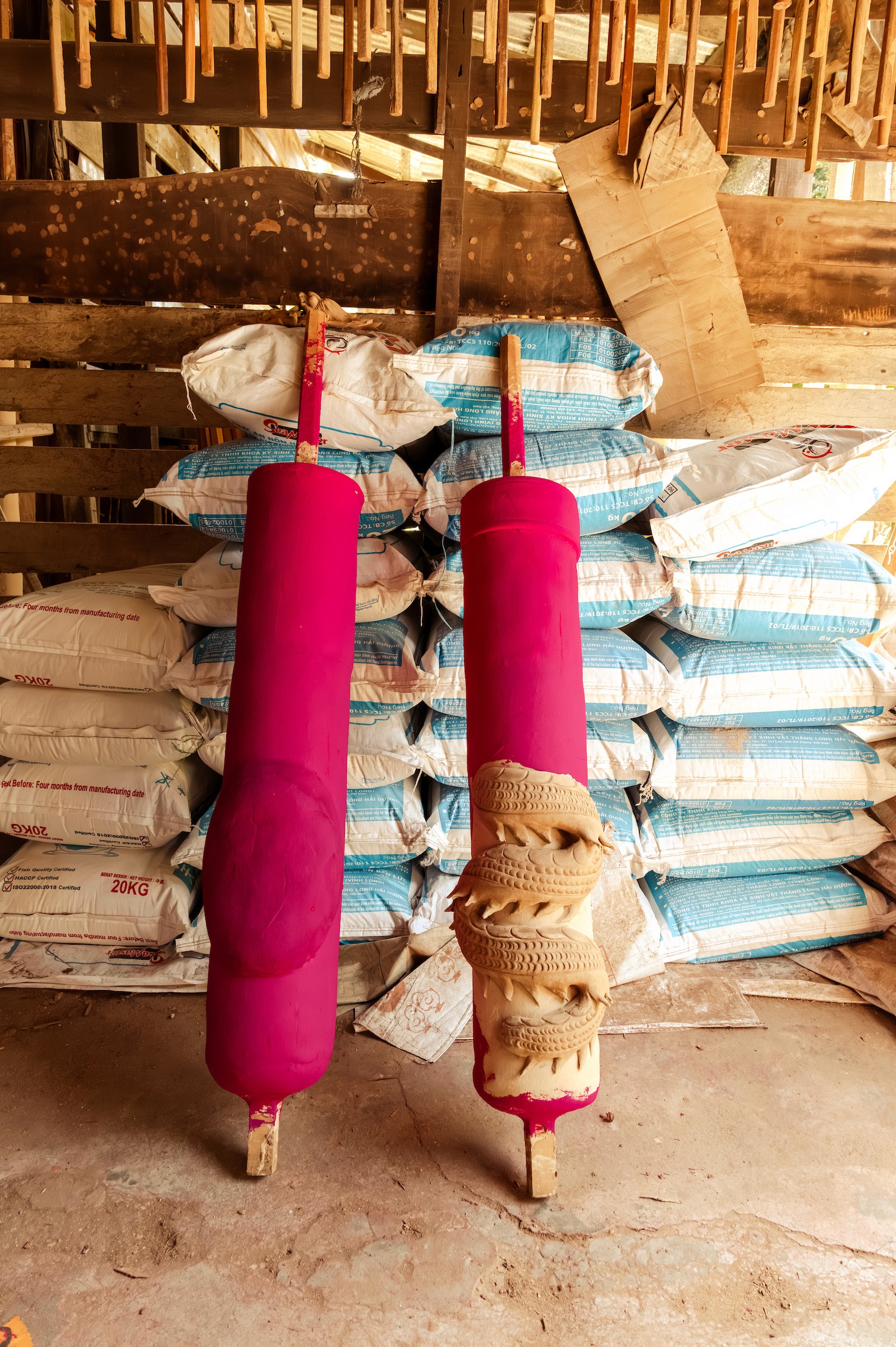
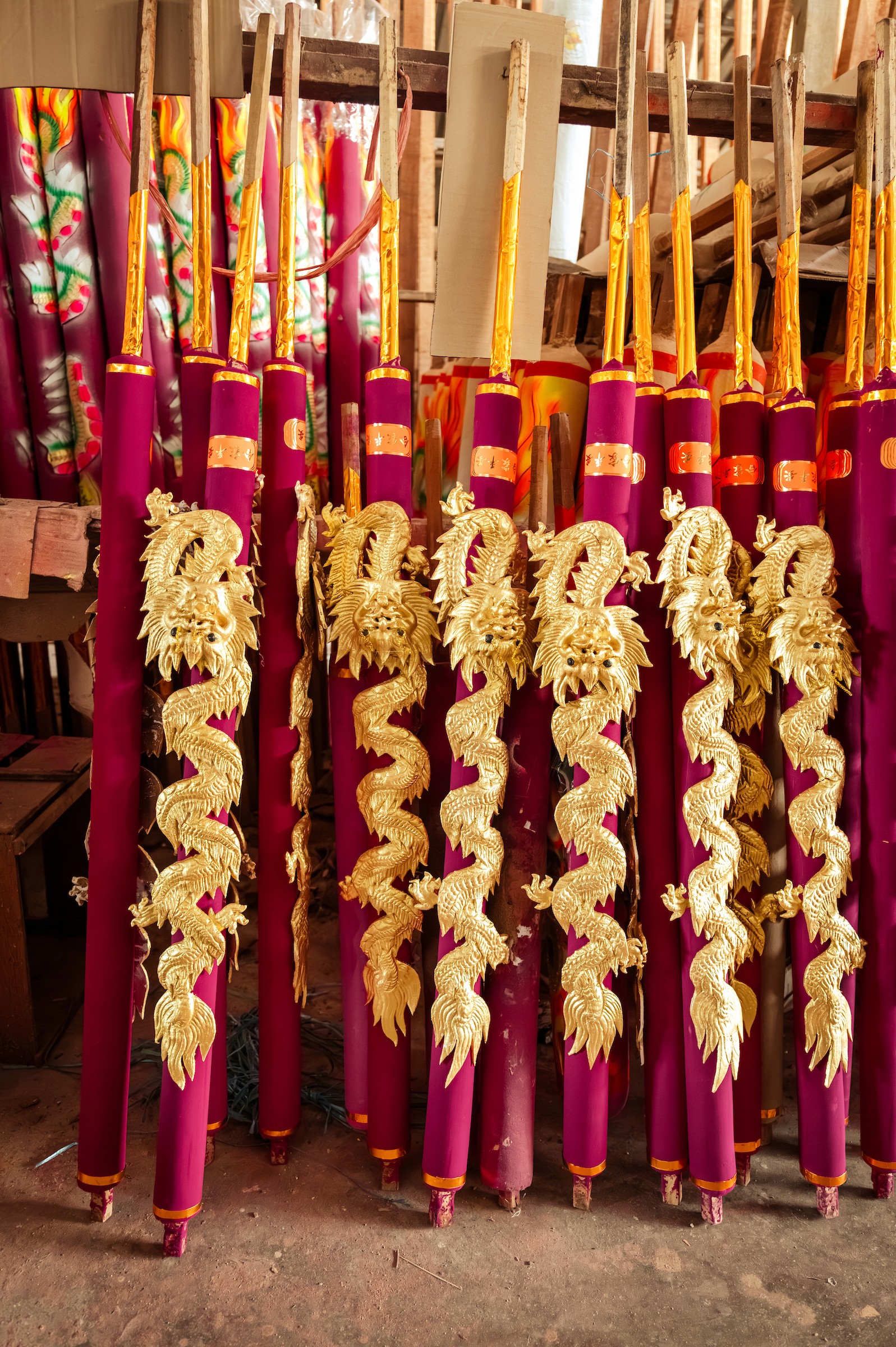
At the heart of the workshop lies its most expressive and intricate craft. Sheets of clay are hand-shaped into dragons whose bodies are then twisted and coiled around single, giant joss sticks. So ornate and vibrant are the creatures that each seems to hiss and breathe as they are wrapped around the cylinders.
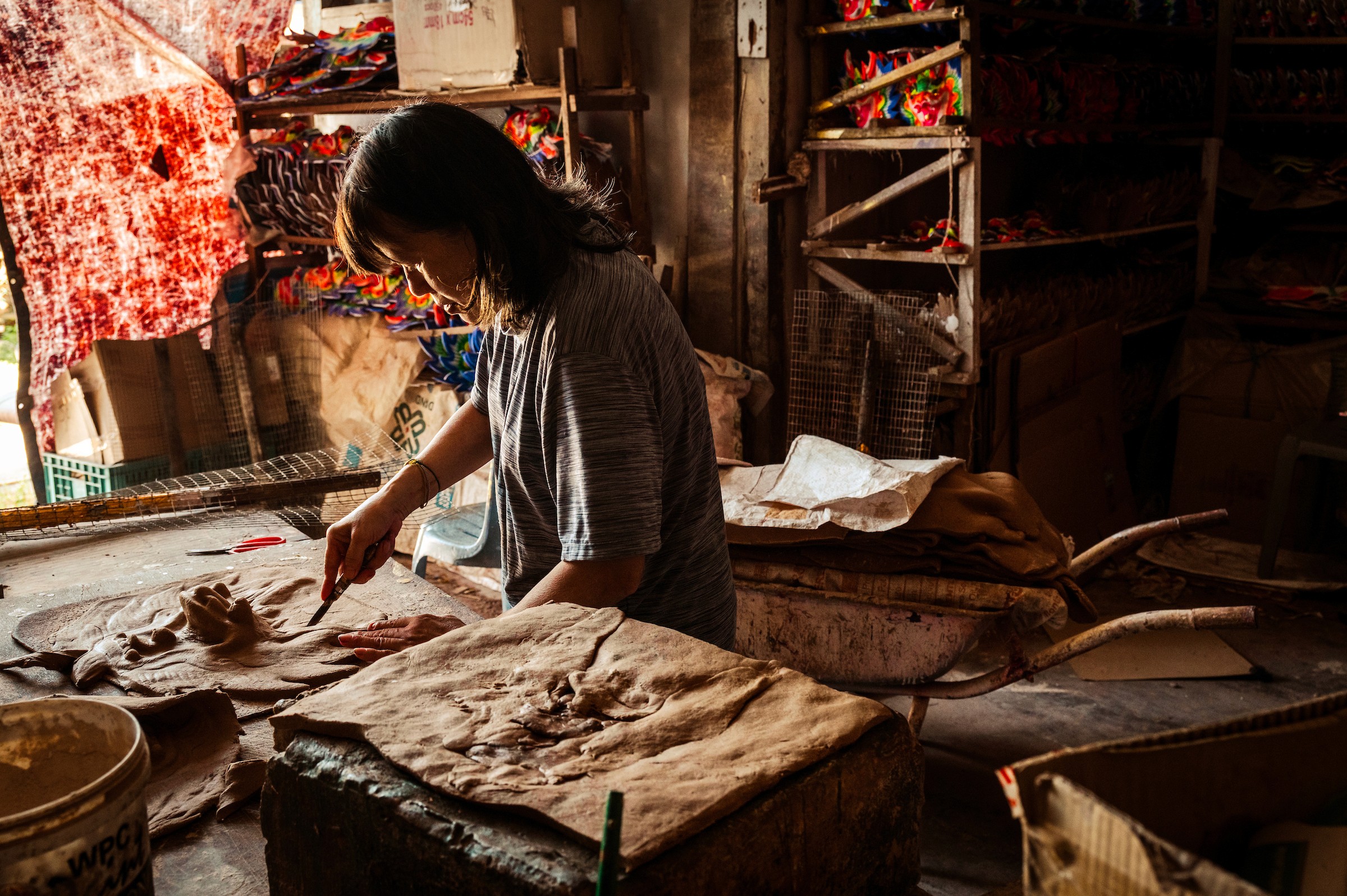
Big or small, every carefully made joss stick here carries weight and intention, qualities that matter deeply to the temples and devotees who continue to depend on Ong and his team to fulfill their orders across Malaysia and Thailand.
Photography notes
I’m drawn to stories that slip past the spotlight so I felt an urgency to photograph this place, knowing that there are few practitioners left – and even fewer spaces where the full process still exists under one roof. Visually, I found the process compelling in a very tactile way: the textures of incense dust, the aroma, the deep magenta of the finished sticks and the sculpted dragons conveying a sense of quotidian labour and grand ceremony at the same time.
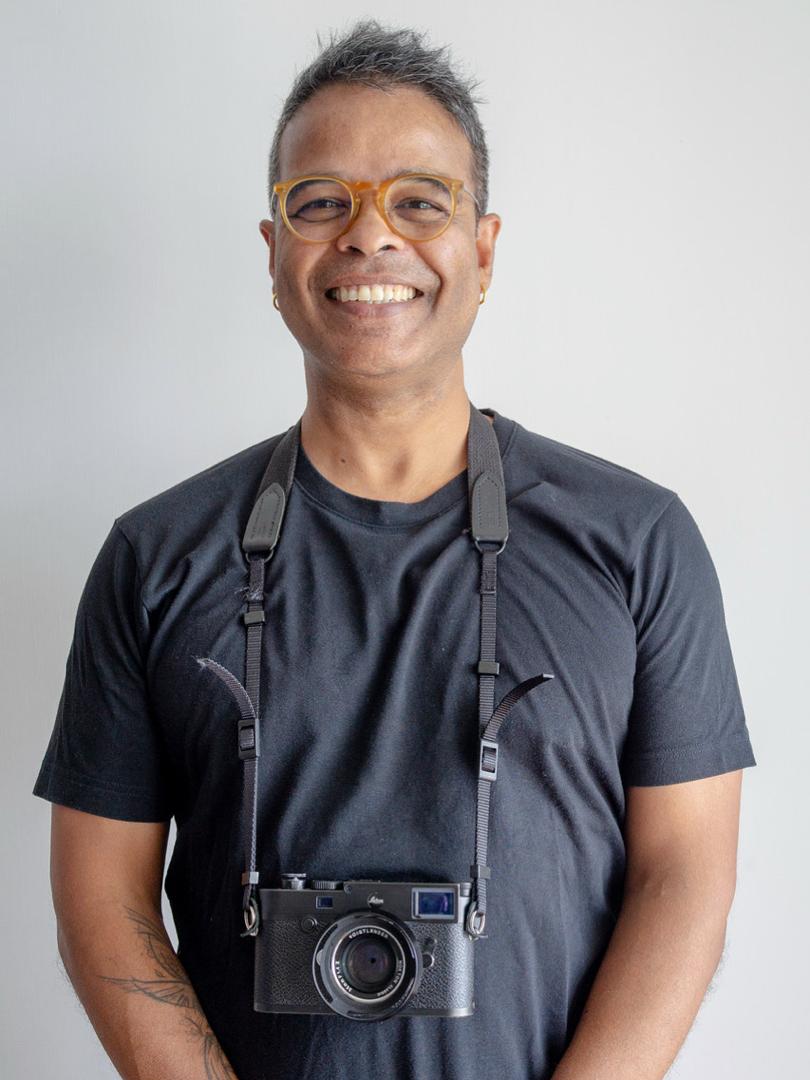
I tried to move gently during my shoot. Using a Leica rangefinder camera let me stay almost invisible, like a fly on the wall, while following the rhythm of the space.
The workers’ repetitive movements then became mine – my way of drawing out small details and bringing the viewer closer to where my subjects stand. The aim was to make the photographs feel inhabited, as if the viewer is inside the workshop, noticing the same quiet moments, and in this case, even sensing the faint aroma of incense, rather than looking at something distant that is slowly fading.
I don’t live in Penang, but I keep returning, mainly for its cultural and historical depth and for the food, of course. There’s a certain charm to the place, especially Georgetown, where layers of history and everyday life fold into each other. It’s often in these ordinary spaces, in the slow peeling back of surfaces, that something larger begins to reveal itself, and that’s what continues to draw me back.