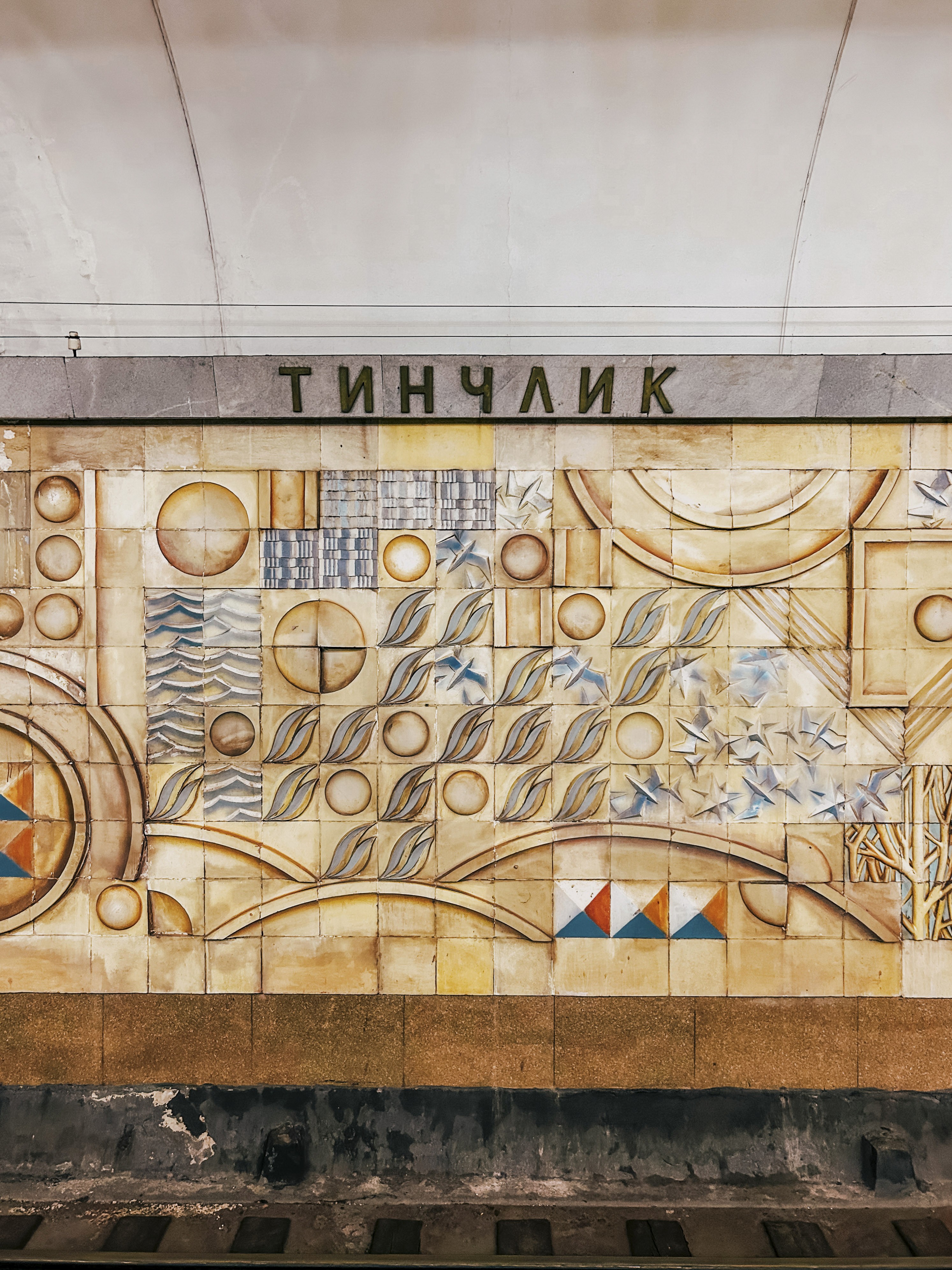
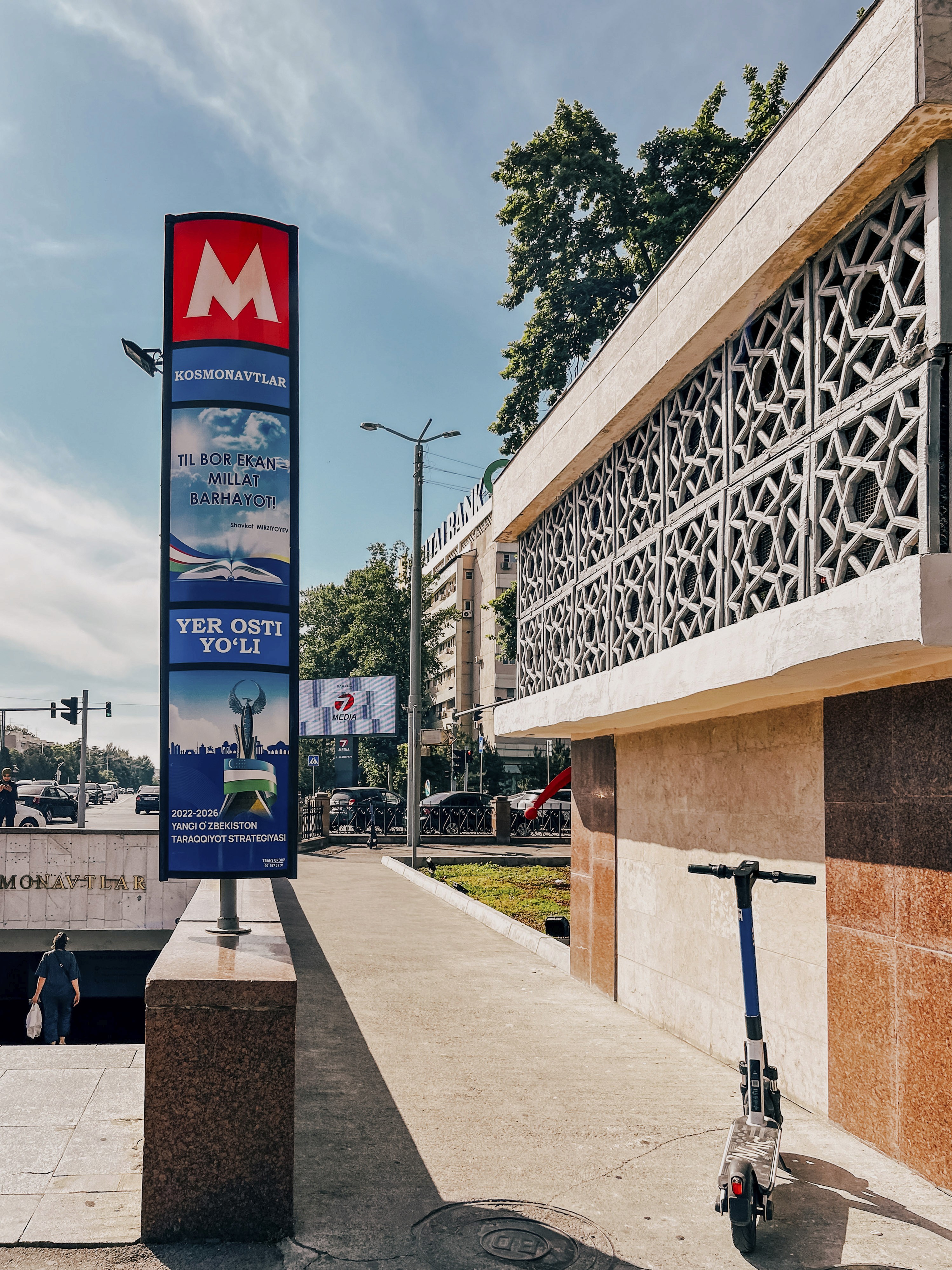
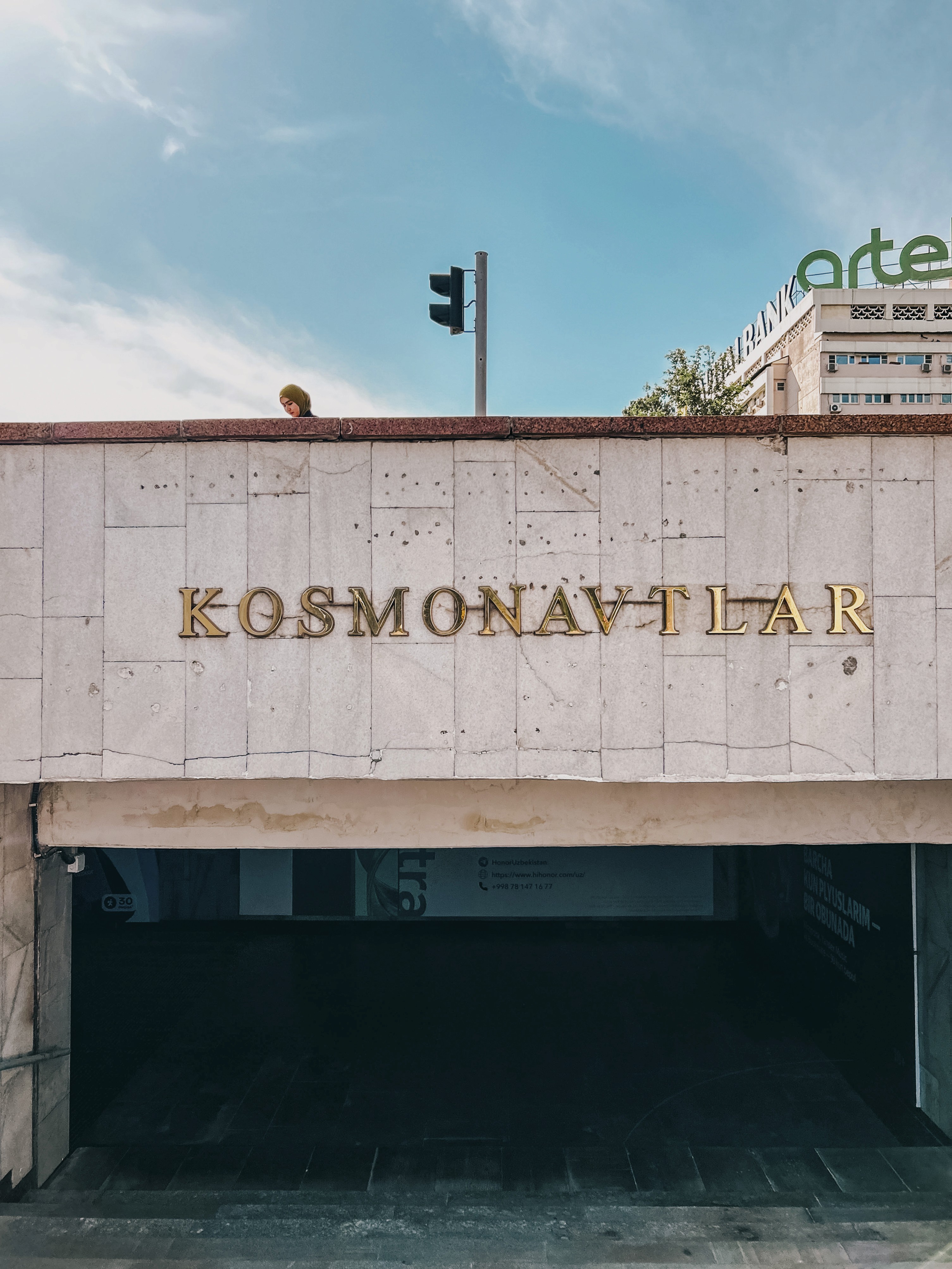
From above ground, there’s nothing to signal that the metro station is anything but ordinary. A bold “M” in red and blue marks the location, with the stop’s name spelled out in a plain font. A flight of stairs descends into the earth.
✦
Commuters pass by as they would anywhere else in the world – a suited man talks self-importantly into his phone, a group of teenagers with acne scars and braces rushes by giggling. Mothers balance shopping bags in one hand as they tug children along with the other.
Yet it is here that the ordinary begins to dissolve into one of Central Asia’s most fantastical spectacles. Once daylight gives way to subterranean lighting, you’ll see it: the ballroom-style chandeliers, mosaic-lined vaulted ceilings, ornately carved columns and richly painted walls that appear to part of a grand art gallery. Except that in Tashkent, this is just another train station.
‘Palaces of the people’
Opened on November 6, 1977, when Uzbekistan was part of the USSR, the Toshkent Metropolitani was the first subway system in Central Asia. Its construction followed a devastating earthquake in 1966, which flattened much of the Uzbek capital, destroying thousands of homes.
“The earthquake turned Tashkent into a laboratory of Soviet architecture,” says Marina Kozlova, a Tashkent-born journalist and founder of the Yep.uz website on Uzbekistan, who has spent decades reporting on the metro’s history and evolution.
At the time, the government was keen to rebuild Tashkent as a model Soviet city, positioning its train stations as ‘palaces of the people’ – which explains their elaborate design.
Still, it took years for travellers to discover their beauty because the stations, which are engineered to withstand both seismic shocks and military attacks, served as city-wide nuclear shelters during the Cold War. Their military classification meant that photography was prohibited. But in June 2018, the ban was lifted, and word spread quickly about the public transport system that resembled a museum.
Photos: Avantika Chaturvedi
Extraordinary architecture
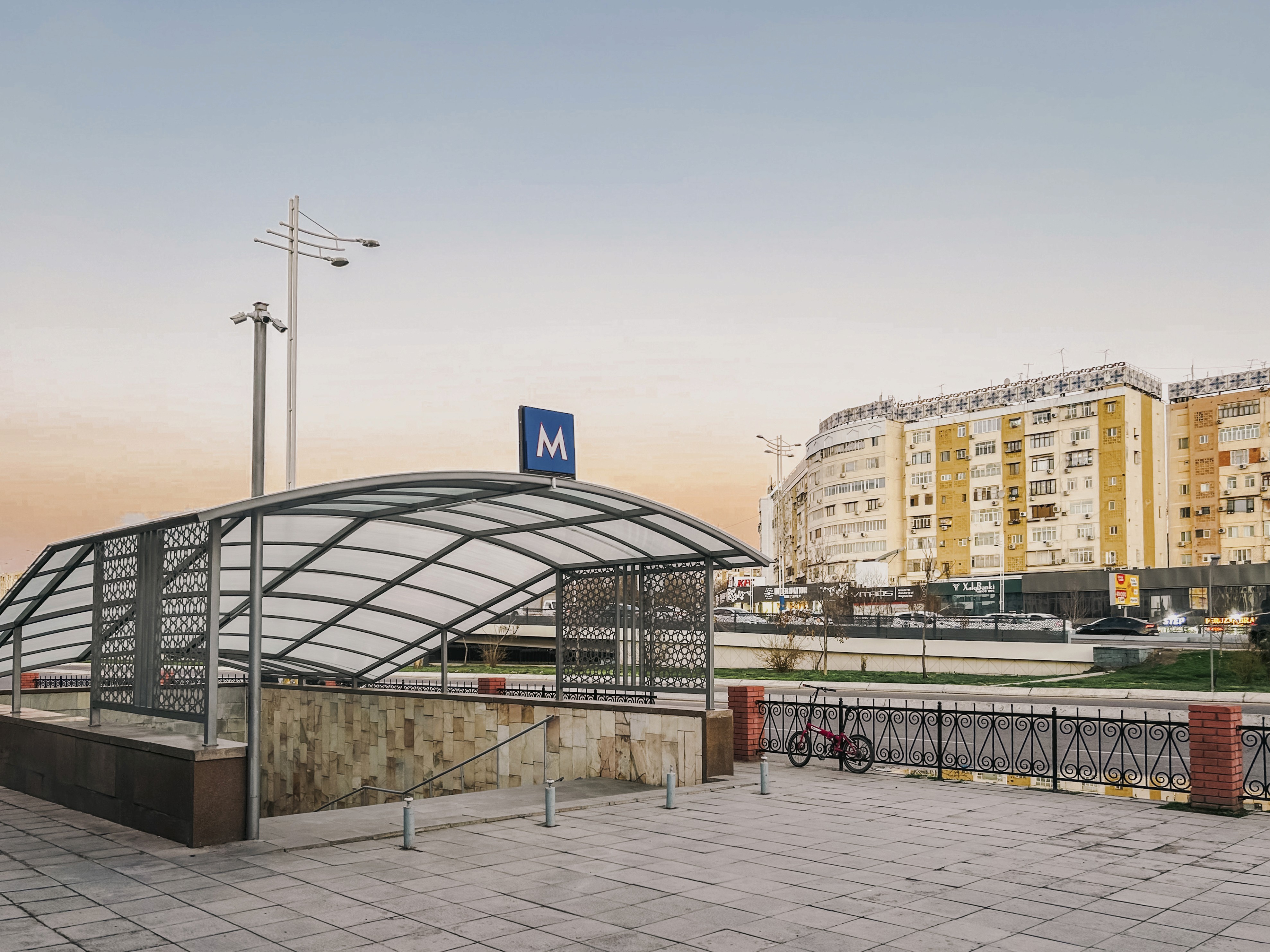
The surprise of the Tashkent Metro is that no two stations prepare you for the next. One opens beneath a honeycomb ceiling, where light filters through geometric stained-glass onto the platform below. Another blooms with chandeliers suspended like cotton balls.
On yet another platform, blue-and-white ceramic reliefs depict students and workers emerging from abstract cityscapes and orchard forms – allegories for Uzbekistan’s enduring symbols of youth, agriculture and progress.
Marina remembers opening day vividly. “I was a ninth-grade schoolgirl when it opened,” she says, smiling at the memory. “On November 6, 1977, I rode from Mirzo Ulugbek to what was then Lenin Maidoni – now Mustaqillik Maydoni – for a school performance. It felt like we were entering the future.”
The first line, the Chilonzor line, introduced an architectural language that would define the metro for decades: Soviet high modernism softened by Uzbek motifs, expressed through vernacular materials and seismic-resistant engineering.
Photos: Avantika Chaturvedi
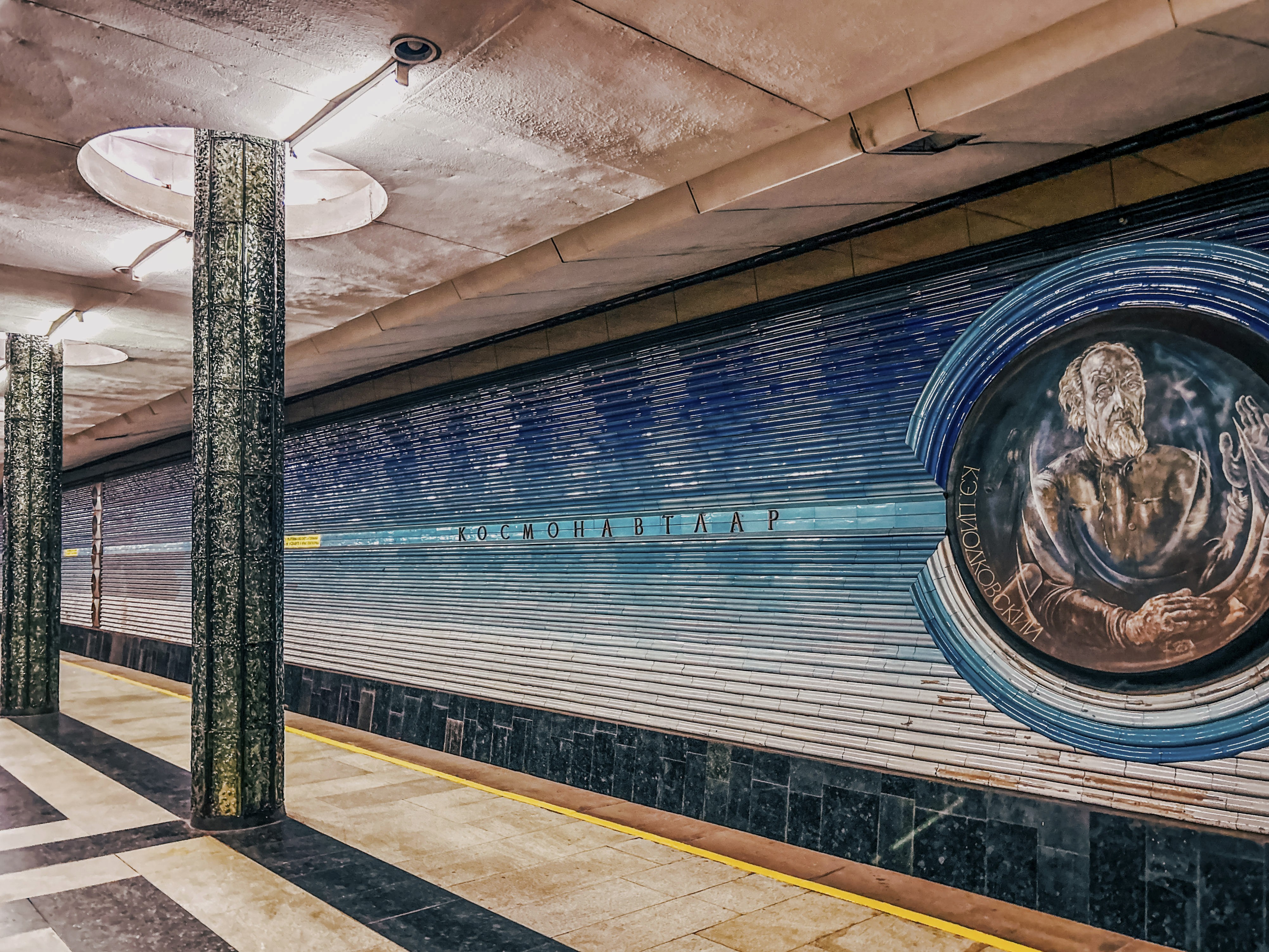
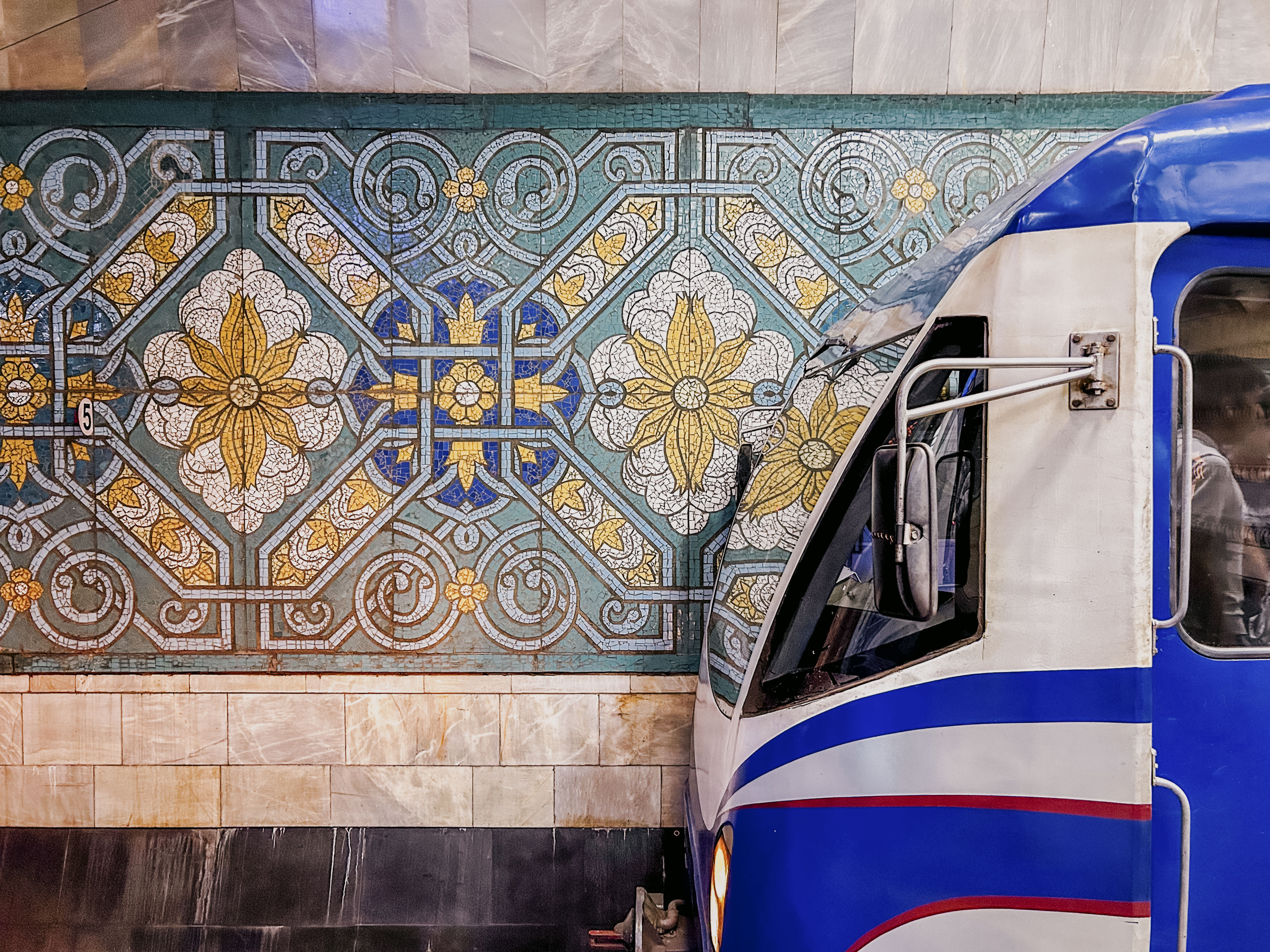
On the Ozebkiston line, built in 1984, you’ll find one of the metro’s most celebrated stations: Kosmonavtlar, meaning “cosmonauts”.
Descending into it feels like stepping into a retro-futuristic Soviet dream.
The station is washed in glittering indigo tones, with ceramic medallions lining the walls depicting figures tied to the Soviet space program: Yuri Gagarin, Valentina Tereshkova and, unexpectedly, Ulugh Beg, the 15th-century Timurid astronomer whose observatory in Samarkand once made Central Asia a centre of celestial study.
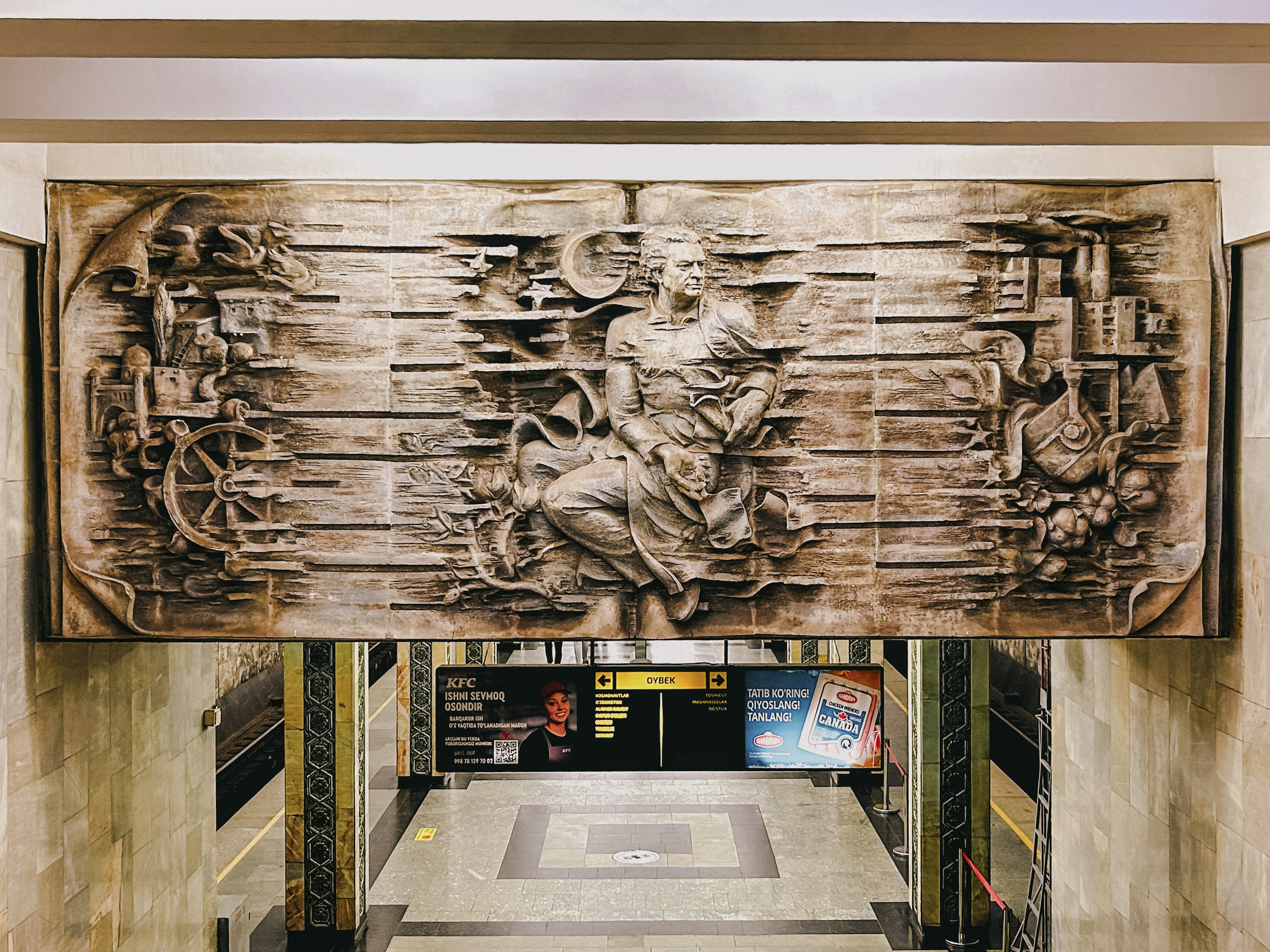
David Lowe, a photographer who has documented Uzbekistan’s architecture since 2018, calls Kosmonavtlar the station where the metro’s storytelling works most powerfully. “The design tells you exactly what it wants you to feel: the optimism and excitement of space,” he says.
Photos: Avantika Chaturvedi
The photographer, whose work has appeared in publications including the Design Museum in London, has returned repeatedly to capture the metro’s stations because of how dramatically each one shifts visual language.
“Kosmonavtlar is theatrical,” he says. “Then you arrive somewhere like Alisher Navoi just a couple of stations later, and it’s at the complete opposite end of the design scale.”
Named after the 15th-century poet considered the founder of Uzbek literature, the Alisher Navoi station borrows heavily from Islamic architectural vocabulary. Turquoise ceramic panels depict scenes inspired by Navoi’s poetry, while domed ceilings and repeating arches make the experience feel closer to a madrasa or mosque than a metro platform.
If Kosmonavtlar projects outward toward the cosmos, Alisher Navoi turns inward, drawing authority from the Silk Road past.
Stories on walls
That same negotiation between Soviet ideology and Uzbek identity appears again at Paxtakor.
The station’s name means “cotton farmer”, and its walls pay tribute to Uzbekistan’s long association with cotton – the “white gold” that shaped much of the republic’s Soviet-era economy.
Cotton motifs bloom across the station in cloudlike mosaics. Unlike the heroic imagery of Soviet monumental art, Pakhtakor remains more abstract and decorative.
At Bodomzor on the green Yunusobod Line, a station whose name refers to almond groves, things take a more futuristic turn. Here, sharp lighting structures cast geometric patterns across pale surfaces, creating a cinematic atmosphere.
“It’s inspired by almond orchards, but interpreted through light,” says David, who counts it among his favourite stations. I can see why: even at its most futuristic, the metro keeps returning to landscape, poetry and local memory.
Photos: Avantika Chaturvedi
Art for everyone
For Marina, the system ultimately reflects the Soviet socialist promise of the democratisation of art. “The idea was that monumental art, beautiful design and high-quality materials should belong to ordinary working people just as much as they belong to elites,” she says.
Marble, ceramics, chandeliers and stained glass – none of it was intended only for private galleries.
Today, that vision remains intact, best seen at Mustaqillik Maydoni, one of the metro’s grandest halls. Marble columns rise beneath glass chandeliers, giving the atmosphere of a ballroom below ground.
And yet trains continue arriving every few minutes. Office workers lean casually against marble columns. Schoolchildren wait beneath chandeliers without looking up.
Perhaps that is the metro’s most remarkable quality: how extraordinary spaces become effortlessly ordinary through repetition.
For visitors, though, the effect remains startling. A single metro token (costing just 3,000 Uzbekistani som – roughly $0.25) buys entry into one of the most unusual art collections in Central Asia, spread beneath the city itself, with each station a lesson on how Tashkent simultaneously imagined its future and remembered its past.