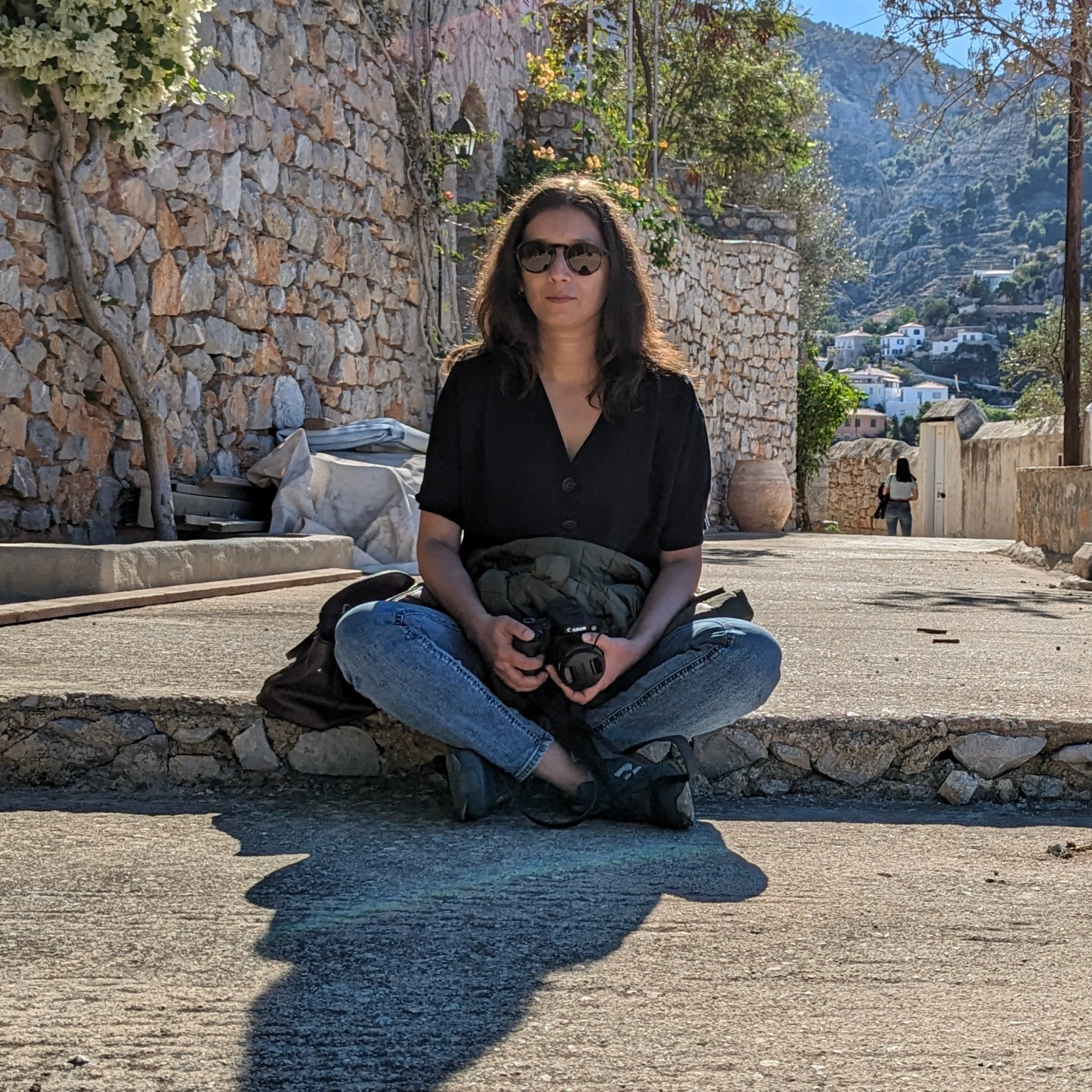
A city can be a beast and an angel, depending on your personal experiences – especially during your formative years. When I was growing up, Delhi was to me a giant beast devouring its own ethereal beauty, lush greenery and layered history, because I never really felt safe there.
✦
That India’s capital – even if it is striving to do better – makes women feel painfully vulnerable is a fact; something well-documented in national and international media. Stepping out on my own, especially during my college years, which involved using public transport, was dreadful because I faced a lot of sexual harassment.
Most girls around me felt the same way. It was just ingrained in us to always be careful. And having to constantly look over your shoulder doesn’t leave one room to experience much else, to be honest.
In 2005, immediately after graduation, I escaped to Mumbai to pursue higher education. After that, Delhi became to me just a place where my folks lived.
Then some years ago, a friend asked me to meet her at Khan Market. I had never been there before, even though it’s well-known and centrally located, surrounded by landmarks like Humayun’s Tomb, Lodhi Garden, India Habitat Centre and Lodhi Art District.
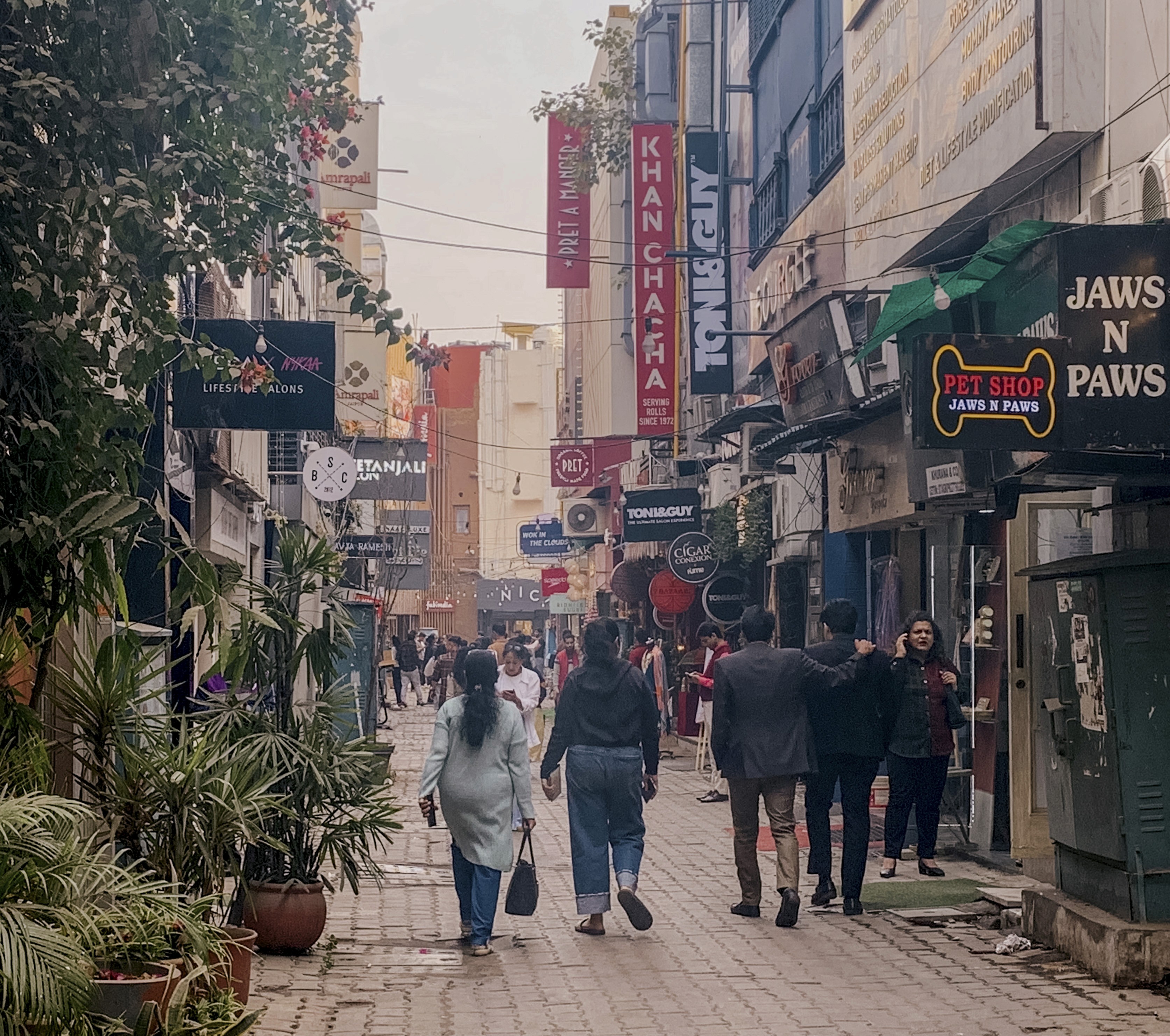
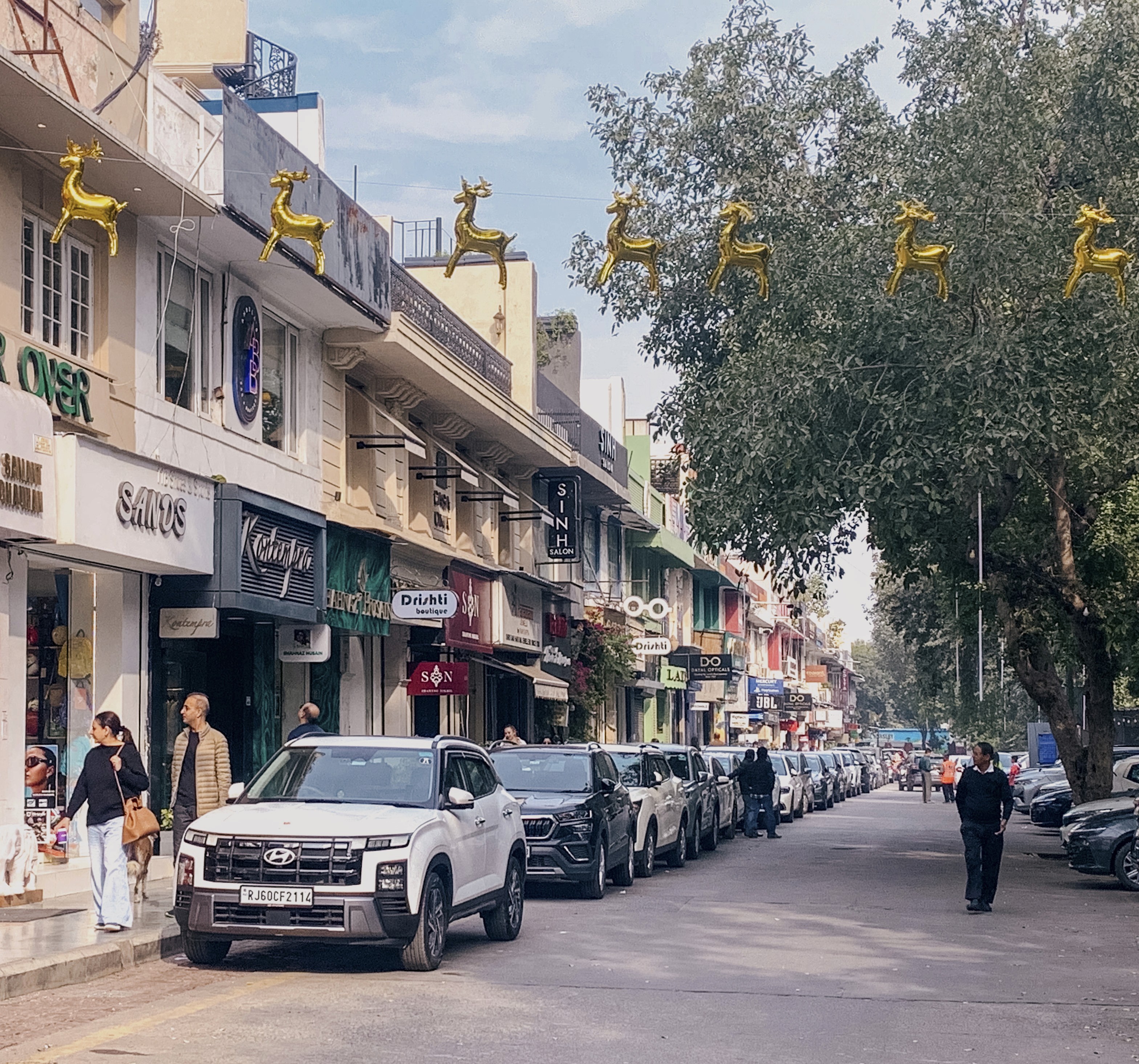
Once I moved past the messy parking area and incessant honking to enter the space, I found myself surrounded by an instant sense of intimacy. This isn’t a shopping mall, cocooned from the reality of the city, nor is it on a road where traffic presses in from all sides. At its entrance, the market opens into a gentle U-shape, with the inner lane being a pedestrian stretch. There’s something comforting about that geometry because you’re still aware of the city around you, but not overwhelmed by it.
After my friend and I had spent a morning catching up at Perch Wine & Coffee Bar (which, as its name suggests, has a wonderfully extensive selection of wine and coffee), she left. Then I did something that I usually don’t do in Delhi: I loitered.
‘Loitering’ is rightly considered a defiant act for women in many parts of the country, but especially so in Delhi, where women live with a pervasive sense of not feeling safe.
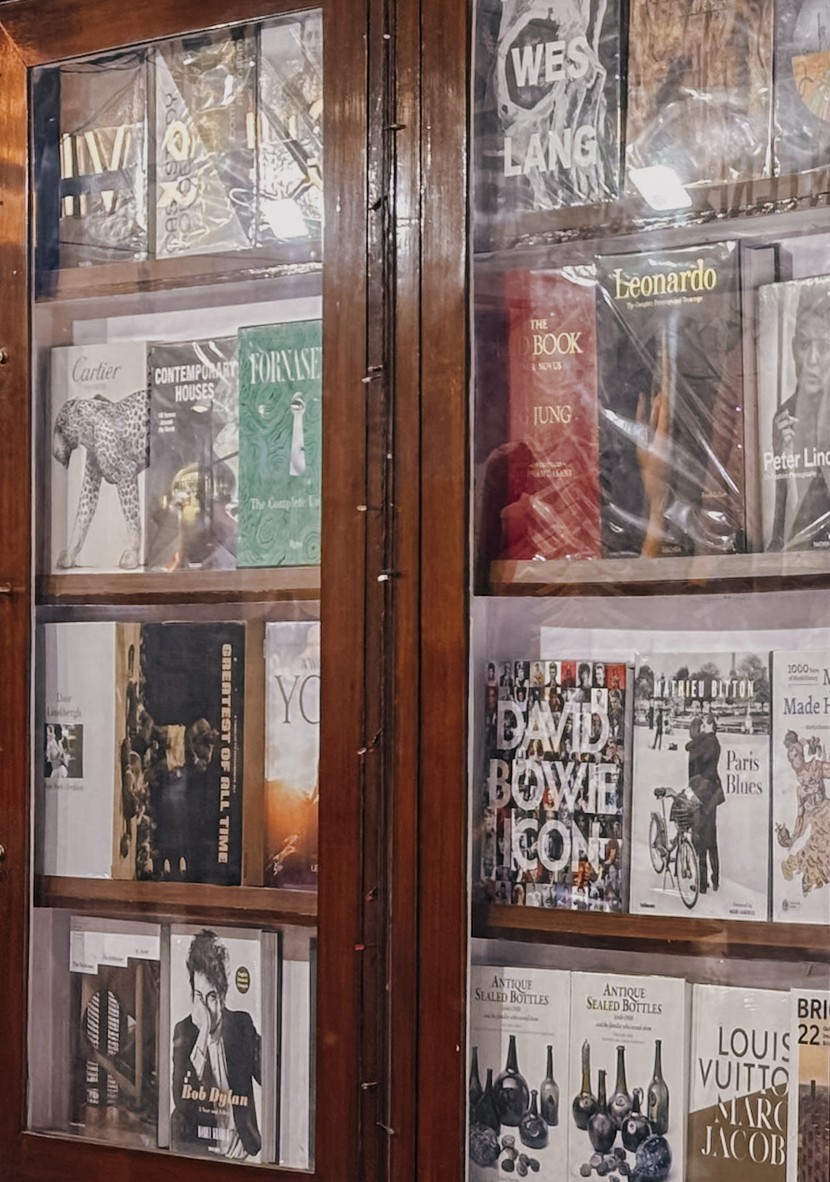
I entered Bahrisons Booksellers, which was more crowded than I expected on a weekday afternoon. There were people browsing the shelves and others enquiring about specific titles. A few were talking to the person at the payment desk as if they were really good friends. I could sense that the store had old but strong bones, and if you were curious, it would reveal many wonderful stories and secrets beyond its pages. Once I stepped out, the generous winter sun and my curiosity kept me company as I explored more of the market.
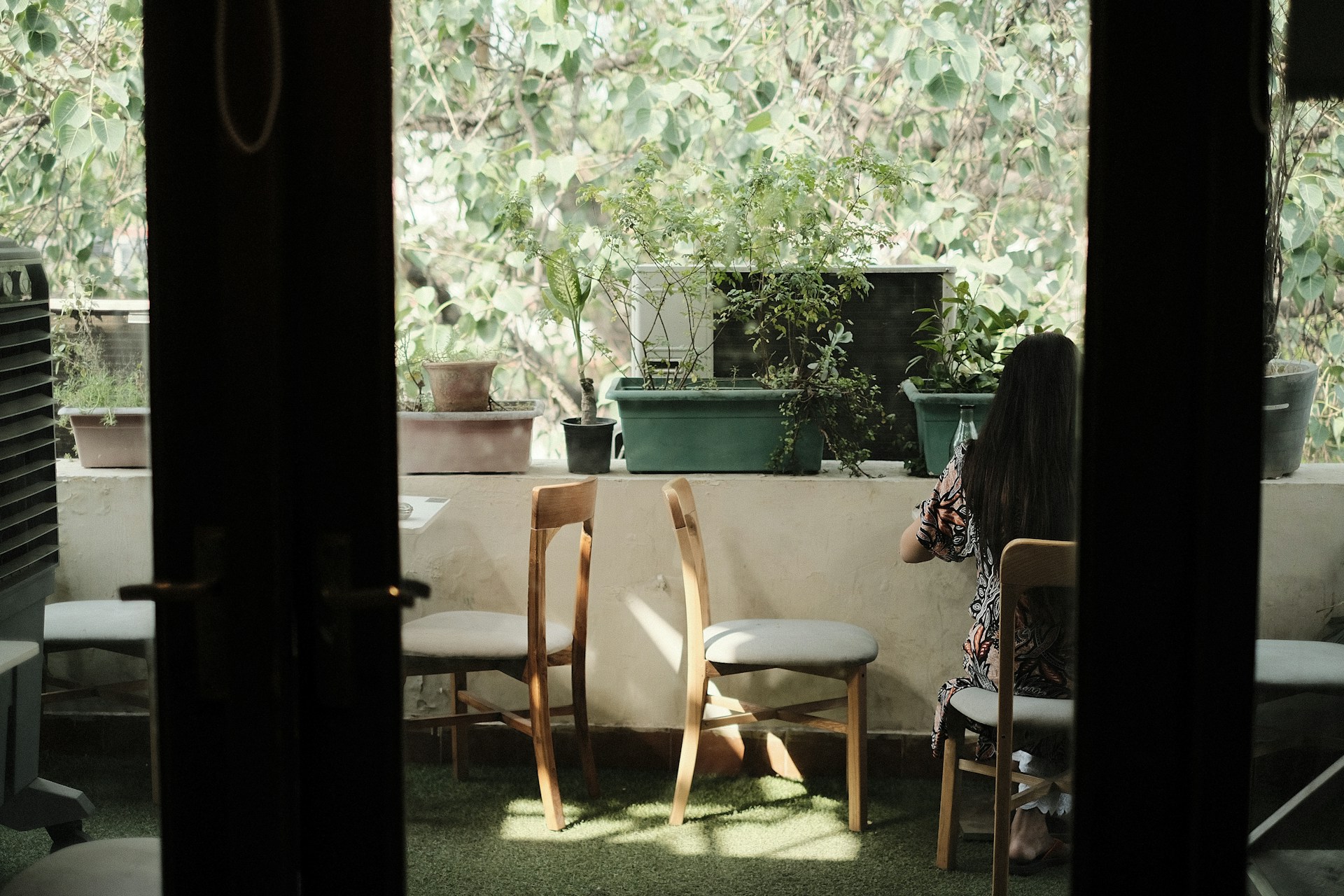
Photos: Ravi Sharma, Payal Khandelwal (middle, right)
Solace for the soul
Khan Market has since become my sanctuary in Delhi. Some of its stores have become my favourite hangouts, whose stories I have discovered over time. Bahrisons, for example, was established in 1953 by Balraj Bahri Malhotra with his own collection of a thousand-odd books. There’s even a book about its history called Bahrisons: Chronicle of a Bookshop.
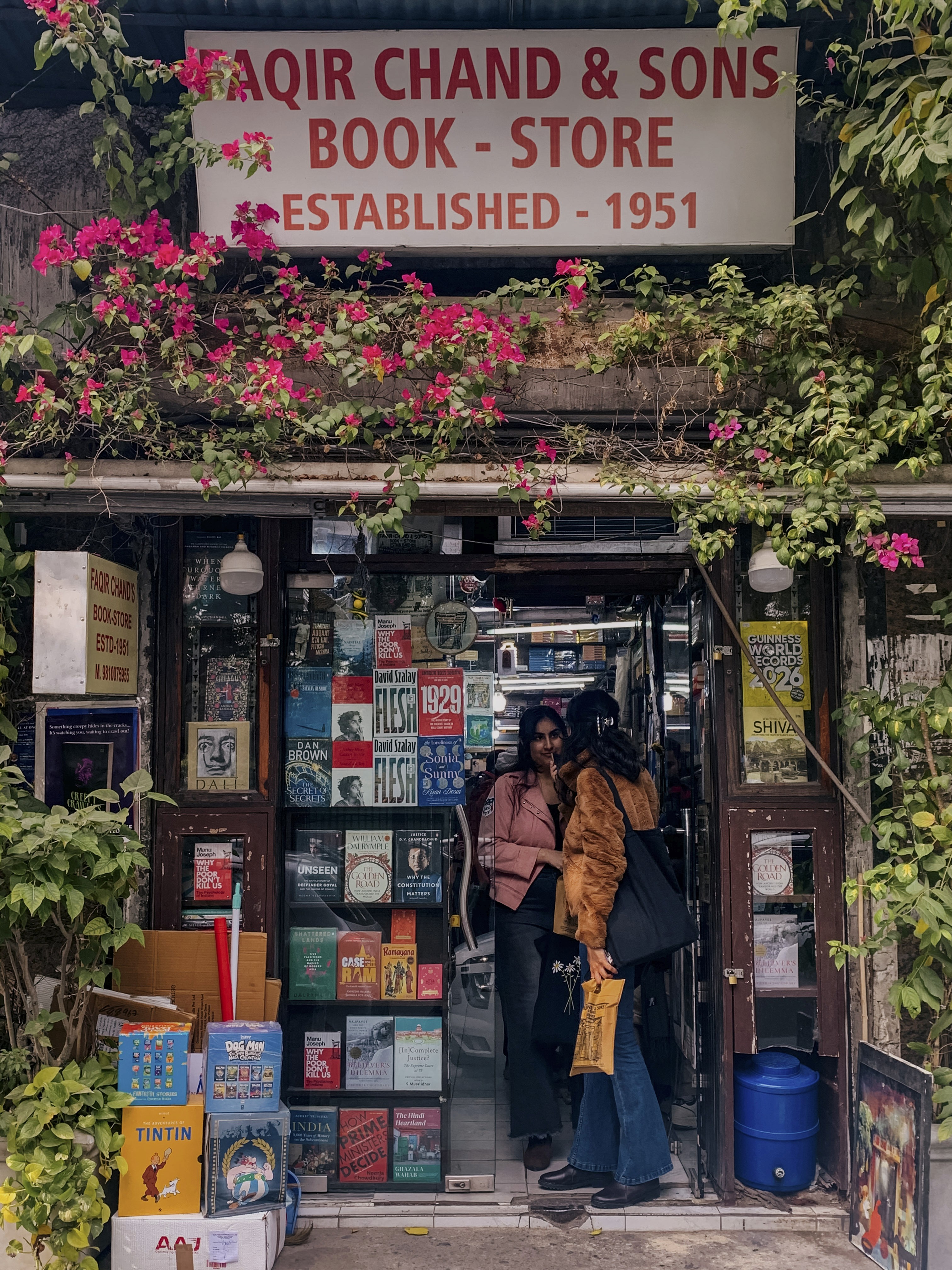
Then there’s the Faqir Chand bookstore, a small rectangular space where the shelves stretch from bottom to top, so close together that you literally walk between walls of books.
It was opened in 1951 by bookseller Faqir Chand, who moved to India from Peshawar, Pakistan, after Partition. The store is still in the family and is now run by Faqir’s great-grandson, Abhinav Bamhi.
Both Bahrisons and Faqir Chand carry an extensive range of books, but offer very different experiences. At Bahrisons, everything seems curated and thoughtfully arranged. Faqir Chand is stacked higgledy-piggledy with towers of books, and browsing feels like a treasure hunt. I’ve found some of my most cherished Urdu poetry books here, many of which come with English translations.
Photos: Payal Khandelwal, Sehajpal Singh, Payal Khandelwal
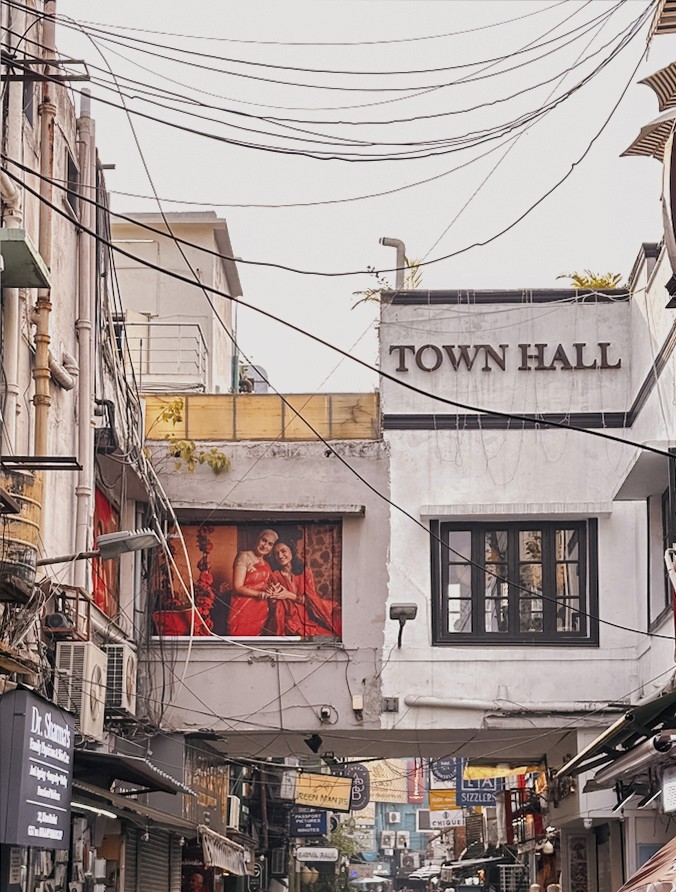
Over time, my curiosity about the market extended beyond its shops to its origins. Khan Market was set up by India’s Rehabilitation Ministry to provide economic opportunities and residential housing for the refugees, mainly those who had migrated from the North-West Frontier Province following Partition. The original U-shaped, double-storey complex was named in honour of freedom fighter Khan Abdul Jabbar Khan.
History and high fashion
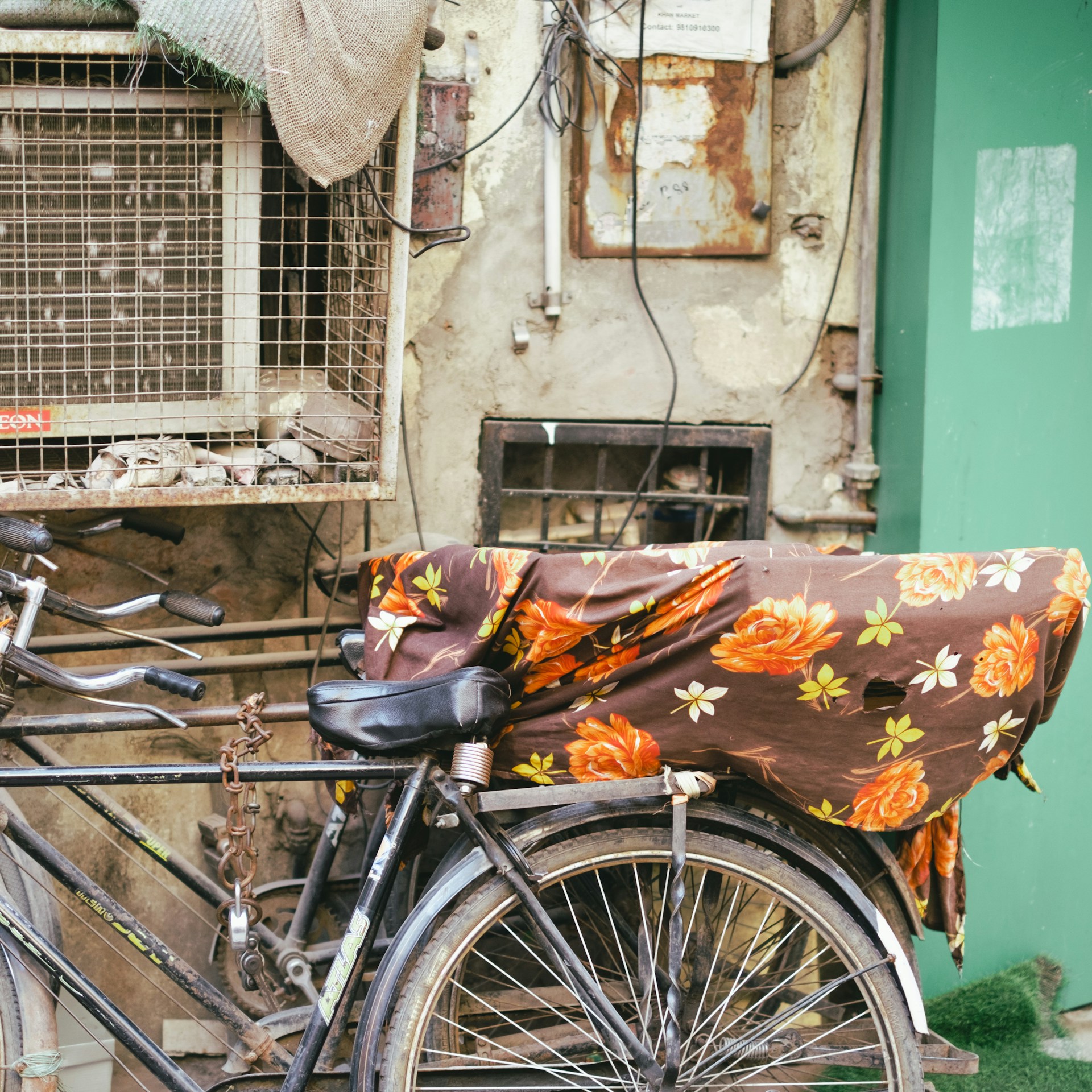
Most of the families who lived here have now moved out, and the place has transformed into a commercial market notorious for Delhi’s highest retail rents, with many higher-end brands, premium grocery stores and sophisticated eateries opening shop in recent years. All of this is interwoven with smaller stalls that proudly display their wares outside.
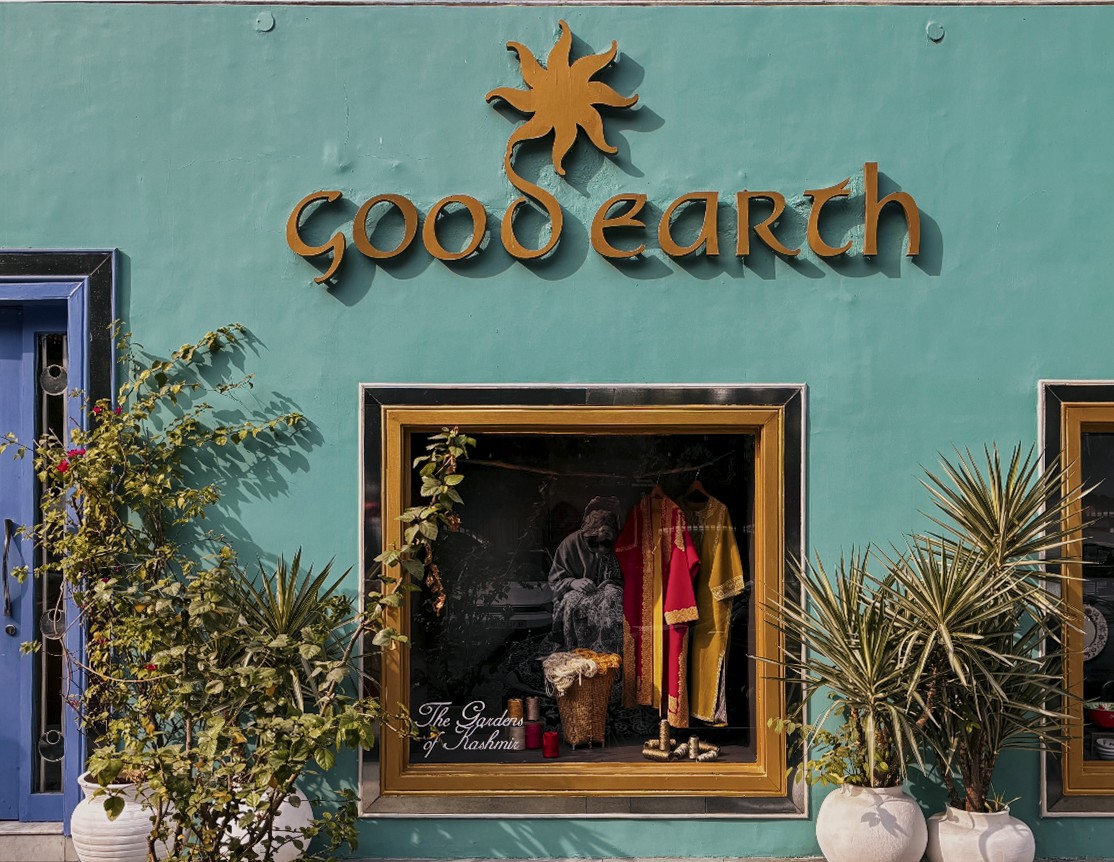
Apart from the two iconic bookstores, I love the stores that celebrate Indian craft and design with a contemporary outlook, including Good Earth, Nicobar, Anokhi, and Fabindia.
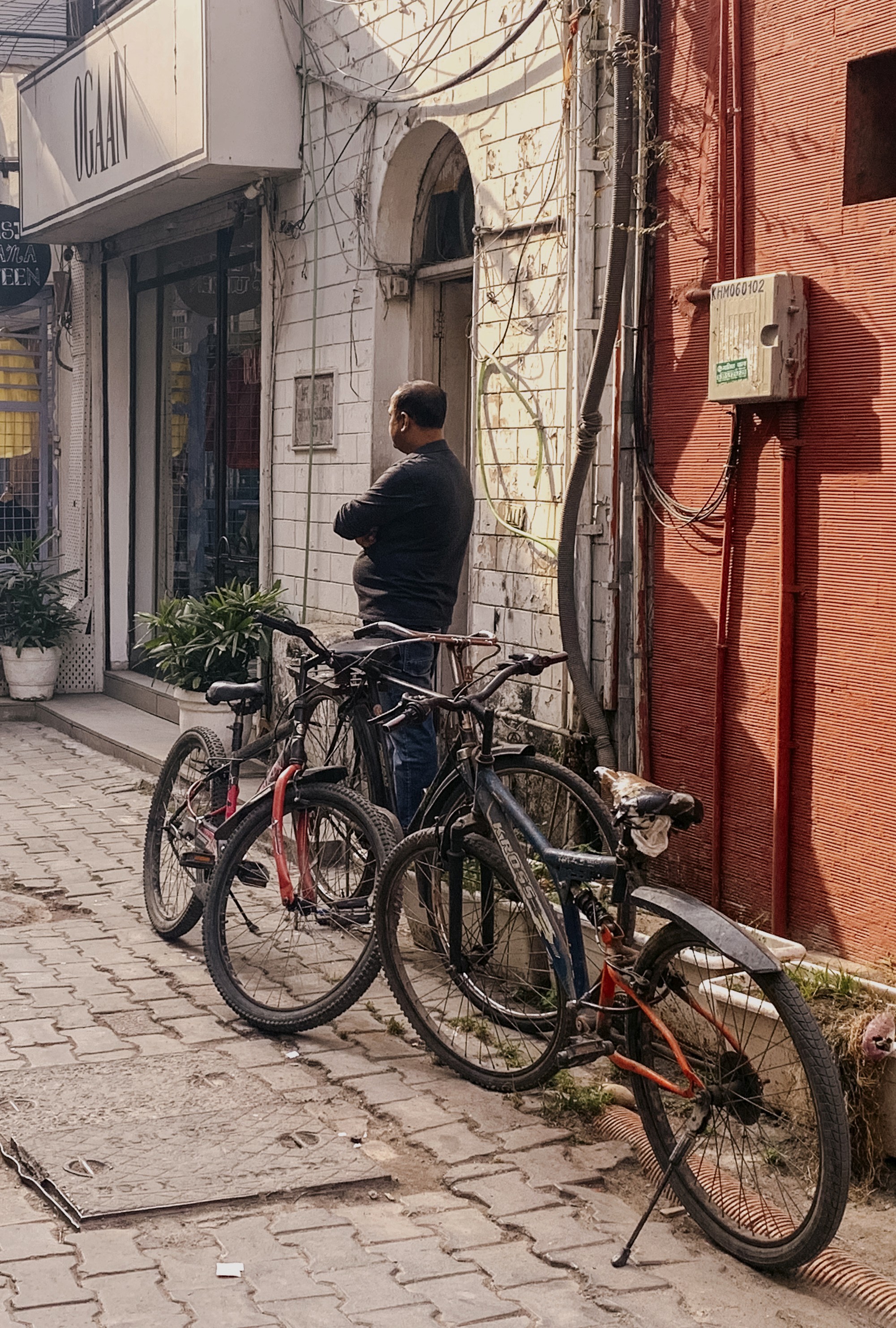
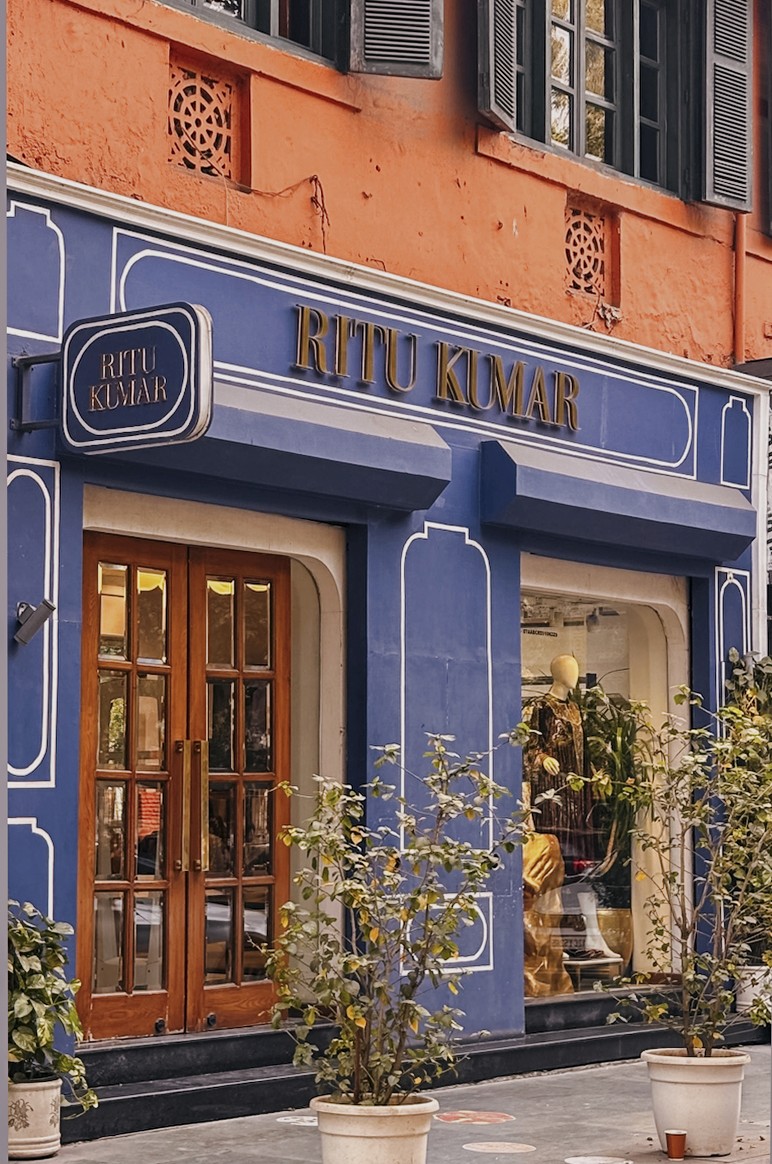
Ogaan is a boutique store with clothes from various Indian fashion labels. Renowned Indian fashion designers Ritu Kumar and Ranna Gill have a presence here too, wedged between homegrown accessories and beauty brands like Hidesign, Forest Essentials, and Kama Ayurveda.
Khan Market also houses a Shahnaz Husain store, a pioneer of ayurvedic herbal beauty in India, whose products I first encountered on my mother’s dressing table as a kid. Nimai and Minerali source eclectic jewellery from independent makers across the country. And for stationery lovers, Anand Stationers is a gold mine. It was also established in the 1950s and has transitioned from block-printed textiles to sustainable handmade paper, packaging and custom stationery for a new generation of customers.
Photos: Payal Khandelwal
Like magic, the market’s multitude of experiences have a way of contracting and expanding to fit any timeframe. Even if you have just a couple of hours, you can browse through the entire area quite quickly. However, some days, I’ve ended up spending an entire day here with leisurely breaks for coffee, food, books and daydreams.
I’ve also shared some very special moments in its company and with people close to me. Once, my mother was going through a difficult time because one of her close friends had passed away. I took her to Khan Market for a change of scenery, where we sat at Latitude 28, a café tucked above the Good Earth store, sharing a pizza and a pot of hot tea. Slowly, my mother started to look calm, which meant the world to me. It’s now a ritual for us to go to the market together whenever I am in the city.
An evolving landscape
Needless to say, there’s that constant dichotomy, the chaos intrinsic to many neighbourhoods of modern India, that echoes throughout the market.
You notice it in the small, everyday moments: a stall owner taking a break, having a cup of tea and clutching a cigarette. A group of youngsters posing for selfies outside Faqir Chand’s gorgeous, bougainvillea-lined entrance. A woman claiming a corner to sit and enjoy her book in crowded Bahrisons. A stray dog being cared for by the local shopkeepers.
And then you remember that this is one of the most expensive markets in the world, even if the overall condition of the infrastructure leaves much to be desired. For every long-time owner who gives up their space, a larger commercial brand muscles in. And with every day it’s evolving.
What will determine the market’s future charm is whether it can retain its character and memory. A large part of Khan Market’s appeal lies in its community of multiple homegrown brands and local shops, so many steeped in history. Bookstores like Bahrisons and Faqir Chand, along with legacy shops like Anand Stationers, help the market retain its memory even when so much of the past is being shed. They remind you of what the place once was, even as it shapeshifts into what it is becoming.
For me, though, the connection with Khan Market remains personal. For a long time, I had no inclination to even try to rediscover Delhi. Of course, when I began returning as a more confident and privileged adult, my experiences of it softened a bit – but Khan Market was the first step in in my journey to repairing and rebuilding my relationship with the city.