✦ Phu Quoc, Vietnam's largest island, is undergoing rapid tourism-driven development ahead of hosting the APEC summit in 2027. ✦ New direct flight routes, including Sun PhuQuoc Airways from Singapore, are helping to drive a sharp rise in visitor numbers. ✦ The island is now a fascinating blend of old and new as its traditional economies continue alongside resort and tourism infrastructure growth.
✦
ON MY WAY to seek out old Phu Quoc, I came face-to-face with its newer side. “I’m from Tây Ninh (a province close to Ho Chi Minh City) and came here to find more work,” my Grab driver Thiên said to me.
We spoke through the Google Translate app on his phone. Whenever he had something to say, Thiên lifted it from the dashboard, spoke into it and handed it over for me to read, then waited for me to voice my reply back.
The young man had crossed the country to be part of Phu Quoc’s growth, and spoke for it without hesitating. “I think the new tourism developments are a good thing. They let me earn more and start a family,” he added, driving skilfully while honking at the motorcycles clogging the single-lane road.
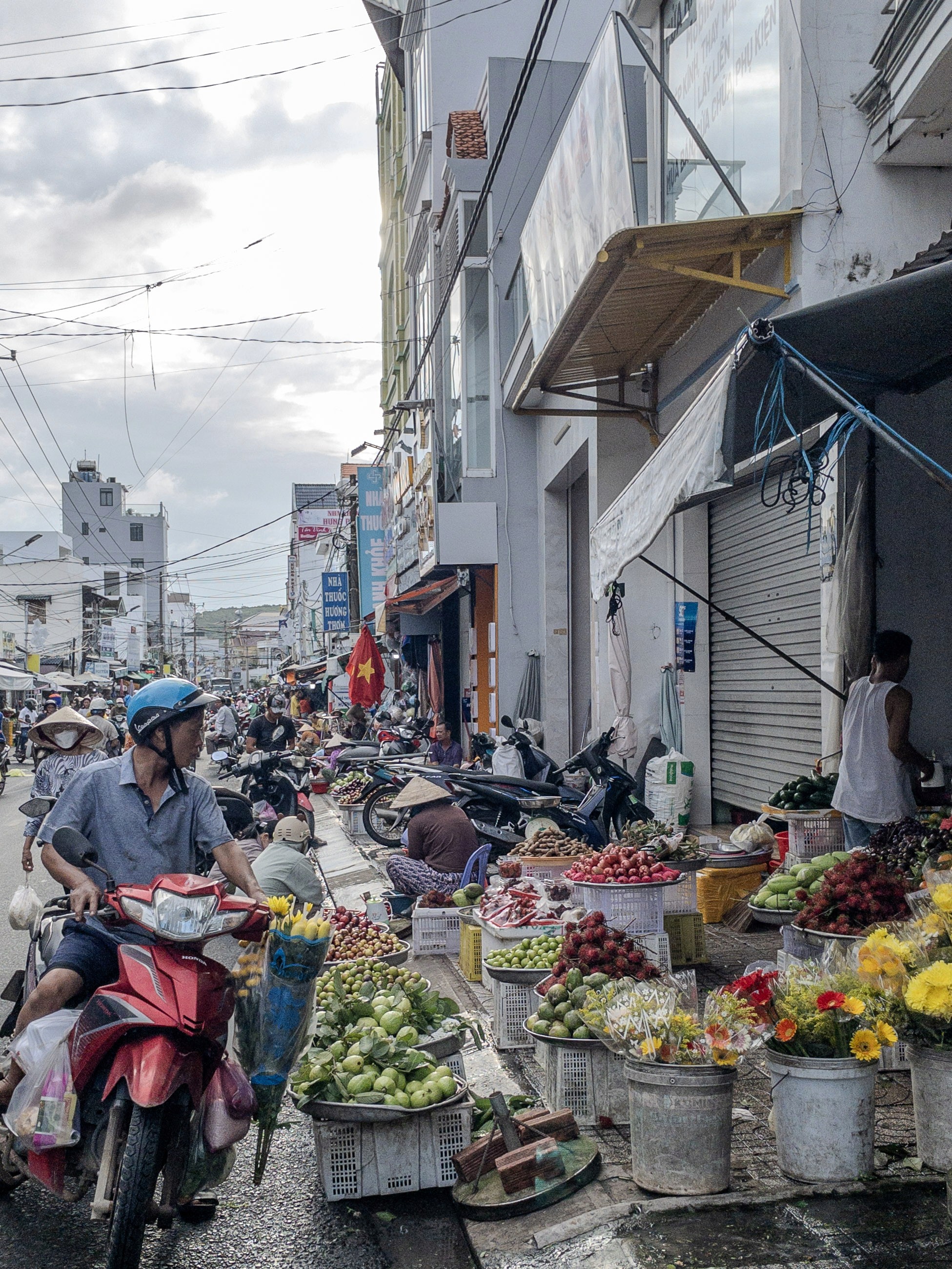


Like him, many other Vietnamese have moved to Vietnam’s largest island to ride on its economic boom.
Tourism in Phu Quoc has grown 30% year-on-year, and new international direct routes are ushering more tourists in.
I myself had flown in from Singapore on the new, full-service carrier Sun PhuQuoc Airways that operates daily between the two destinations. Next year, the island will host the APEC summit 2027, truly thrusting it into the limelight.
It’s the kind of trajectory that transforms a place at warp speed, and I wanted to see how Vietnam’s first island city – inhabited for thousands of years but largely undeveloped until recently – was striking a balance with that history.
✦
It was my first time on Phu Quoc, an island in the Gulf of Thailand that sits closer to Cambodia than to Ho Chi Minh City. But I’d heard plenty from friends. Phu Quoc’s transformation has created a haven for families and those who want a beach holiday with food and entertainment within easy reach – a side of the city that presents itself readily.


On the night I arrived, the waterfront at Sunset Town was given over to the Symphony of the Sea multimedia show. The nightly attraction bills laser effects flown in from Australia and six world champions in jet ski and flyboard, and it opened with performers setting off fireworks from the backs of their jet skis as ABBA’s Gimme! Gimme! Gimme! blasted over a crowd already hyped on the promenade.
Sunset Town is in itself a destination with global flavour, a Mediterranean-themed coastal village just minutes from Khem Beach with terracotta-and-pastel facades stacked on a hillside, arguably the most Instagrammed square kilometre on the island.
The next morning we took the cable car out to Hòn Thơm (“pineapple island”), directly off Phu Quoc's southern tip, one of the world’s longest three-rope sea-crossing systems.
The carriage climbs to a height that shows you the mind-boggling scale of the development that has gone into modernising the island.


It’s from here, between the pylons, that you can see the bones of old Phu Quoc: tin-roofed houses crouching shoulder to shoulder down to the rocks, the monsoon surf breaking white against their sea walls: an economy of fishermen, nước mắm (fish sauce) and pepper still running on the same rhythm that they’ve had for hundreds of years.
✦
Thiên pulled up at the fish sauce factory Nước Mắm Khải Hoàn after close to an hour on the road. Wafts of it enveloped my senses the moment I got out of the car, and Thiên chuckled at my reaction. The fermentation room was a tin-roofed shed around the size of a basketball court, shading two rows of 12 vats built from bời lời (litsea) wood and standing 2m tall. Fresh anchovies are layered with sea salt and left in the shade for 12 to 15 months.
This is a heritage that gave Phu Quoc the first Vietnamese product granted Protected Designation of Origin certification by the European Commission.
Like champagne, only fish sauce produced in Phu Quoc can be labelled Phu Quoc fish sauce.
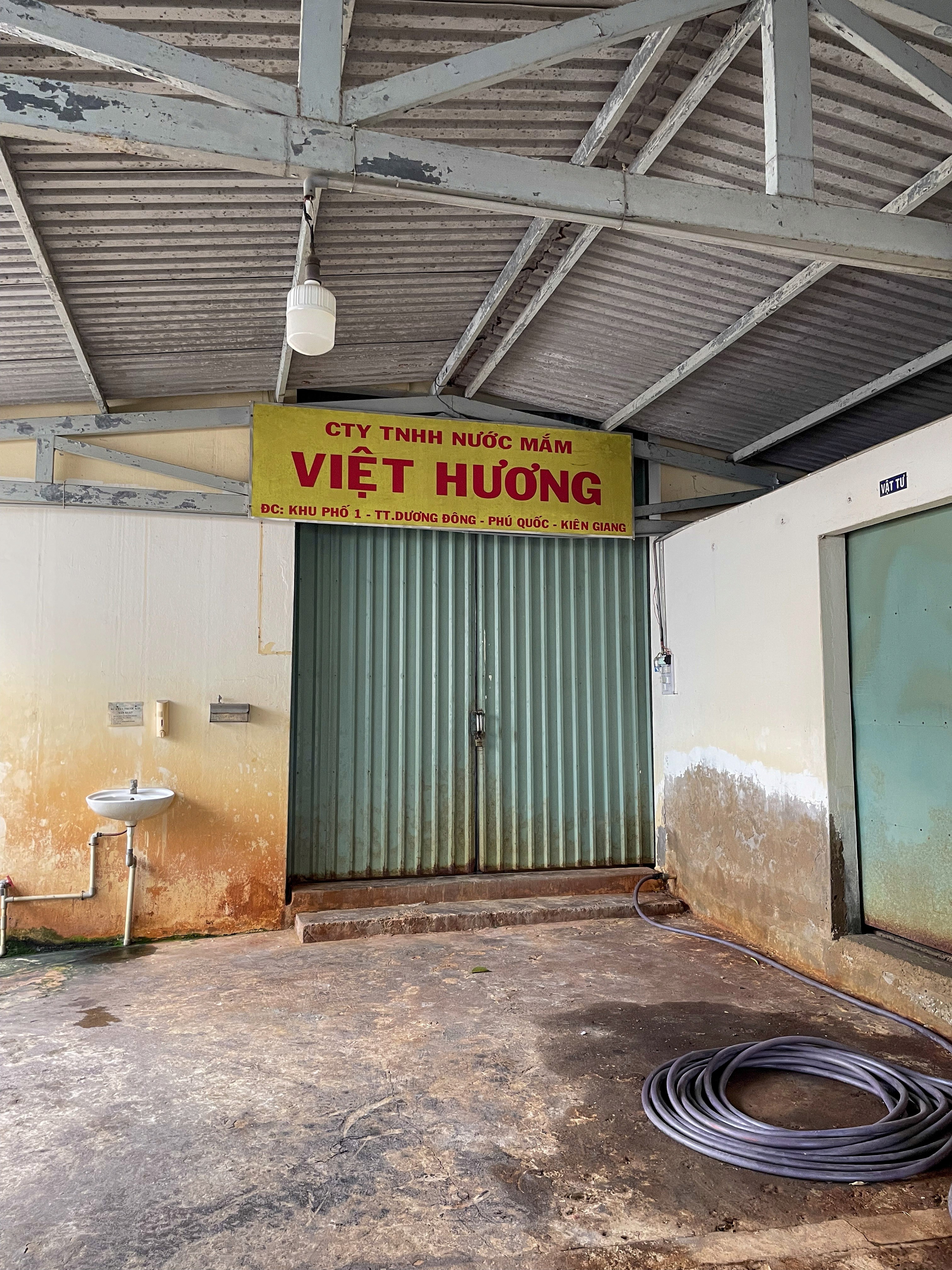


I had the shed to myself and stood there, imagining the work that had gone behind each slim yellow-capped bottle. The pressing, draining and topping-up happen in their turn, but most of the process is simply waiting for the sauce to ferment – long months through which the vats don't need company.
✦
On my last morning I went looking for the fishermen.
“If you want to experience something more native, simple side of Phu Quoc, I recommend that you head to An Thới market,” the night-shift concierge at JW Marriott Phu Quoc Emerald Bay told me. “It’s a nice stretch of local businesses and you can start at the An Thới seaport.” But, he warned, “based on the weather, I don't think you will see many fishermen because they will prefer to stay out at sea”.
An Thới is Phu Quoc's largest fishing harbour and second-largest settlement, and a 10-minute drive from the Bill Bensley-designed hotel. I arrived at the crack of dawn, determined to catch a glimpse of fishermen at work.
The harbour’s version of order is a different one: fishing boats moored in rows against a working shoreline, arranged not for the eye but for the morning's departure.


The concierge was right about the fishermen. At that hour there was only a pair of Vietnamese women operating two water taxis, ferrying boat operators further out from the harbour.
So I walked. I started up the two-lane road as An Thới market got busy on both sides – locals peddling live chickens, unloading bags of crushed ice onto fresh fish, butchers chopping, others selling fruit and vegetables amid the constant sound of motorcycles travelling to and from the seaport.
At the end of it, an elderly lady was toasting cassava pancakes stuffed with grated coconut over a charcoal stove. I stopped for breakfast and tried to make conversation. “What do you think about Phu Quoc becoming modern, with so many hotels?" I said into my phone, and showed her the screen.
She smiled without replying, and it was then that I realised Phú Quốc had already given me the answer, just not in words. The island runs on two clocks: An Thới's boats leave the harbour on their own schedule, indifferent to the cable cars overhead. The vats at Khải Hoàn need their 12 months even as Sunset Town continues mushrooming. But the two economies share the same 20km of coastline, and for now, they seem happy to do so.


Where to stay in Phú Quốc
JW Marriott Phu Quoc Emerald Bay: The Bill Bensley-designed resort closest to An Thoi, ten minutes from the seaport and market for travellers who want easy access to the island's fishing side.
New World Phu Quoc: Beachfront and steps from Sunset Town, putting guests within walking distance of Khem Beach, the Symphony of the Sea show and the cable car terminal to Hòn Thơm.
Premier Village Phu Quoc Resort: Villa-style accommodation on the island’s south, a base for travellers prioritising space and privacy over proximity to Sunset Town’s nightlife.
La Festa Phu Quoc, Curio Collection by Hilton: A newer addition to Phu Quoc's hotel landscape, positioned for travellers who want current-generation resort infrastructure on the island.
Where to go: Old Phú Quốc versus new Phú Quốc
Old Phú Quốc
Khải Hoàn Fish Sauce Factory: The heritage fermentation site behind some of Phu Quoc's Protected Designation of Origin nước mắm.
An Thới Seaport and Market: The island's largest fishing harbour and its adjoining market, best visited at dawn.
New Phú Quốc
Symphony of the Sea and Kiss of the Sea Shows: Sun Group’s nightly waterfront spectacles at Sunset Town.
Campanile Clock Tower: A landmark of Sunset Town’s Mediterranean-themed streetscape.
Eagle Eye Observatory, Sun World Hòn Thơm: Reached via the cable car system connecting Phu Quoc to Hòn Thơm island.
Santo Beach Club: A beach club anchoring the island’s newer entertainment offerings.
How to get there
Sun PhuQuoc Airways operates daily direct flights between Singapore and Phú Quốc, making the Vietnamese island as a straightforward weekend or short-break destination from Singapore. The full-service carrier’s route removes the previous need to connect through Ho Chi Minh City or Hanoi, cutting total travel time significantly.
The writer travelled as a guest of SunPhuQuoc Airways.