As a documentary photographer whose work captures the raw interactions between people and their environments, I’m naturally drawn to how spaces are shaped by the people who occupy them. This curiosity applies not just to organic landscapes, but also to man-made structures.
✦
My mind drifts to 2013, when I travelled to Singapore and was first captivated by the imposing silhouette of three 55-storey towers crowned by a sky-bound ship. Thirteen years later, I returned – this time not to observe from afar, but to step inside the heart of Marina Bay Sands.

✦
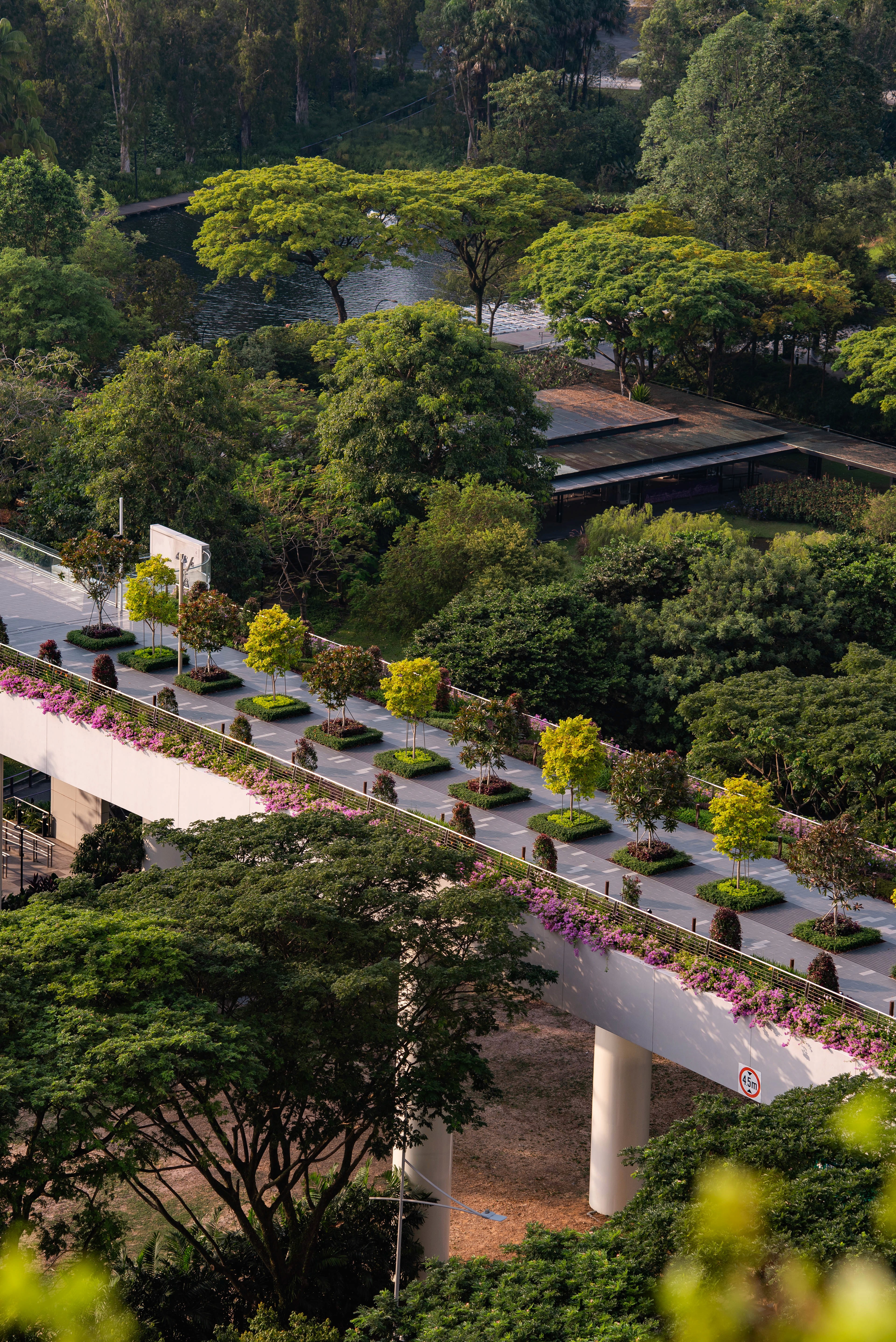
Upon arriving, I could feel the symbiosis between the architecture of this landmark and its inhabitants. The lush foliage woven into the design and the artworks melting into public spaces felt like a visual narrative curated for the observer.


High-tech hospitality with heart
In Bali, where I’m from, hospitality flows with the natural rhythm of the tides and the gentle ebb and flow of travellers. But here, in this behemoth of a complex, it has to be orchestrated down to the last detail so that everything operates as perfectly as it must.
Curiosity drew me to discover the hidden engine driving it all, and I ventured into Marina Bay Sands’ heart of house.
This underground city that moves with the dynamism of an unbroken current supports more than 12,000 team members.
From autonomous robots making round-the-clock deliveries along the service corridors, and conveyors retrieving uniforms from a wardrobe of more than 200,000, to an AI system that logs discarded food in the staff dining rooms so chefs can adjust portions, every movement is engineered with precision.

Yet, beyond the machinery, it was clear that human passion is at the core of this operation. I met the wardrobe staff who meticulously care for every garment, the chefs nourishing thousands of employees around the clock, the ever-attentive butlers, and the florists breathing life into the hotel with fresh botanical arrangements. It is their heartbeat that truly powers this space.


Nature embraced by technology
From my room, I saw how the morning sun illuminated neighbouring Gardens by the Bay, an urban sanctuary redefining the harmony between nature and concrete.

The interplay between the two reflected how this place offers a radically different way to get to know the natural world. Not long ago, I had been submerged in the waters of Bali, interacting with its vibrant marine life and coral ecosystems. Who would have thought that in Singapore, I would dive once more – this time inside the ArtScience Museum?
At Into the Ocean: Journey Beneath – an immersive, multi-sensory exhibition produced in collaboration with OceanX – I embarked on a virtual descent. The journey pulled me from the sunlit Photic Zone down through twilight depths and into the pitch-black Aphotic Zone.
This showcase brilliantly fused deep-sea footage (much of it not previously released publicly), contemporary art, rare scientific specimens and interactive technology into a single, powerful message of marine conservation.


For a visual storyteller, it was a feast for the senses. And it made me realise how technology can bridge humans and their environment in beautifully unexpected ways. Exploring the ocean through this interactive medium left a profound impression: there I was, just steps from my hotel lobby, standing in the dark of the deepest ocean trenches.
✦
Over the days I spent at Marina Bay Sands, I began to realise that the subject of my photographs was larger than I had first imagined.
I had naturally started with people – their gestures, routines, expressions and the small interactions that so often reveal a story. But gradually, another presence entered the frame: the systems and technologies working quietly behind the scenes, shaping how people moved, how spaces responded and how each experience unfolded.
I carried my camera with me wherever I went, not simply to hunt for a good photograph, but to observe and preserve the details that might otherwise go unnoticed.


What moved me just as much was the way nature and technology seemed to coexist rather than compete: greenery woven into monumental architecture, natural elements softening highly engineered spaces, and technology working almost invisibly in the background. There was something deeply human in that balance.


I left with more than photographs. I carried the warmth of encounters, fragments of conversation, the stories of the people I met, and a deeper awareness of the invisible care behind each experience.
Some things resisted being contained within a frame: the precision of the operations; the attentiveness behind each gesture; the quiet harmony between people, nature and technology.
Perhaps they are not opposing forces after all. Here, I saw them working together toward the same purpose: to understand people, anticipate their needs, and, in their own ways, reach the human heart.