Few places in Malaysia are as steeped in folklore as Langkawi, also known as the Land of Legends.
✦
Kuah, its main town, means “gravy” in Malay – a name that comes from a story about two giants who quarrelled at a wedding and sent the pots of food flying. Nearby, Kampung Belanga Pecah (Broken Crockery Village) marks where the kitchenware is said to have smashed during the quarrel.
All across this fantastical archipelago of 99 islands, the landscape is full of such tales.
There’s the pool where fairies are believed to have bathed; a lake where a celestial princess laid her child to rest; two mountains that were once feuding giants.
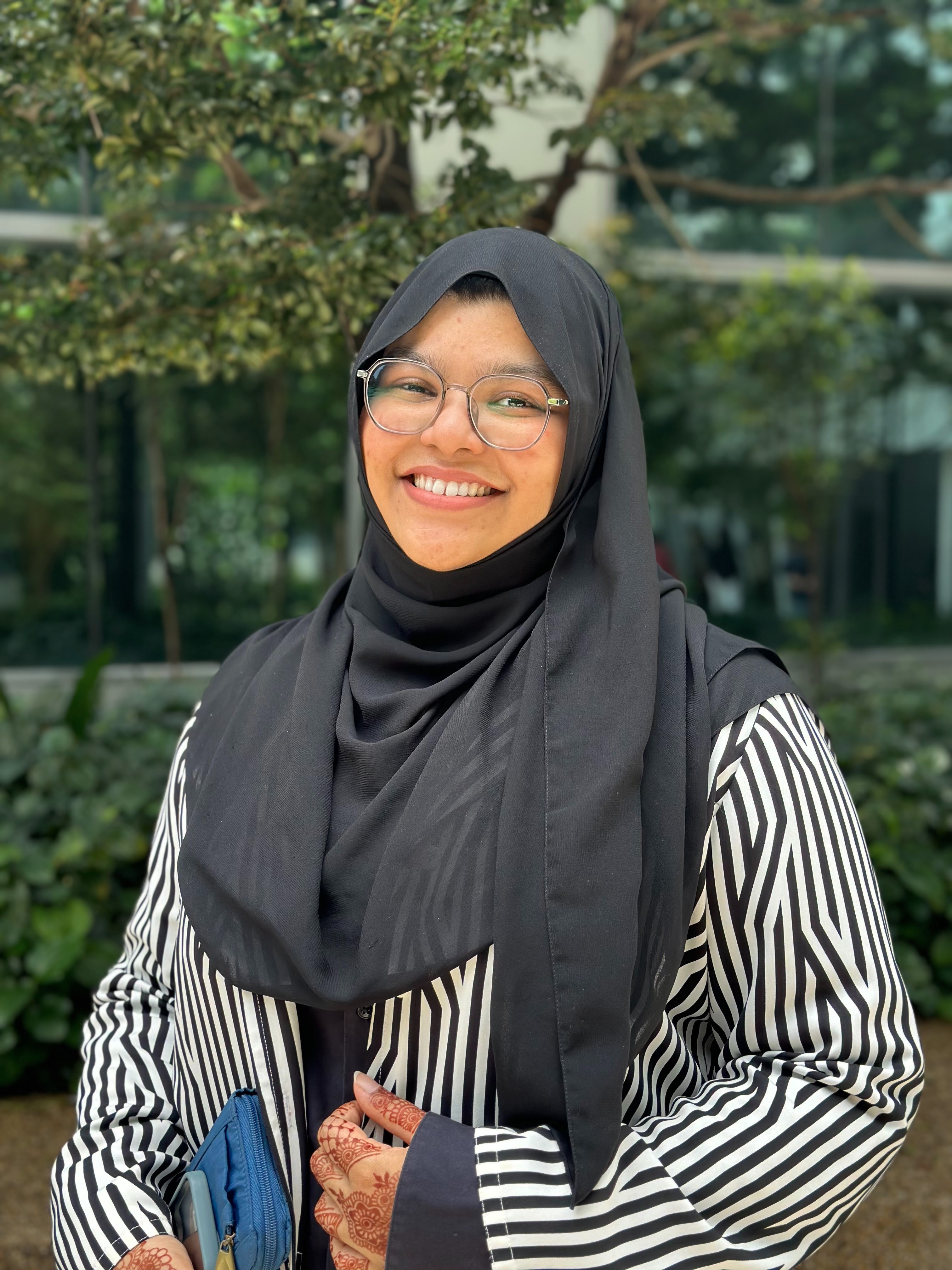
I first became enchanted by some of these stories as a child, on a trip here with my parents. Sixteen years later, I came back without much of a plan to let the legends lead the way.


All photos: Fairooz Sadique
At the foot of a giant
My base was the new Hilton Burau Bay Langkawi Resort on the island’s west coast, which sits at the feet of one of those giants in a location like no other.
In front of the hotel, a 650-metre stretch of white sand runs down to the Andaman Sea; behind it rises the rainforest-covered Gunung Mat Cincang, the mountain the giant Mat Cincang is said to have become.
The legend has a geological counterpart: Mat Cincang belongs to the Machinchang Formation, the oldest rock in Malaysia at more than 500 million years, and the rainforest that grows on it is one of the oldest on Earth. Its sandstone peaks look hacked apart, a shape long tied to the giants’ brawl – fittingly, “cincang” means “chopped” in Malay.
The resort's breathtaking open-air architecture – all timber, rattan and weathered stone – draws on these distinct surroundings, with every room opening onto a terrace or balcony that brings you face-to-face with forest, mountain or sea. From the Grand Lawn, the terraced gardens climb towards the giant’s canopy like the rows of an amphitheatre, with Mat Cincang itself as the mist-wreathed backdrop.


All photos: Fairooz Sadique
Where fairies bathe
Less than 10 minutes’ drive from the resort, Telaga Tujuh (Seven Wells) is named after the seven connected pools at the top of a 638-step climb.
Legend has it that fairies bathed in them, and the water is said to have healing properties.
It was also a climb I’d made with my dad as a child. Like my father and I had before, most visitors stop at the main pools, one of which sits beneath a spectacular stream of water cascading down a 91m perpendicular cliff.
But Shafwan Bin Salim, my guide from Hilton Burau Bay’s Nature Center, led me further on a trail through the dense rainforest. The trek was a real test for my untrained legs, but the payoff was the stunning Blue Lagoon, a pool of startling teal well off the main route that many travellers miss.
Along the way, Shafwan distracted me from giving up by pointing out which plants heal and which poison, and by sharing the legends that drew him to Langkawi as a student and kept him here.
For something gentler, the hotel’s Nature Center also leads guided walks through the giant’s forest, right behind the resort. And afterwards, its eforea Spa is built for tired legs, with picturesque outdoor barrel saunas, a meditative Salt Room and five rock pools in nooks nestled within the forest to move between.


All photos: Fairooz Sadique
The pregnant maiden
To the east and a 15-minute boat ride from Kuah Jetty, Tasik Dayang Bunting (Lake of the Pregnant Maiden) lies at the centre of Pulau Dayang Bunting, the archipelago’s second-largest island and the setting for one of Langkawi’s most famous legends.
It’s here that the celestial princess Mambang Sari is said to have married a mortal man, Mat Teja, and where they lost their baby soon after birth.
The princess left her child in the lake and blessed its water – a story of loss that has created a place of hope.
These days, childless couples come to swim in it hoping to conceive; approaching by boat, you can see the island’s hills trace the outline of a pregnant woman lying on her back.


All photos: Fairooz Sadique
The giants’ quarrel
And then there’s the legend that gave Kuah its unusual name. As the story goes, two giants, Mat Cincang and Mat Raya, fell out at their children's wedding feast, starting a brawl that sent food flying. Only after a village elder stepped in did the two giants turn themselves into mountains out of shame.
To stand on one of them, I took a 15-minute walk from Hilton Burau Bay to the base station of Langkawi SkyCab within the colourful, chalet-style Oriental Village.
The gondola’s 42-degree stretch between the base and middle stations is among the steepest in the world, and as it climbed, the music from the village below gave way to the sound of wind.
The top station was more than 700m up Gunung Mat Cincang with the curved Sky Bridge just below it; from here, I saw Langkawi laid out in full, my renewed understanding of its legends turning mere topography into magical tales.
✦
The island saw me off the way it had welcomed me 16 years ago, with a sudden, heavy downpour. As a child, I’d have remembered only the sea and the rain. But this time I knew better: on Langkawi, nothing is just weather or rock or water for long. A spilt pot becomes a town, a mother’s grief becomes a lake, and somewhere, someone was probably already telling the story of the storm.
In a place as shrouded in legend as this, the best plan is to let the stories make one.