I grew up in Hong Kong during the 1990s. That was the golden era of Hong Kong cinema and nightlife; of neon lights and Wong Kar Wai films and Lan Kwai Fong parties – essentially, the Hong Kong that many people picture when they think of the territory.
✦
The city has changed much in the decades since. Skyscrapers have swallowed many of the old-school shophouses and neon lights. Wong’s film locations have been turned into cafes made for Instagram. And Lan Kwai Fong is much quieter than it once was. Over the years, I’ve watched aspects of the Hong Kong I know disappear under my eyes. Rising rents, labour costs and a lack of interest from new generations have caused many artisan trades, in particular, to fade away one by one.
But one of Hong Kong’s biggest strengths has always been that it never gives up – which means that you can still see pockets of its old self hidden among the glass towers today. Here’s what to look out for and where to go.
Neon lights and signboards
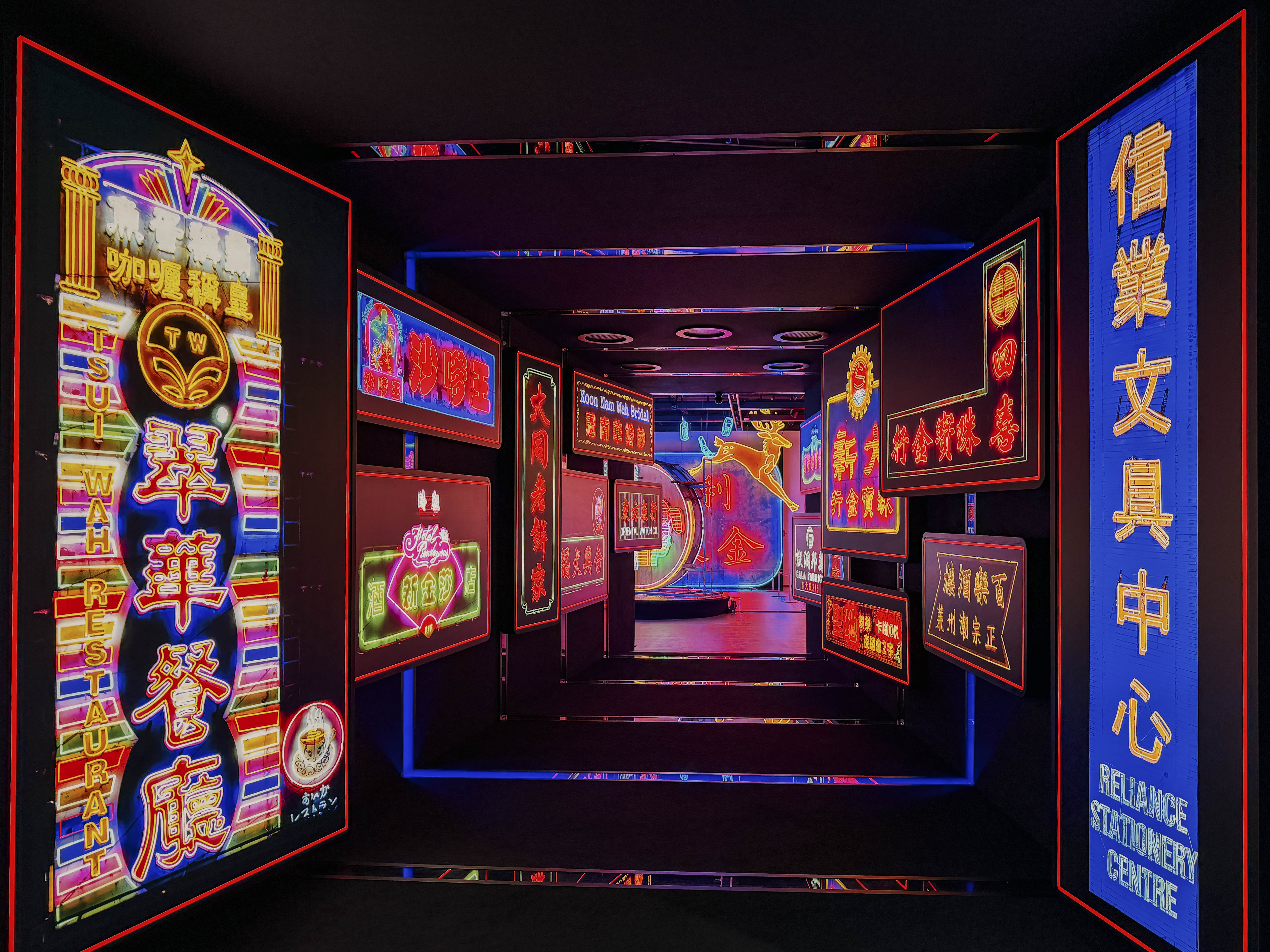
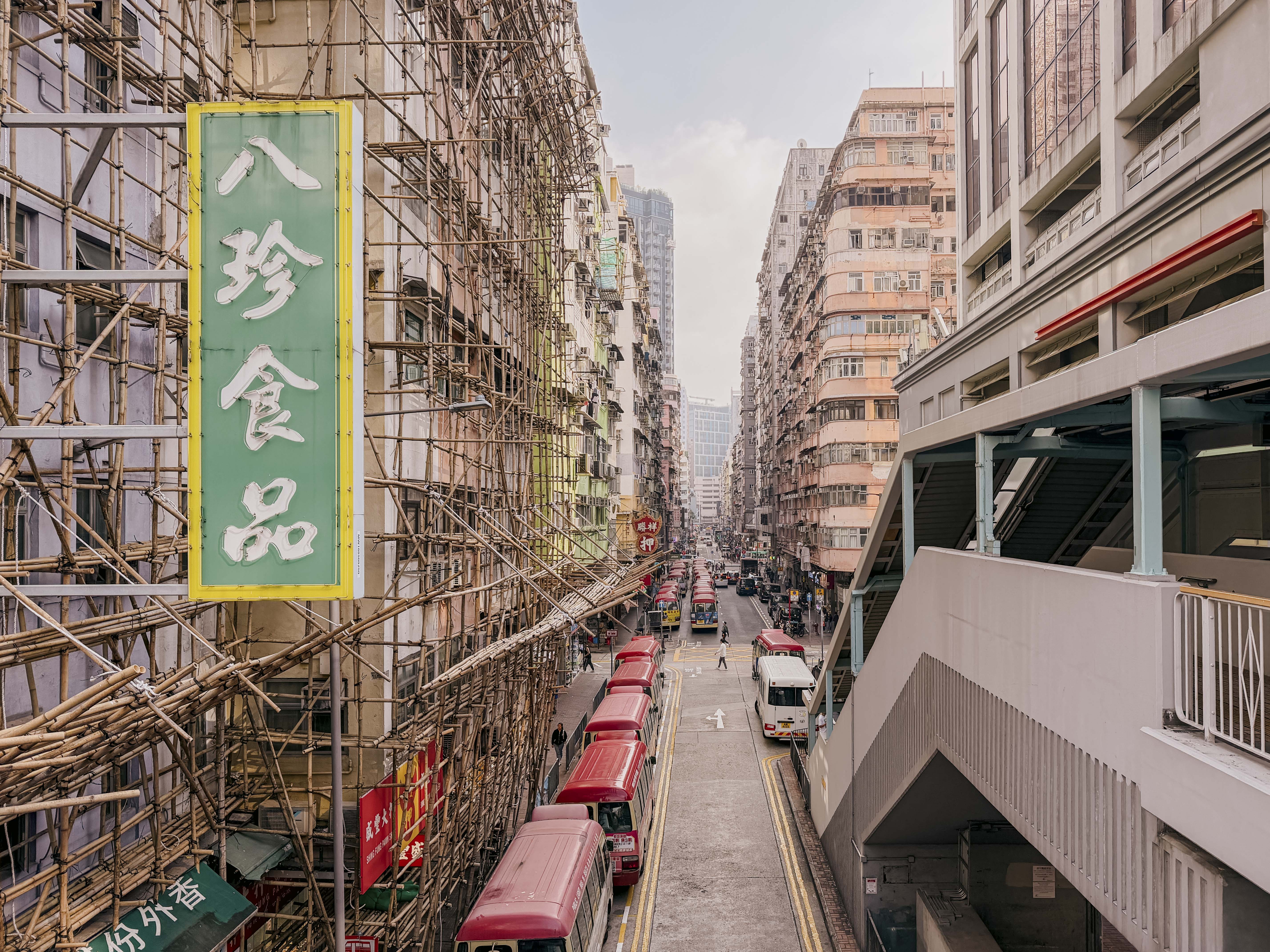
Having lived in the New Territories for most of my life, the furthest I used to travel towards the heart of the city was Mong Kok. Here, there’s a pedestrian bridge I’d cross every time I exited the station that offers one of my favourite sights in Hong Kong.
From the bridge, you can see all the smaller streets of Mong Kok Road running north to south. The view of Fa Yuen Street South, with its minibus stop and giant neon signs, is the most iconic, and now draws hundreds of photo-snapping visitors every night.
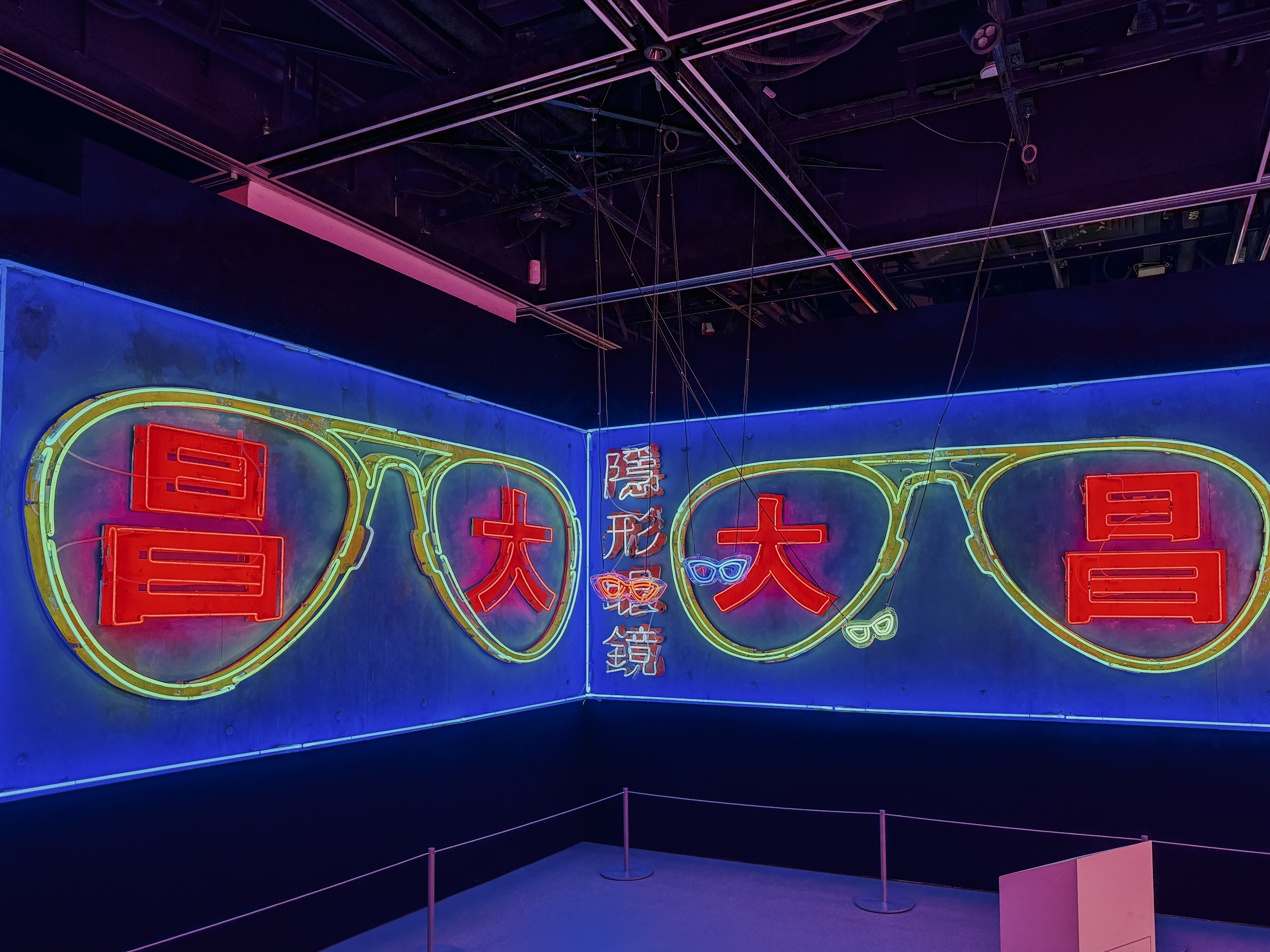
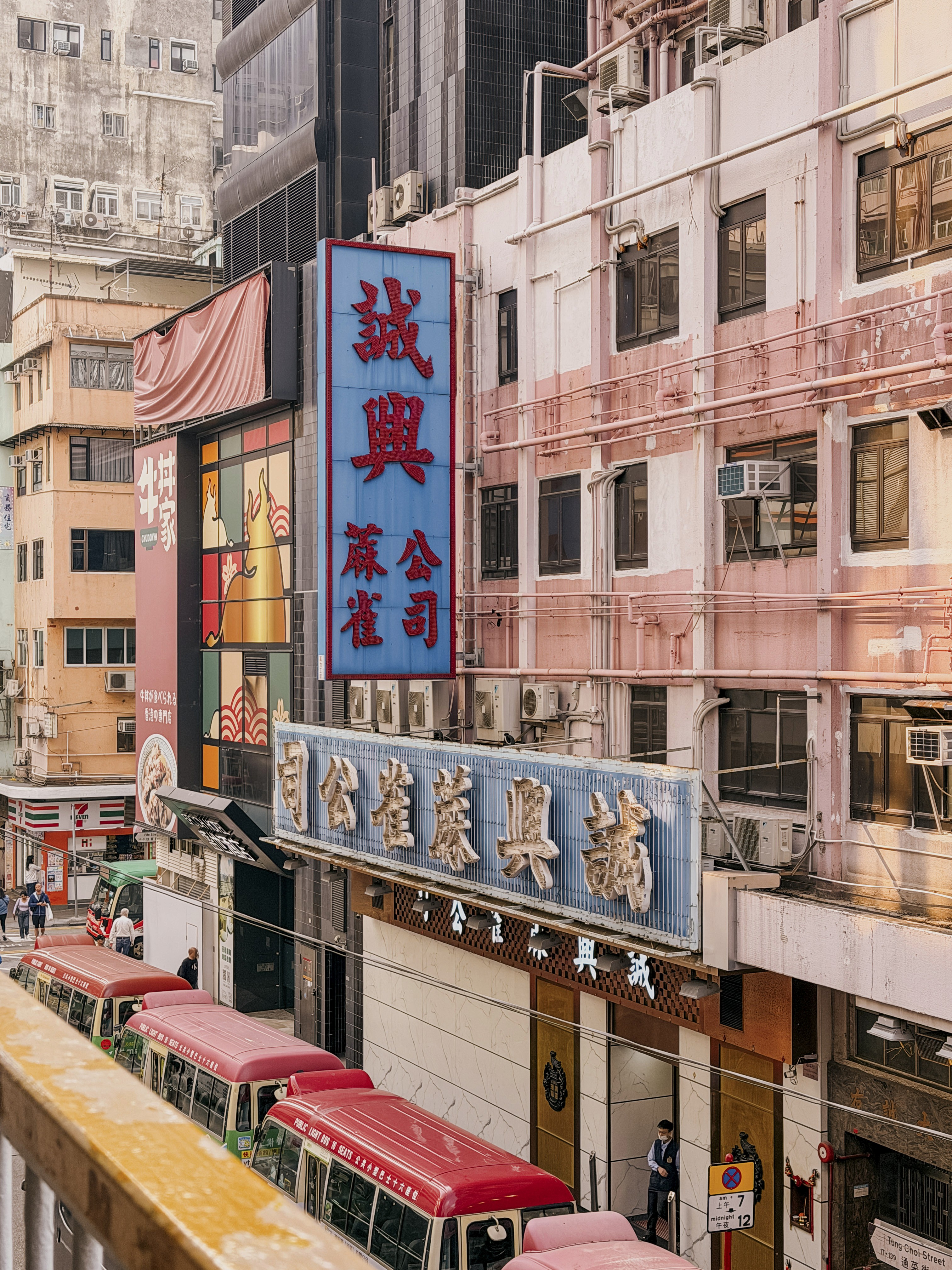
It’s a good thing so many people are immortalising the scene. Neon signs were all the rage during the 1980s and 1990s. But with cheaper LED options and tightening building regulations, many have disappeared. You can find the remaining ones on this interactive map.
Photos: Nam Cheah
Cantonese porcelain
“Nam, can you set the table?” my mum would shout before dinner. I’d make my way to the kitchen to bring out four white-and-blue porcelain bowls, along with matching spoons and bamboo chopsticks.
The bowls – common in many Chinese households and also produced in shades of pastel pink, yellow and green – were made of Canton porcelain. The art originated in the Qing Dynasty and came to Hong Kong during the 1920s, where skillful painters created patterns that combined East and West elements. In the mid 20th century, Hong Kong and Macau were the epicentre of the porcelain’s manufacturing and export.
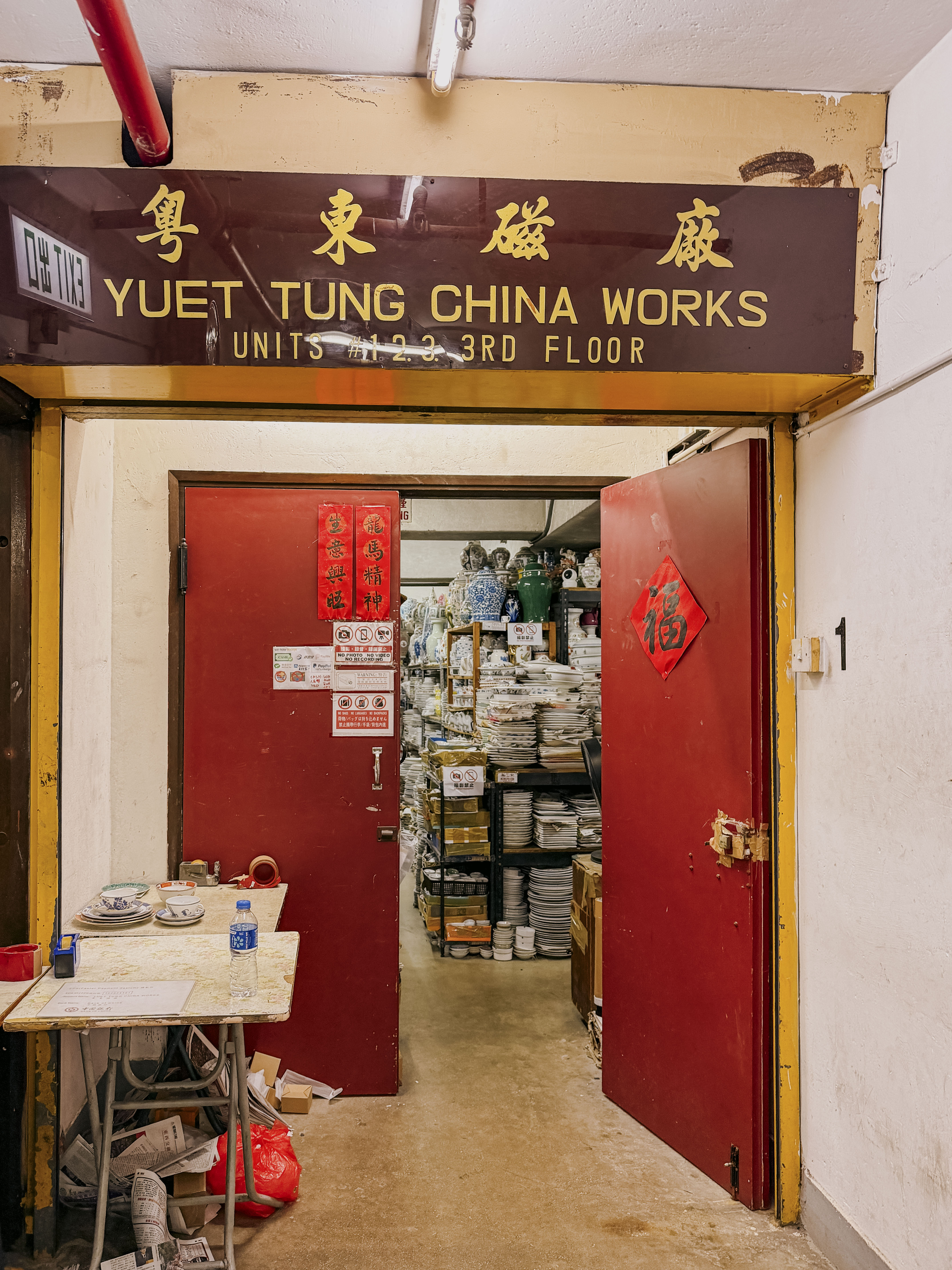
During Hong Kong’s trading boom in the 1950s to the 1970s, there were dozens of factories that made them. But with advancing technology and cheaper labour in China, only one place remains today.
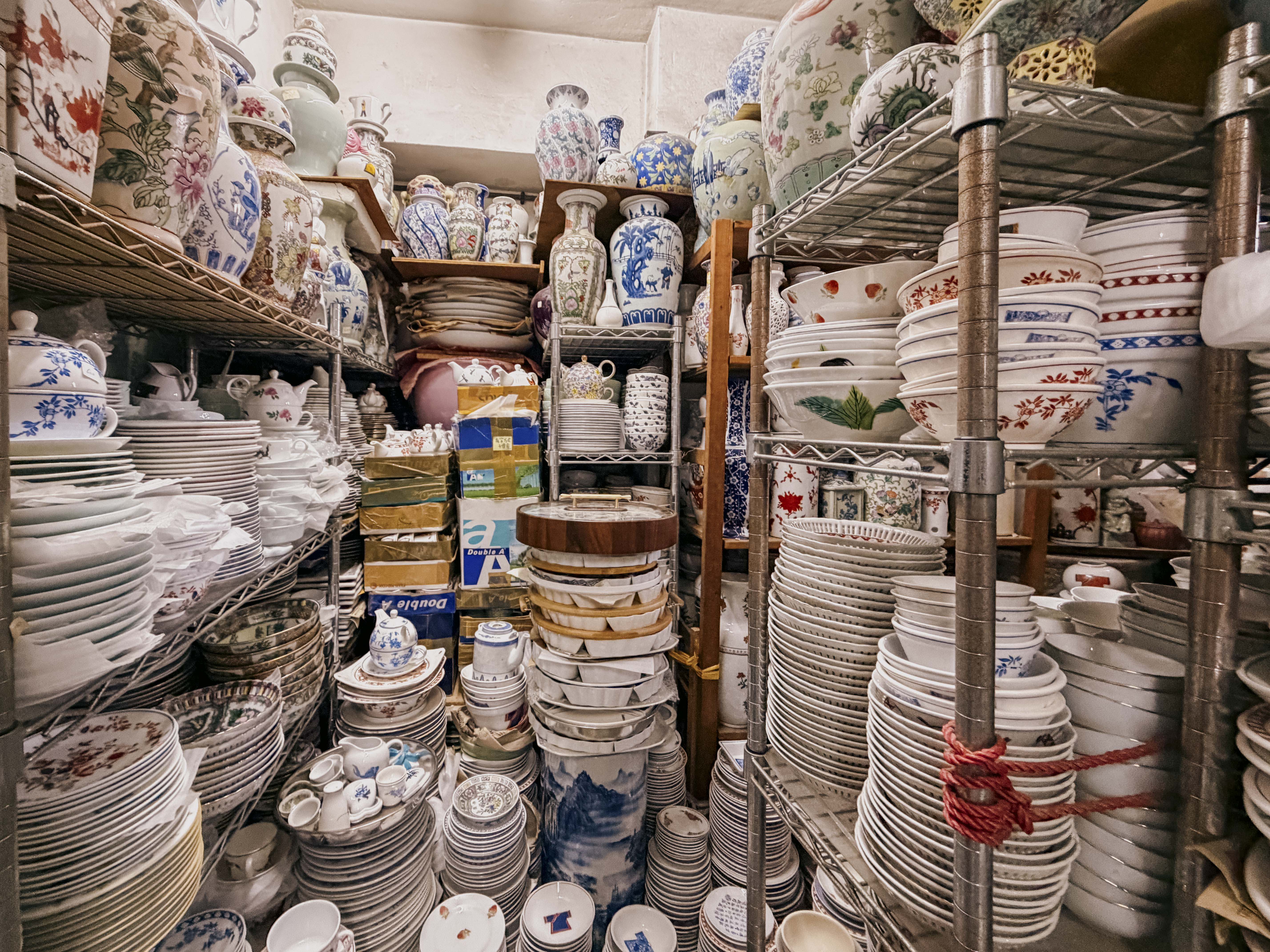
Yuet Tung China Works is tucked away in an industrial building in Kowloon Bay, a no-frills space stacked floor to ceiling with all types of Hong Kong-made Canton porcelain, from tiny saucers to giant vases and, of course, those familiar rice bowls.
Like many others who grew up eating from the bowls, the crisp, almost musical, clinks that the spoon makes as it hits the bottom still reminds me of eating at home after all these years.
Photos: Nam Cheah
Hand-carved mahjong tiles
Another sound I remember from childhood is the clatter of mahjong tiles, when mahjong was played during big gatherings like weddings.
With little internet access in the late 2000s, the game was also popular among my schoolmates, and we often passed around different sets of tiles to admire.
My favourite style of tile is the classic: smooth, glossy rectangles that are bright green on the back and white in front, etched with an elegant Chinese character or pattern in red, green or blue. When I was a child, the tiles were made from bamboo, bone or ivory, but nowadays they’re mostly plastic or acrylic, and mass-produced at a much cheaper price.
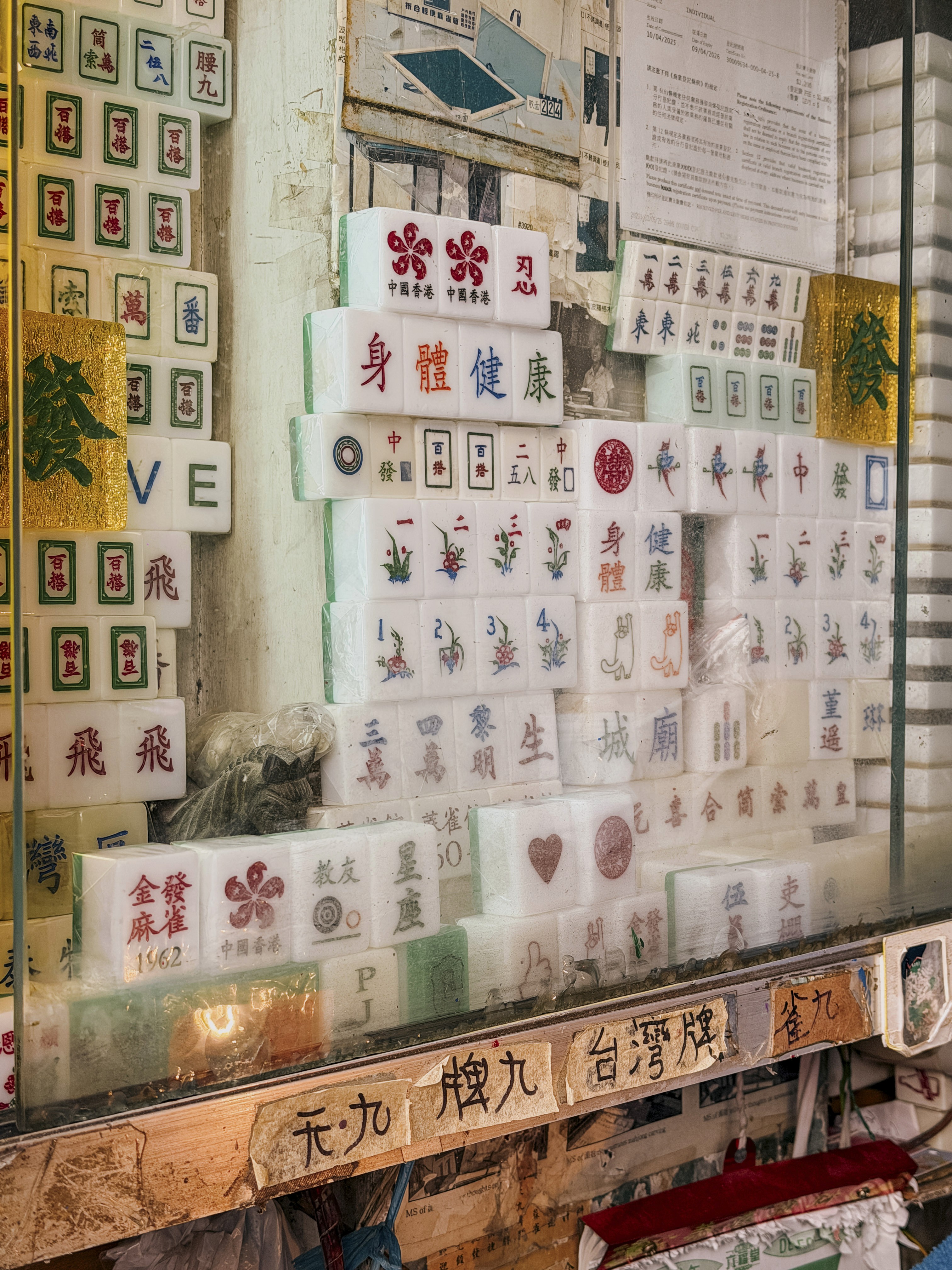
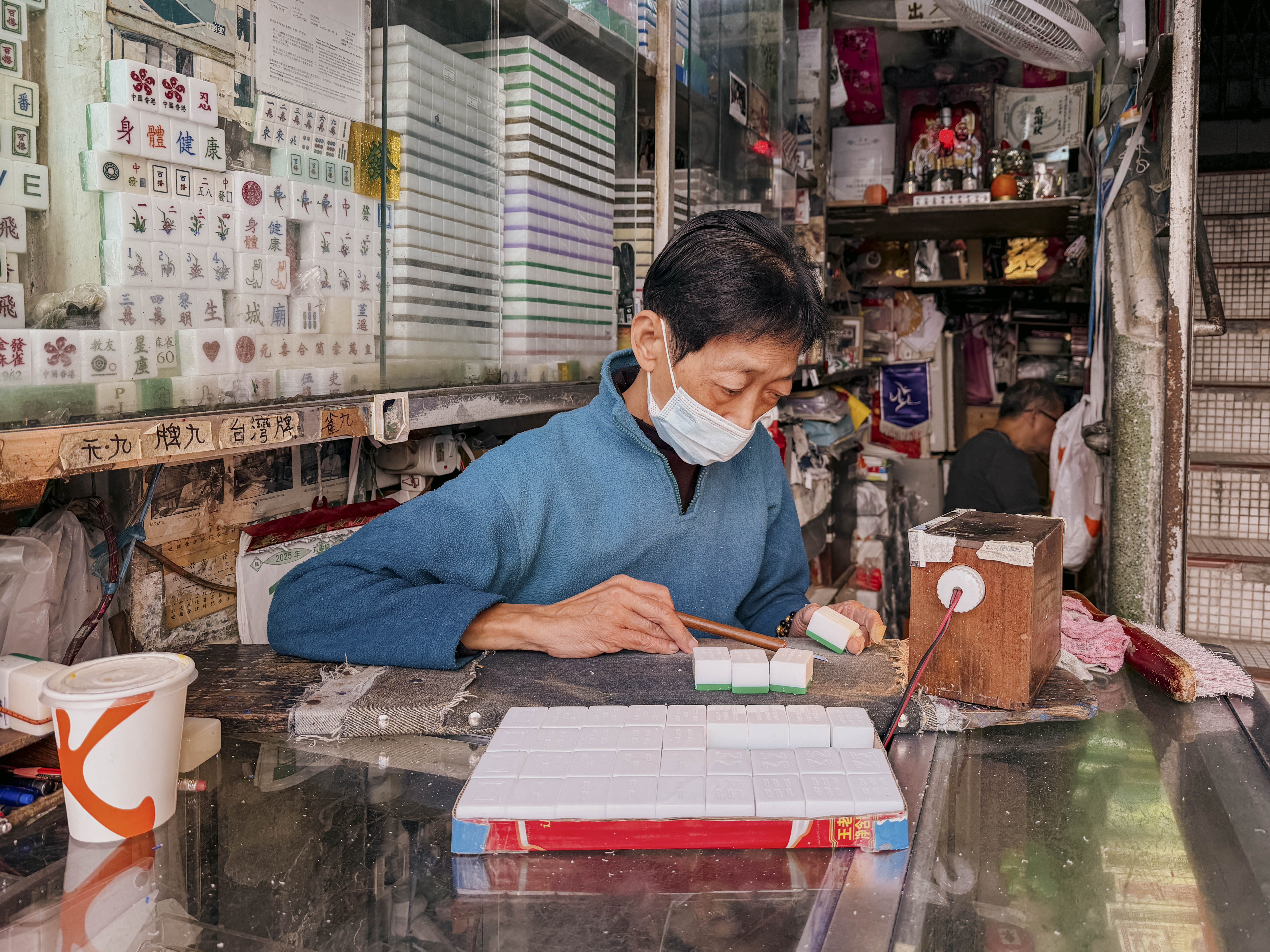
Over the years, the practice of hand-making and carving mahjong tiles has become almost extinct, but there are still a handful of places where the craft can be observed. Ms Ho in Hung Hom is the last female mahjong tile carver in Hong Kong. One hand-carved set takes her two to three months to complete and costs HKD4,500. The business itself is run the old-school way, too – they accept cash only and bookings must be made in person or by phone.
Photos: Nam Cheah
Qipao tailoring
Hong Kong may be one of Asia’s fashion capitals, with a wide range of the latest looks and labels. But if there is one iconic outfit that represents the territory, the qipao would be it.
A garment that has its roots in the Qing Dynasty when the Manchus ruled China, it’s thought to be an adaptation of the flowing Manchu robes of that era. The qipao evolved into the more fitting outfit it is today when Western influences came to China and tailors combined it with traditional wear. In Hong Kong, the golden age of qipao was the 1960s, when many Shanghainese – with whom it was popular – migrated to Hong Kong.
My grandmother used to wear qipao, and my mum would talk about how people thought she was a movie star when she picked her up from school.
There is something unmistakably elegant about it, and dressing in one somehow makes you walk with a little more poise.
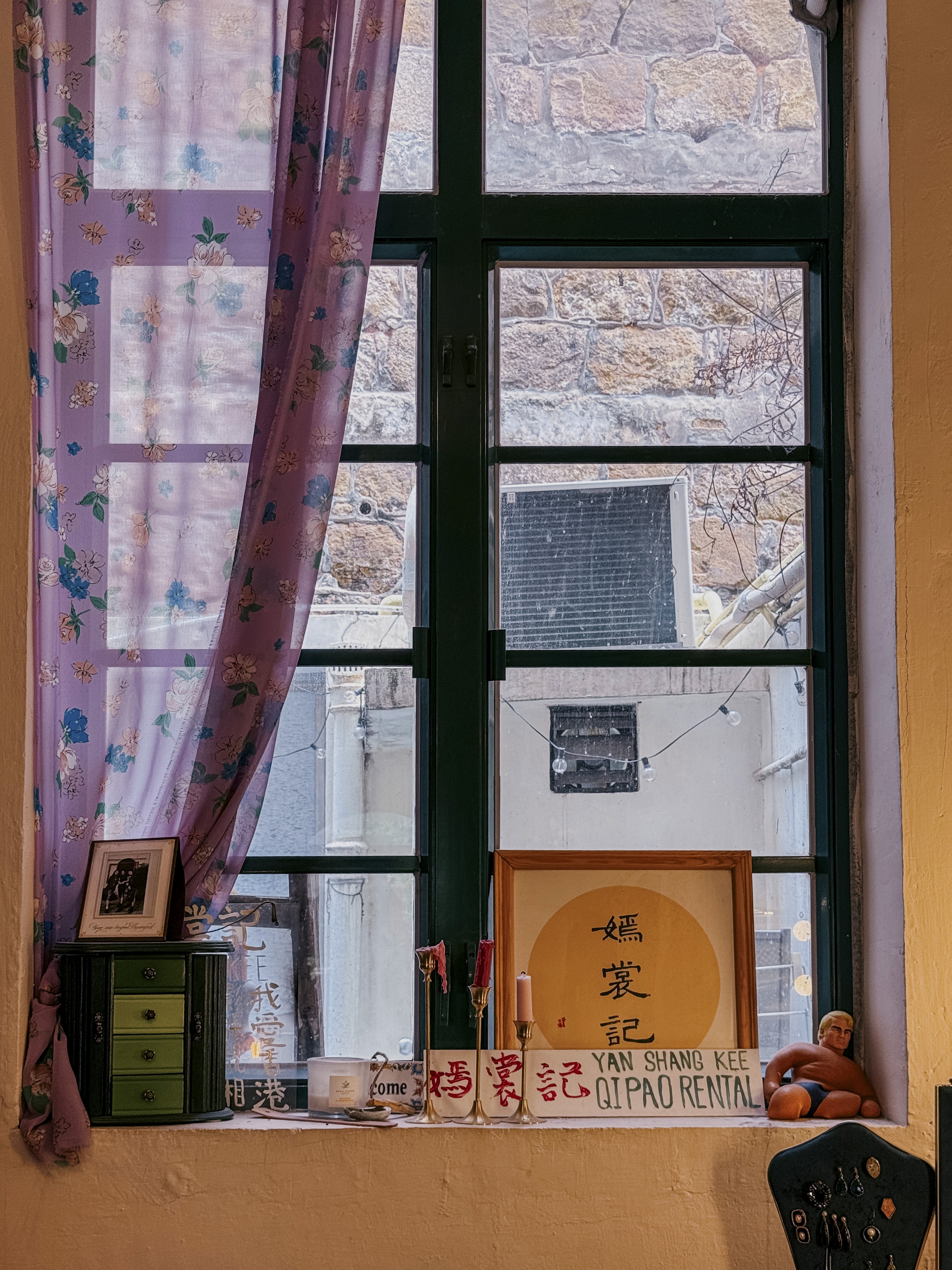
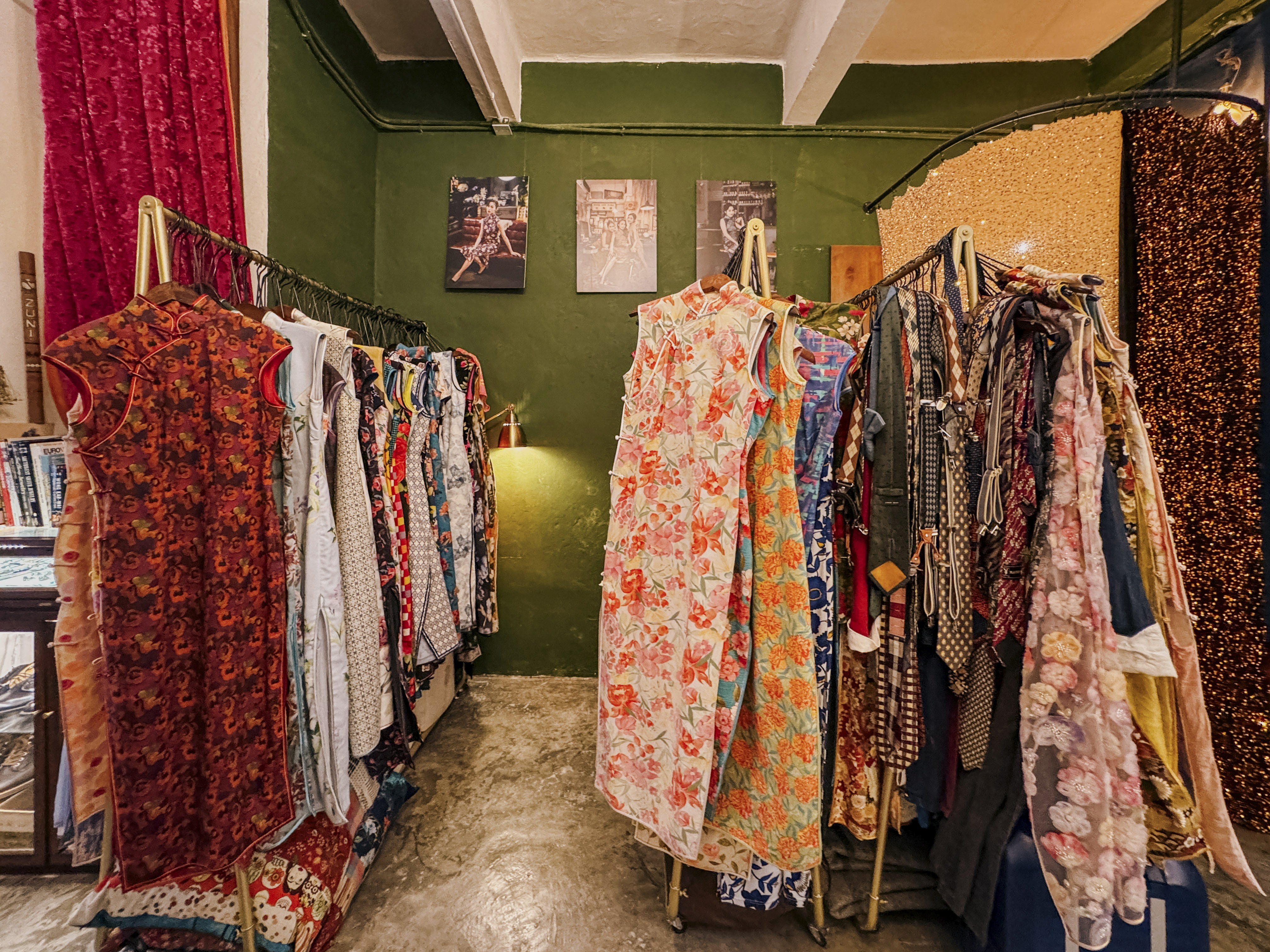
It wasn’t until I was in my early 20s that I tried one myself, rented from Yan Shang Kee, where you can order a custom-sewn qipao or rent a ready-made one for 30 minutes. Although the number of qipao tailors is dwindling these days (fewer than 10 shops are believed to exist), this one opened relatively recently, in 2017. It’s run by Ding Yung, a young woman with a passion for fashion who was inspired by the elegance of qipao in movies that our generation saw as we grew up, most notably In the Mood for Love.
The qipao I tried was fitting, and I wanted to pick one that would hide my belly more. But Yung explained that flaunting your curves is precisely what a qipao is about – a symbol of rebellion and acceptance of self. Much, poetically, like Hong Kong itself.