My earliest memories of handloom weaving are tied to my mother’s vibrant collection of cotton saris – six yards of soft, lightweight fabric neatly folded and stacked upon one another in her wardrobe. Every morning, she picked one to wear to work.
✦
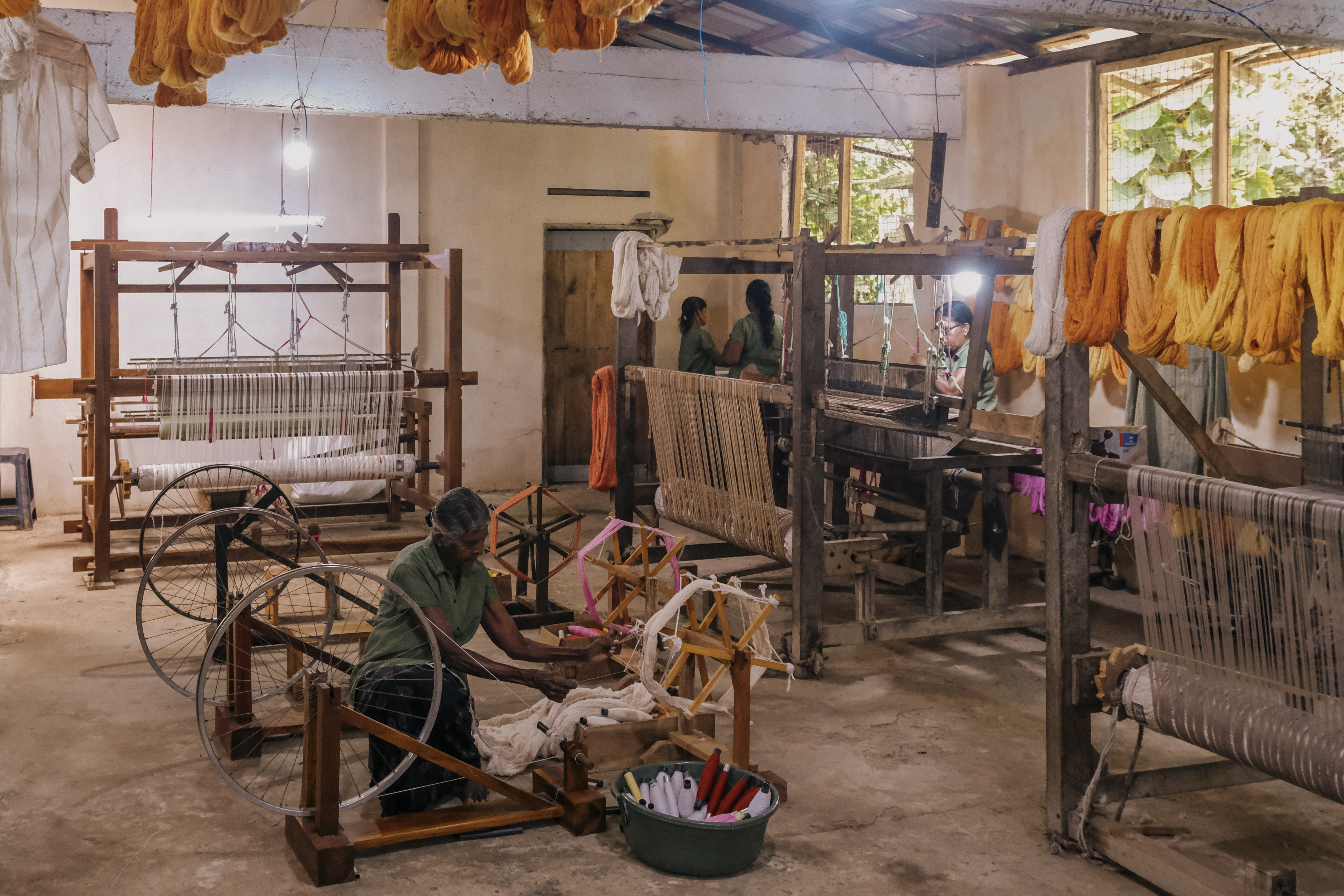
Almost two decades later, I’m reminded of them as I watch a group of women at work, weaving intricately patterned fabric on a manual loom in Sooriya Weaving Mills. Located in a small village 124km south of the Sri Lankan capital Colombo, the mill, entirely run by 40 women, is one of the last remaining traditional textile hubs in the country’s south coast.
Similar to neighbouring India and Bangladesh, Sri Lanka has a rich textile heritage built on handloom weaving. The industry dates back to 543 BC, where cotton was handspun by women from the indigenous communities – a process involving interlacing a set of vertical threads, called the warp, with a set of horizontal threads called the weft, and repeating this step to weave a fabric with different colours and motifs.
Historically, clothes were loomed by women at home for their families using natural fibres like homespun cotton and occasionally, silk.
After Sri Lanka’s independence from the British in 1948, the local government recognised the value of this skill and established textile projects and mills across the country. Traditional looms were distributed among houses so that people could produce their own clothing.
In 1977, however, the introduction of open economy policies and liberalised trade laws by a new state government led to the industry’s decline. Imported textiles flooded the market, and by 1980, nearly 40,000 weavers had lost their livelihoods, according to a paper published by the Institute of Policy Studies of Sri Lanka.
Photos: Zinara Rathnayake
A non-stop rhythm
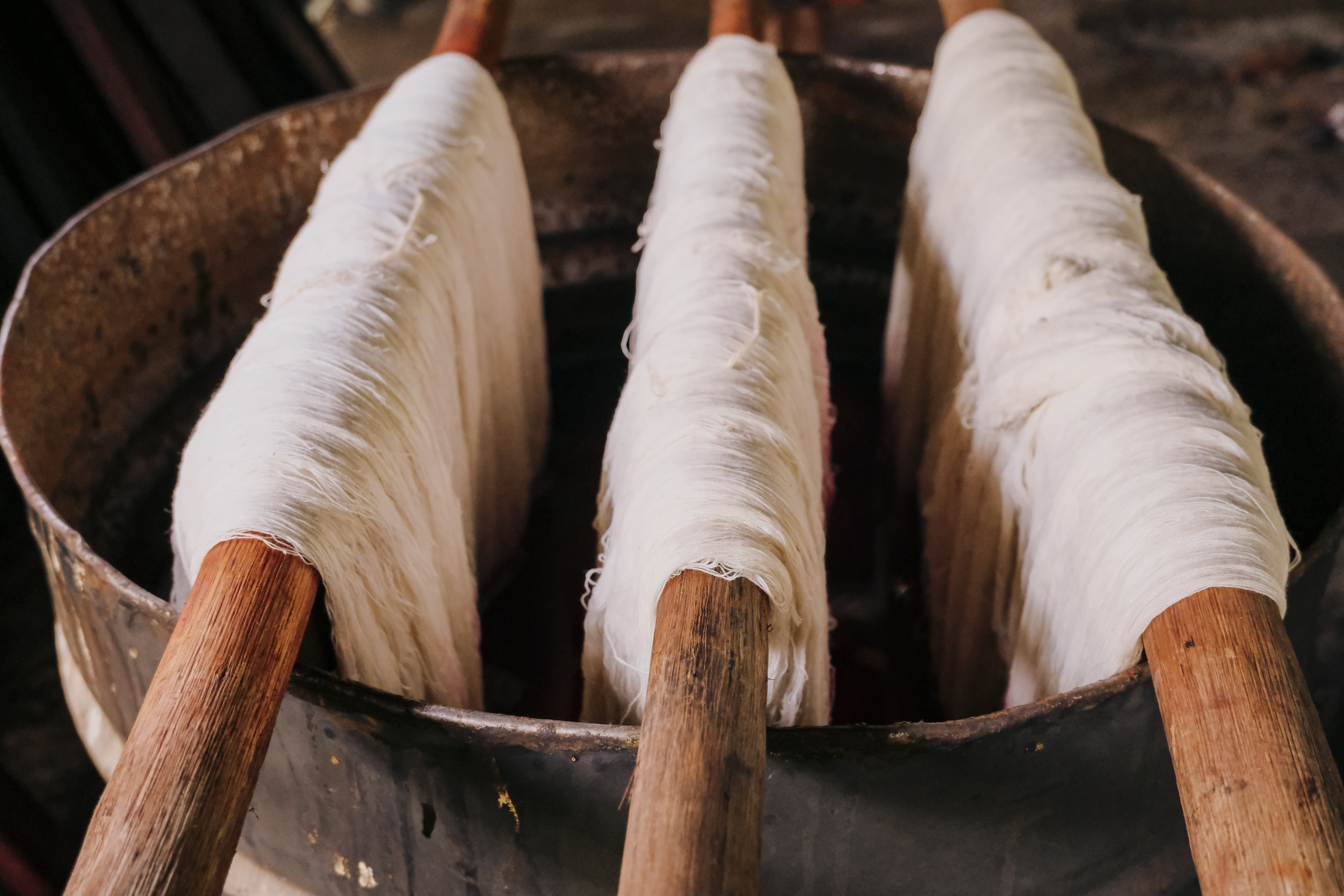
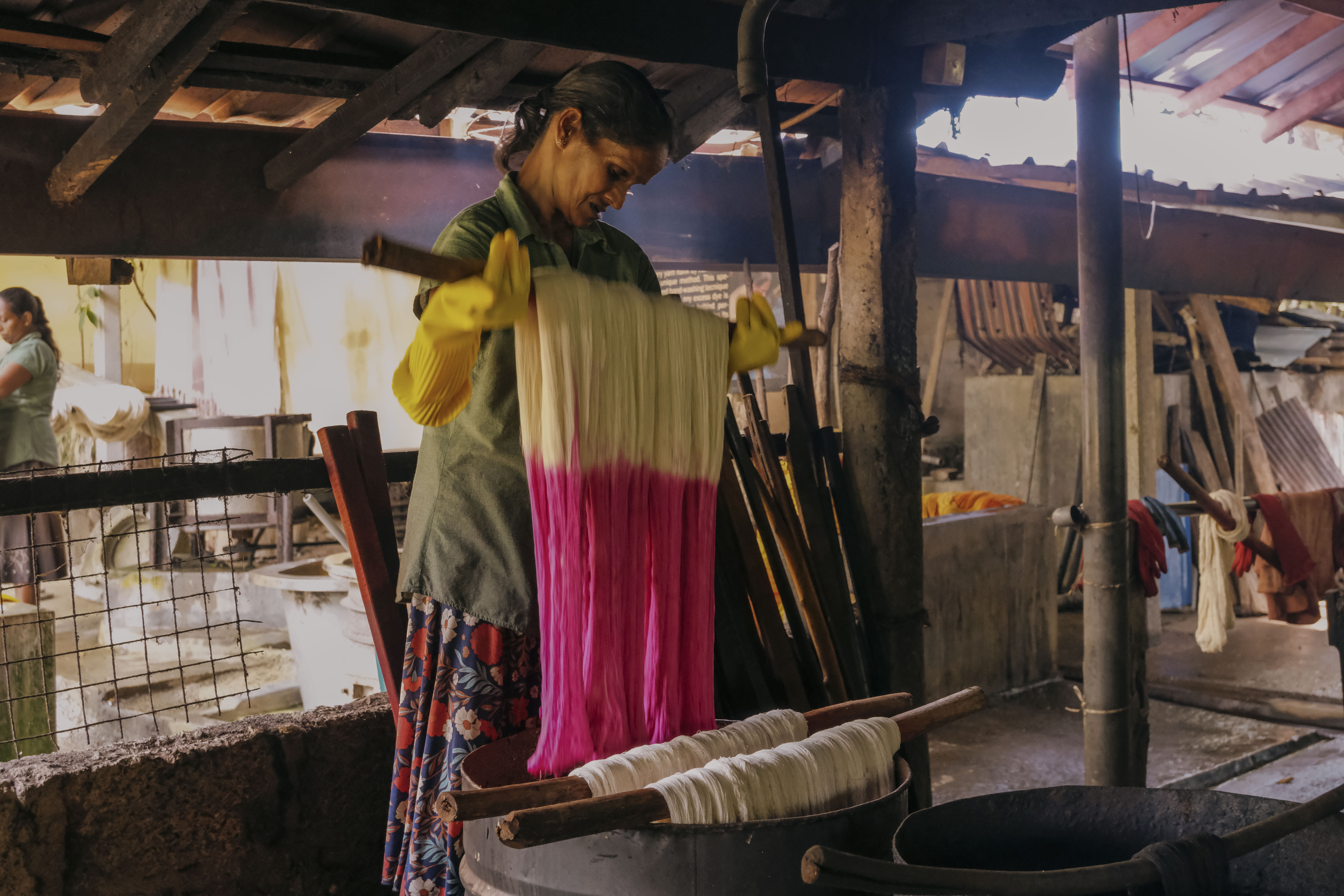
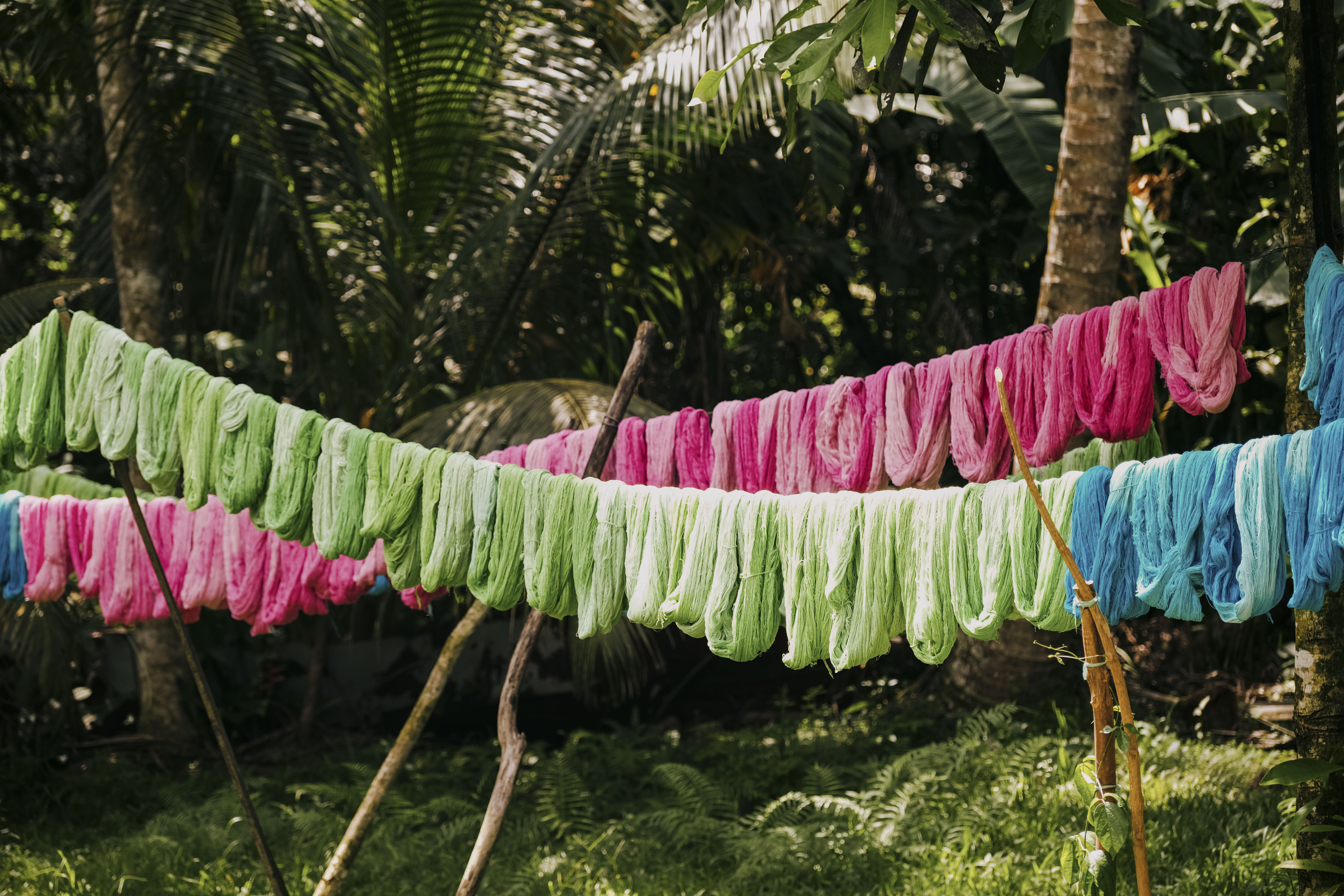
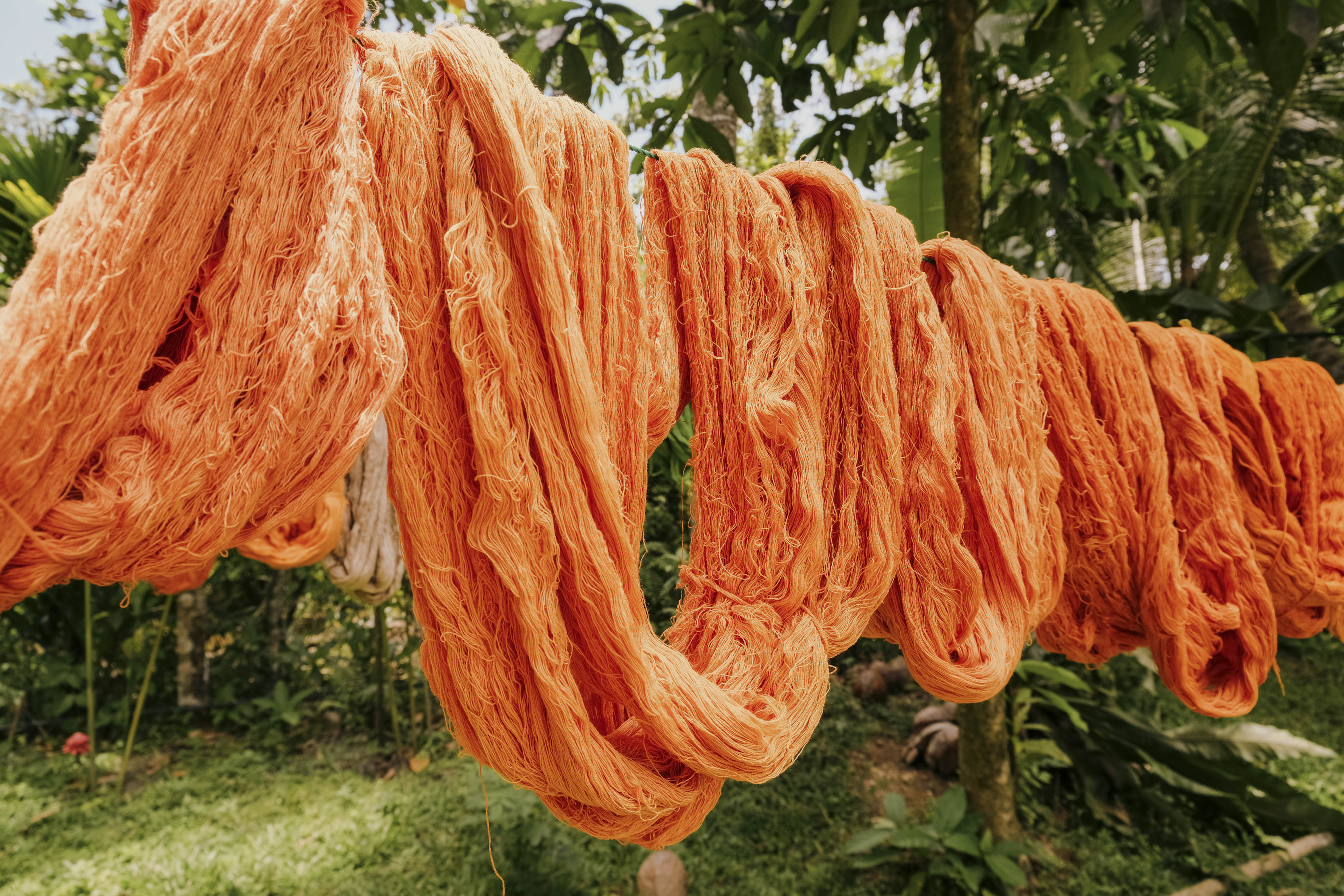
On a balmy September morning at Sooriya, I watch as one woman dips small bundles of cotton yarn in natural dyes made of jackfruit and mahogany. The dyed yarn is washed and line-dried in the garden before it is arranged into a ‘cake’ suitable for weaving.
Set up in 1976 by a husband and wife duo who were passionate about reviving the traditional craft, Sooriya Weaving Mills is a rare all-women-operated entity in a landscape of bigger commercial players. Now owned by Chandana Sooriyaarachchii, the couple’s son, it’s run differently from other companies. “Some women artisans working here joined the factory even before I was born,” Chandana tells me, smiling.
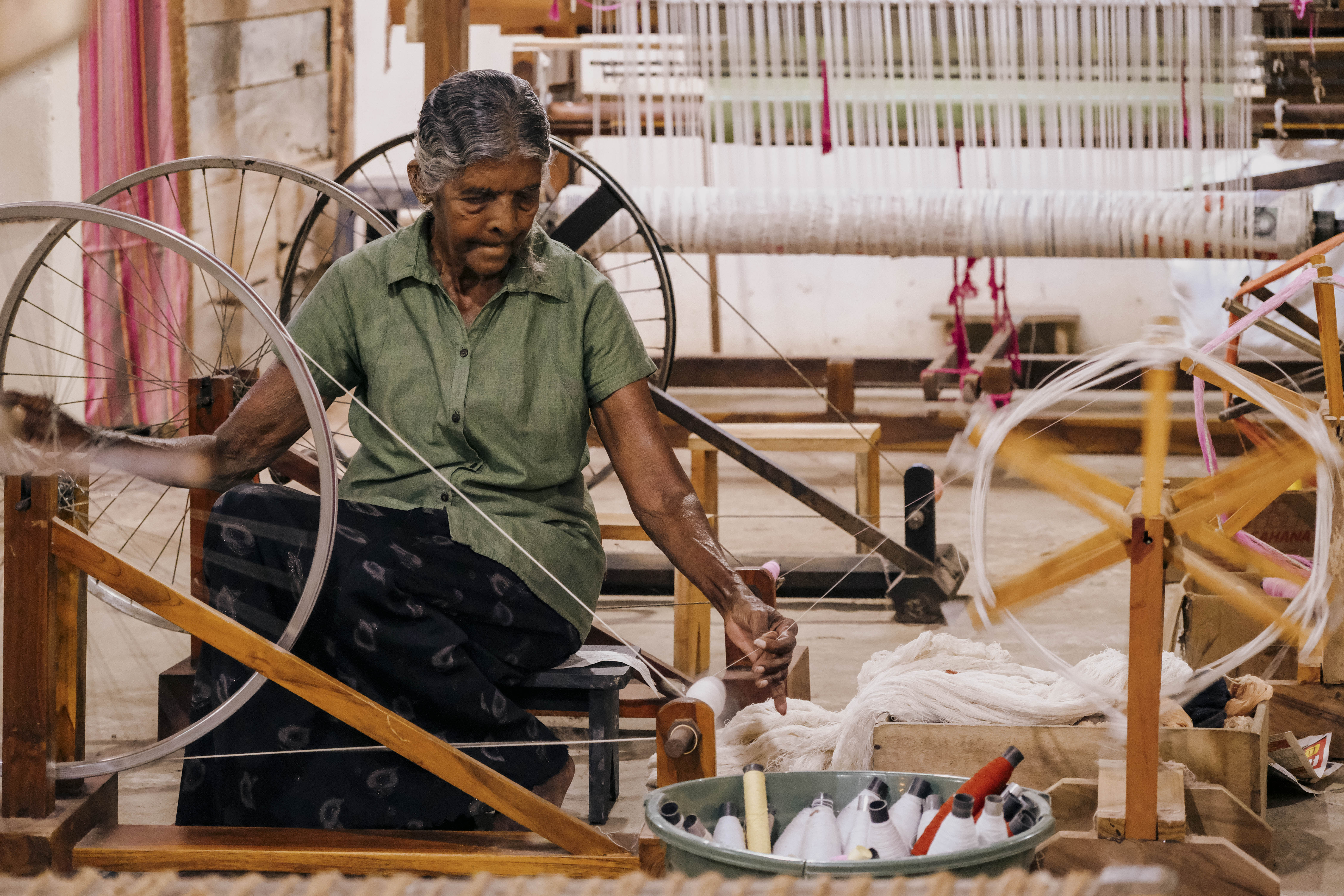
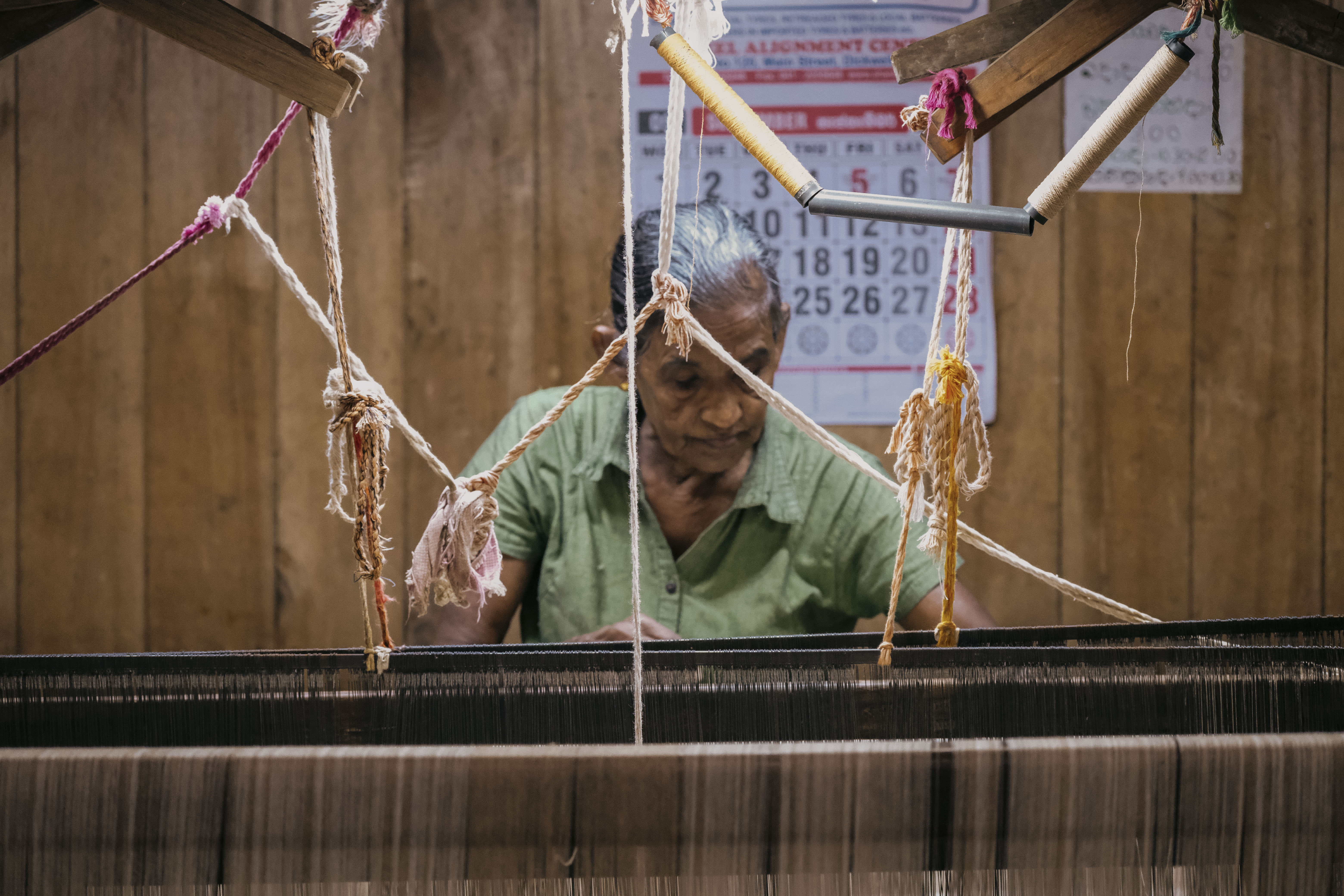
One of them is 84-year-old Kusuma Mudalige, who became a handloom weaver at the age of 20 and worked at a government-run textile factory before joining Sooriya in 1977.
Few other such facilities survived the three-decade-long Sri Lankan Civil War or the armed insurgencies in the 1980s, but Kusuma shares that Sooriya has not once stopped operations – perhaps due to sheer staunchness.
“Usually factories don’t keep old people like me, but I’m still here,” she says, as she handspins cotton yarn using a spinning wheel.
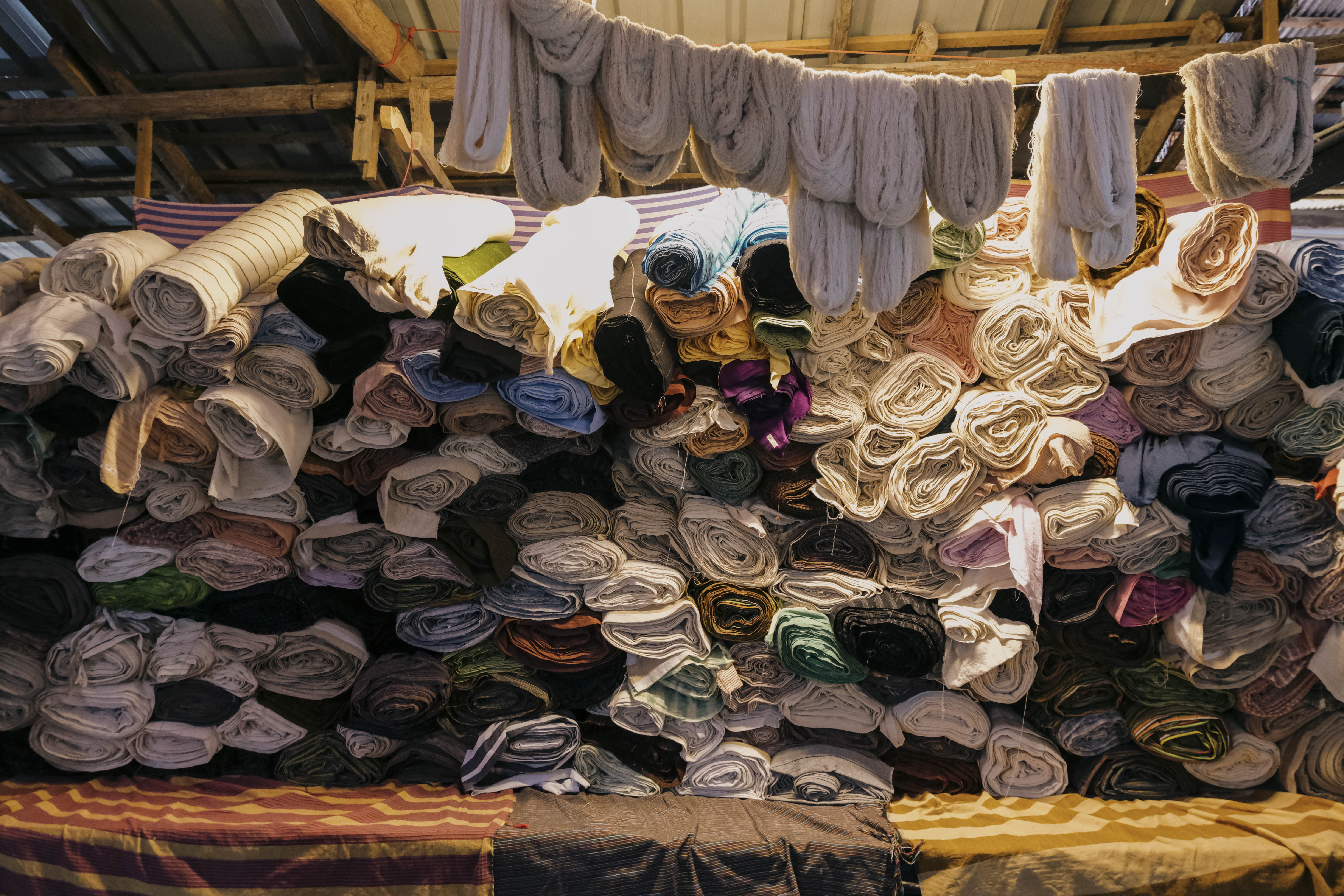
Photos: Zinara Rathnayake
Handmade handiwork
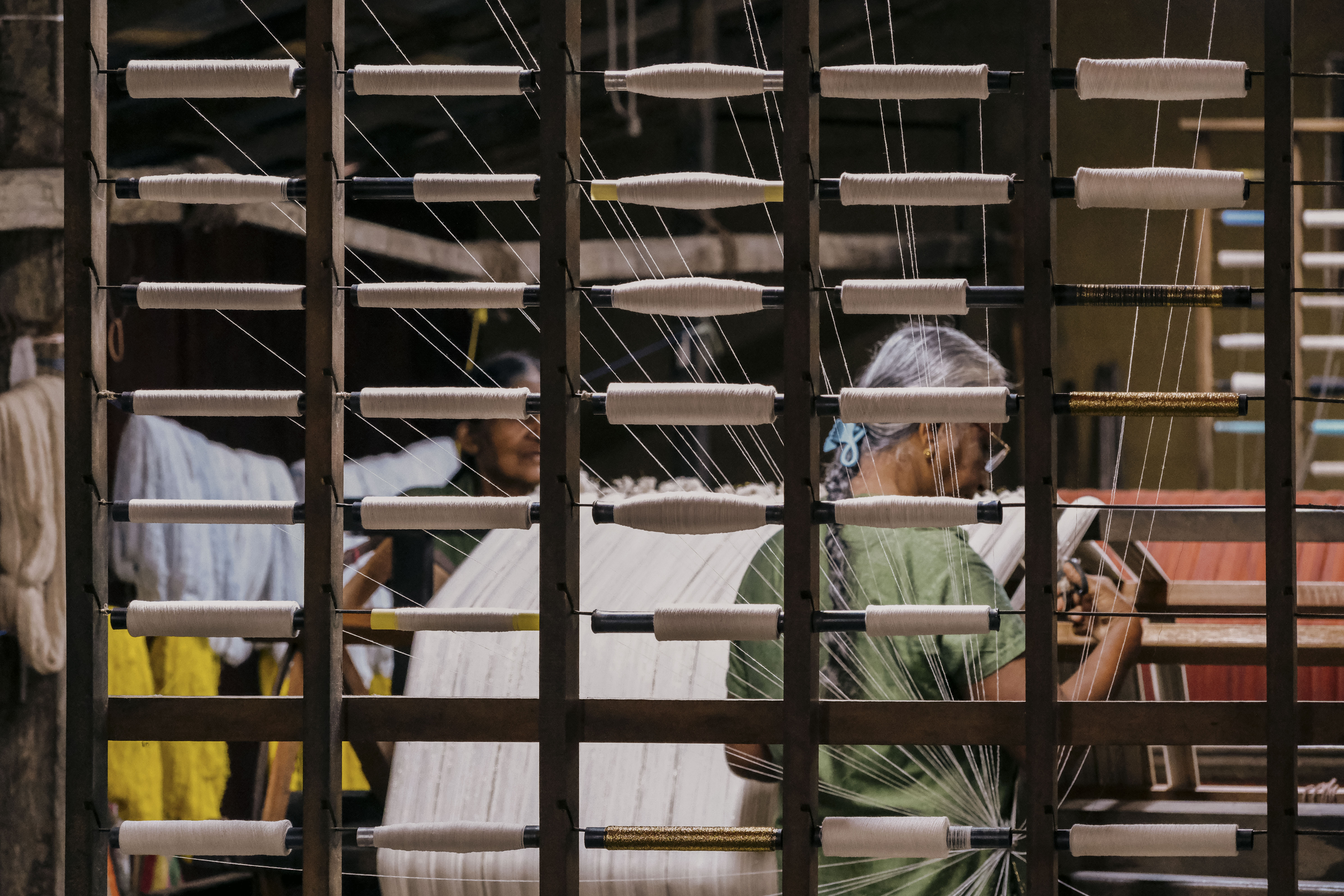
Inside the factory, three artisans get together behind a frame, warping yarn to create a base for weaving, which is rolled onto a beam for the loom. In more complicated designs with several colours, it takes patience, planning and precision to ensure the correct thread order.
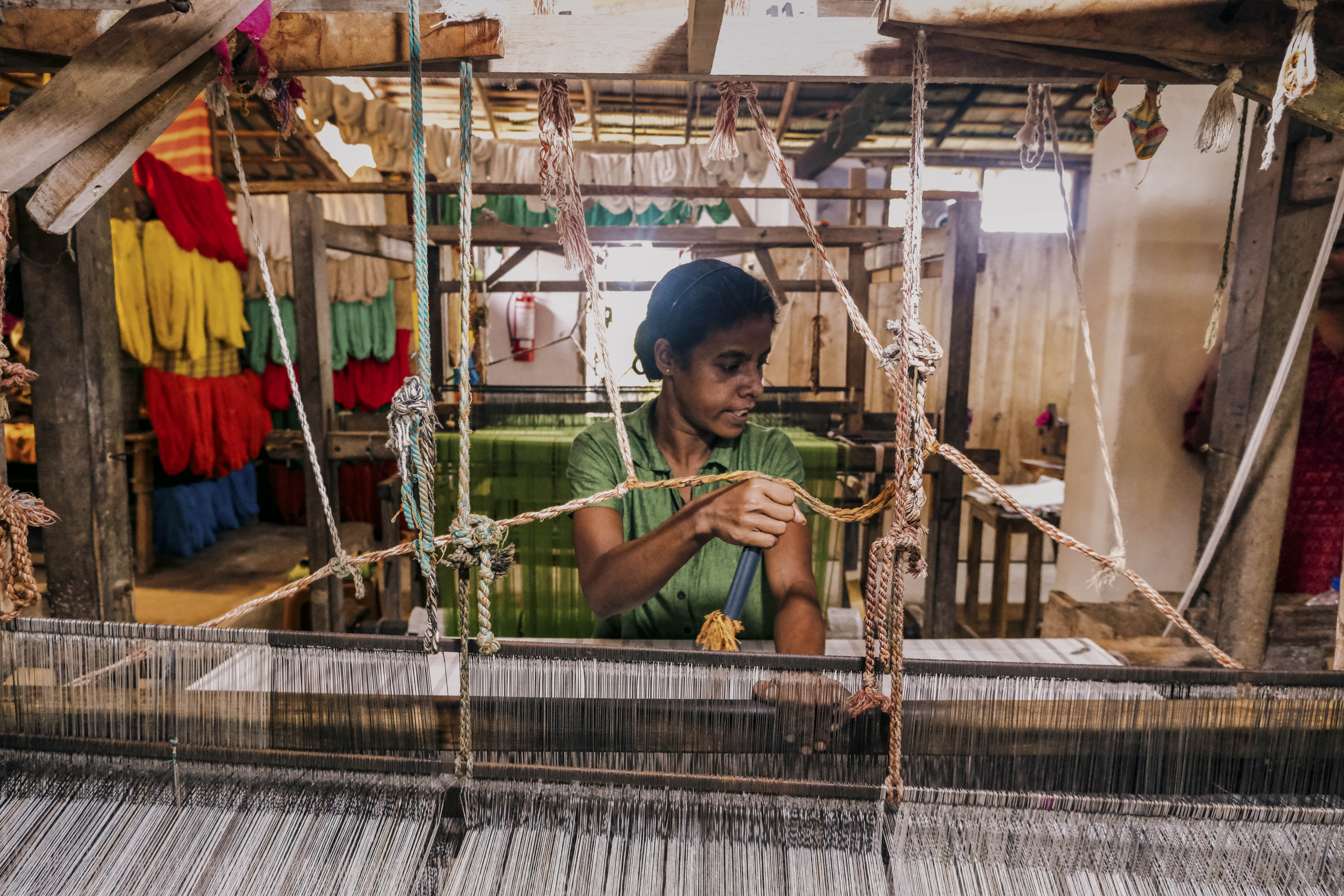
Weavers then follow the laborious, time-consuming task of passing each warp thread – there could be hundreds or thousands of these, depending on the design – through the heddles of the loom to achieve the desired pattern.
Unlike the modern power looms running on electricity, Sooriya’s traditional wooden looms require manual labour. Weavers control each pattern using foot pedals, while their hands rhythmically guide the loom’s shuttle that carries the weft thread back and forth.
The threads intertwine to create fabric that is then sent to a nearby factory to be cut and sewn into dresses, shirts, cushion covers and table runners, which are eventually sold at the adjacent boutique.
Embroidery is also done in-house on stylish kimonos and beach wraps with cosmic motifs and cushion covers with whimsical tuk tuk designs. The entire process – from dyeing yarn to sewing a simple shirt – can take anywhere between two and four weeks.
A reflection of Sri Lanka
Unlike many other traditional local crafts that are dying out, weaving – at least at Sooriya – is very much alive. Although many of the factory’s artisans have been here for several decades, there are others who have joined recently.
One draw is the flexibility of working hours and a more liberal environment where employees have the freedom to work at their own pace, says 46-year-old weaver Priyadarshini Karunarathne.
A mother of two, Priyadarshini previously worked at a larger garment factory, where she was continuously pressured to achieve targets and didn’t have time to sit down for lunch or a cup of tea, she says.
This is the grim reality at many of the garment factories scattered across the country’s economic zones, which offer poor working conditions, long hours and very little pay – even as apparel is Sri Lanka’s largest export sector, making up 7% of GDP.
As I tour the factory at Sooriya, it’s evident that the weavers and artisans here are motivated by their environment and a deep passion for the craft to create meaningful designs, woven painstakingly with natural fibres. This is a special place because it reflects everything Sri Lanka represents: a grounding in tradition, nature and slow life.
Before I leave, I meet 75-year-old Pangagamuwa Gamage Pungya, who learnt to weave from a machine her sister received from the government in the 1950s. “The machine is now no more,” she says, “but my machines [in the body] are working fine."
“I can still come to work here.”