Sometime in the early 16th century, in the scrub and stone of what is now Delhi’s Mehrauli Archaeological Park, a poet named Jamali wrote verses that shimmered with longing.
✦
He was a Sufi scholar in the court of the Lodi rulers and later the Mughals, a man of letters and devotion. Beside him, in life and eventually in death, was Kamali – a figure history records only faintly, but whose burial alongside Jamali has long intrigued the city.
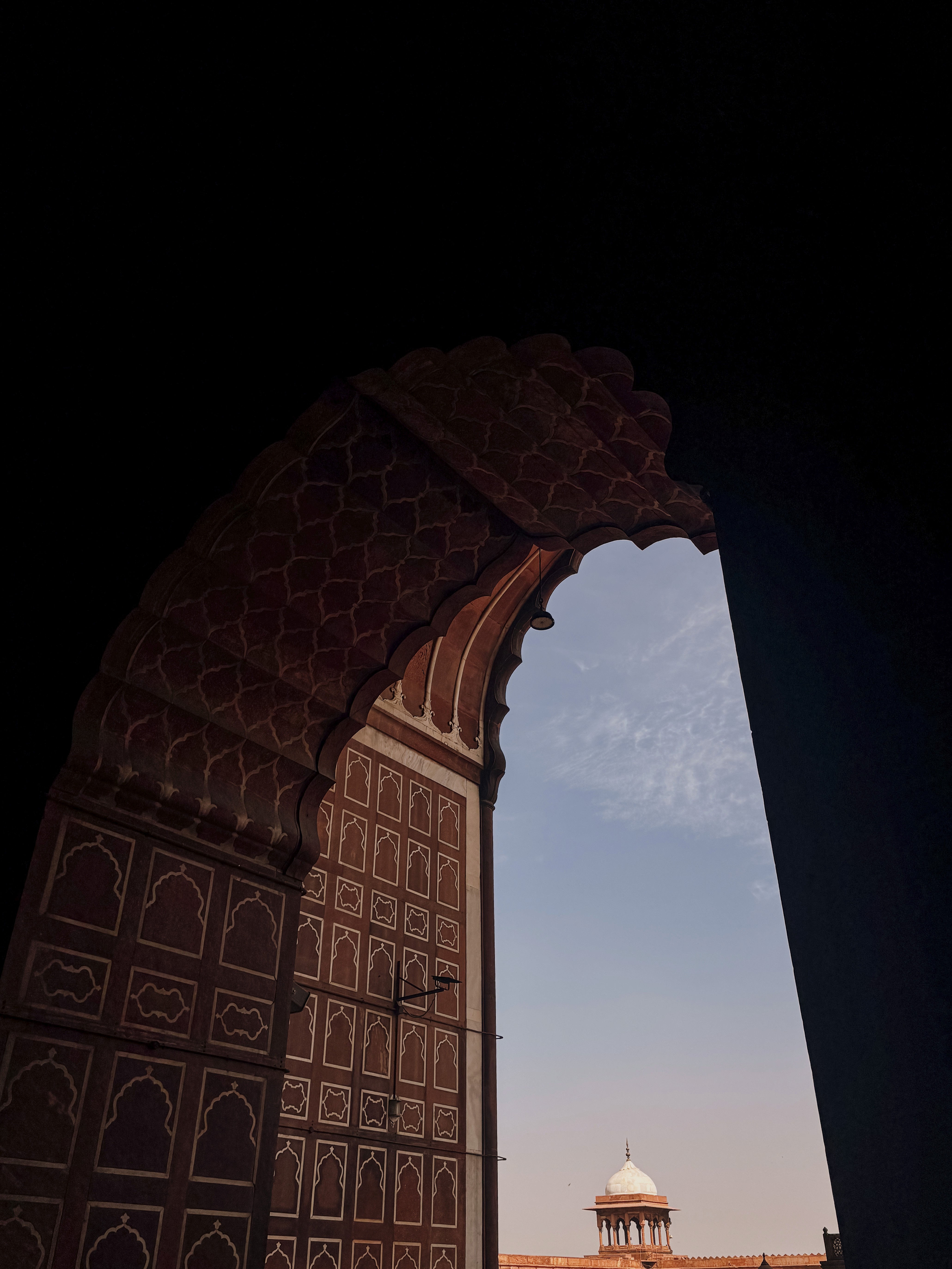
Their tomb stands within a mosque complex built between 1528 and 1529, its red sandstone blushing against blue sky. Above, a circular ceiling in muted reds and blues is adorned with carved sunbursts and delicate floral motifs. A band of Jamali’s Persian verses encircles the dome, words that hover between the earthly and the divine.
Jamali and Kamali lie side by side beneath a single roof, their graves aligned with an intimacy that has invited quiet conjecture. Like a husband and wife in burial, some have observed – except that Kamali was a man.
Whatever the exact nature of their relationship, their closeness in death outlived the empire that once held Delhi in its grip.
Today, the chamber sits quieter than the traffic beyond Mehrauli’s ruins, dust settling in its corners as pigeons cut through the arches. Locals have long associated it with djinns said to haunt old tombs, but for many in queer Delhi it holds a different meaning: a quiet shrine of love.
Young lovers drift in, drawn by whispered histories that claim it as an early marker of queer memory. In a country where no plaque would name such a bond, the monument has been informally adopted as a place to locate oneself within a past that official history leaves unsaid.
“Queer lovers come to the tomb seeking reassurance – a sense that their existence or love is not an aberration but something that has always existed in this city,” says Aditya Vikram Shrivastava, writer and translator.
“It offers a kind of legibility that is not neat. Pir-Murid [teacher and disciple], friends, lovers, companions – you could call Jamali-Kamali either and all of these relations.
“The history-telling we inherit has systematically invisibilised desires that fall outside the grammar of heteronormativity. But spaces like this interrupt that silence, leaving space to imagine other ways of living.”
In recent years, this impulse to subvert the narrative that queerness doesn’t exist in India has sparked renewed attention to Delhi’s layered past. Beyond Jamali and Kamali, a broader queer cartography of the city is slowly surfacing – Sufi shrines, courtly poetry, performance traditions, forgotten neighbourhood stories.
These are sites that Delhi’s queer residents have long visited quietly, sometimes privately claiming them as part of their lineage. Now, some are reclaiming them more visibly, situating the city within a global conversation about queer heritage while insisting that this history is neither imported nor new, but local and enduring.
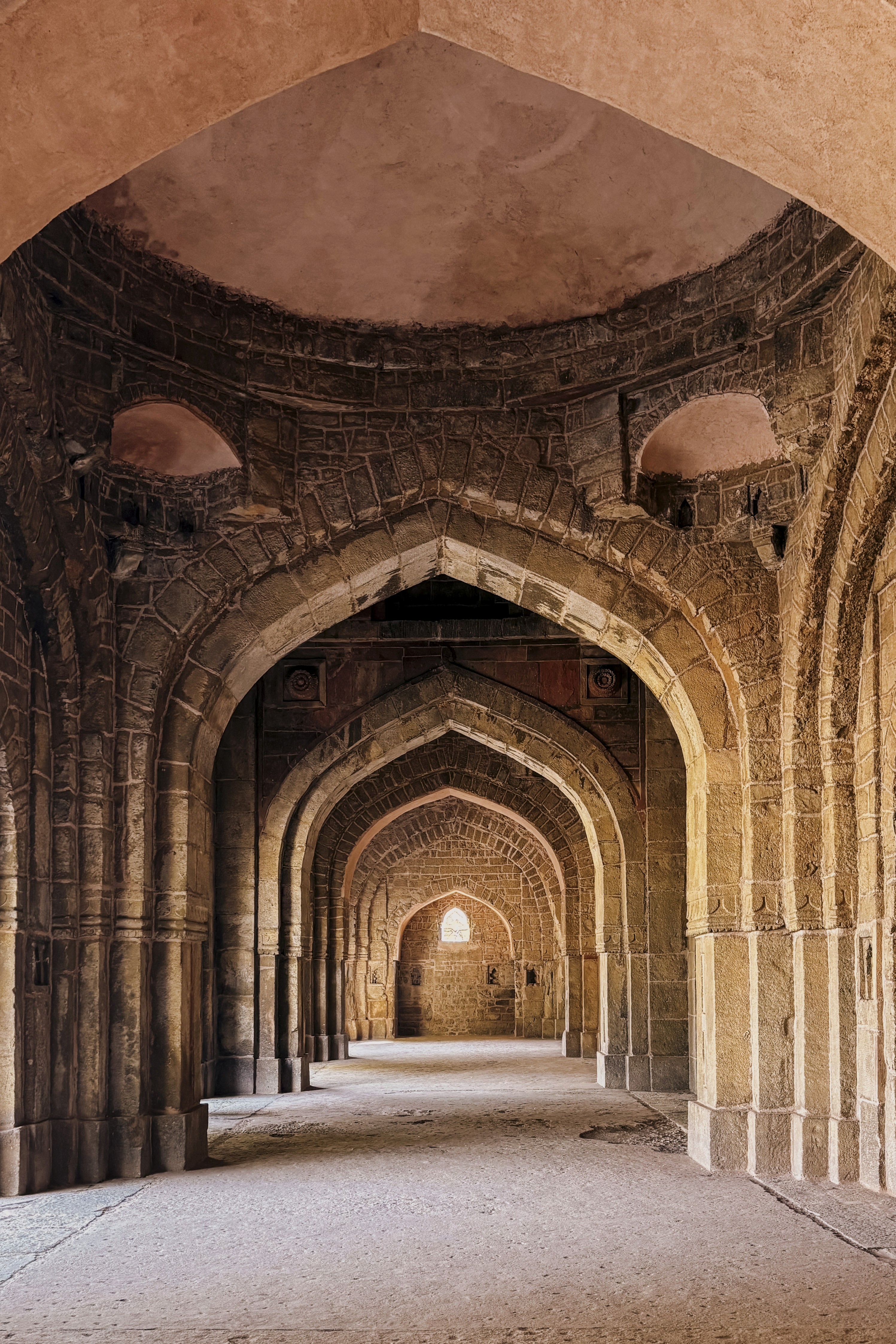
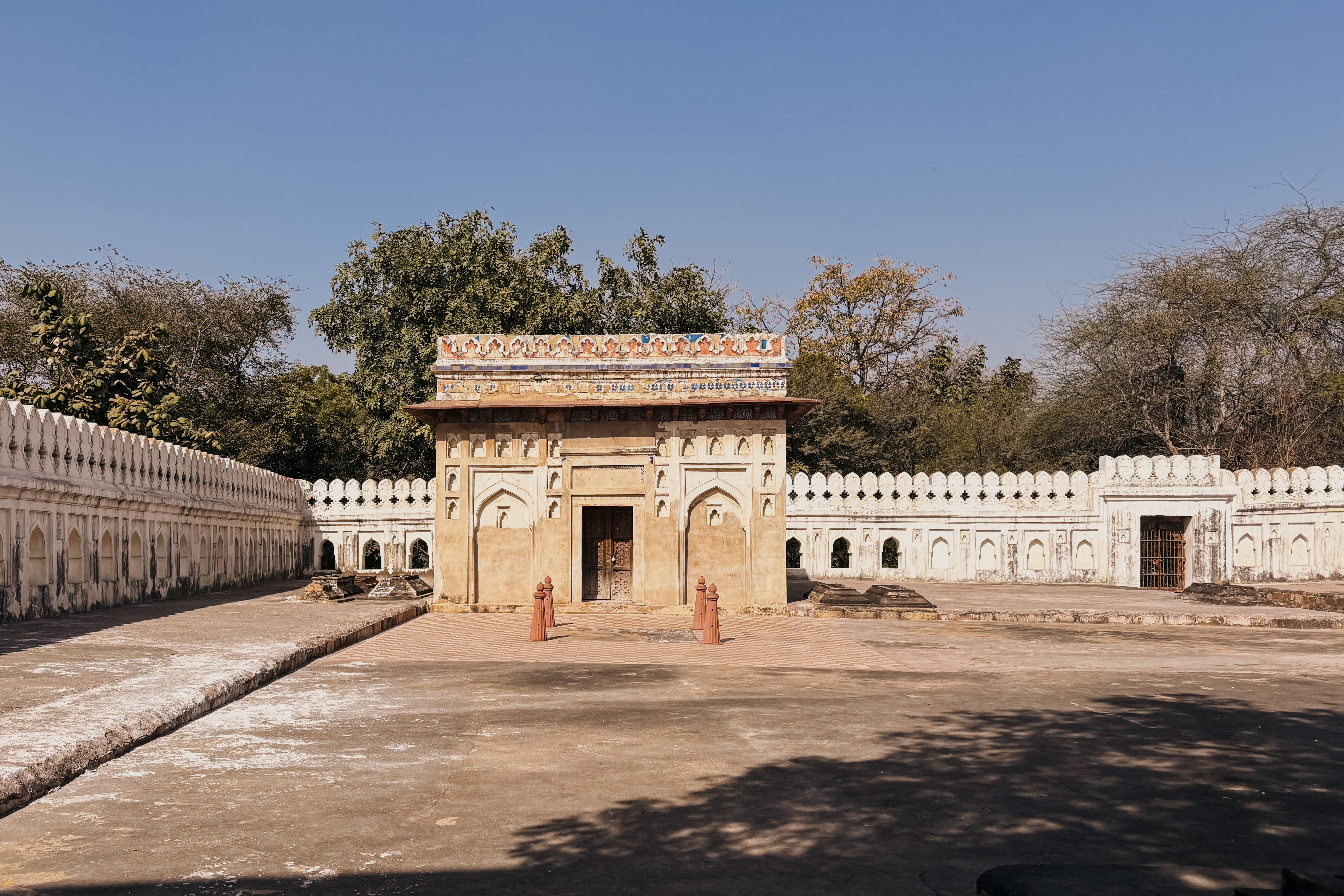
Photos: Anuj Behal
Hijron ka Khanqah
Not far from the more photographed ruins of Mehrauli lies another, less discussed site: Hijron ka Khanqah. The name literally means a ‘Sufi sanctuary for eunuchs’, and the complex comprises a mosque and a courtyard dotted with 49 whitewashed tombs believed to be the final resting places of members of the hijra (a term, among others, used in South Asia to describe a transgender person living in a community with a kinship system) from the Lodi era.
Unlike many monuments curated by the Archaeological Survey of India, this site has been maintained for over a century by hijras from Turkman Gate in Shahjahanabad, who regard it as sacred ground.
On festive occasions like Shab-e-Baraat and Muharram, the Khanqah becomes alive with prayer, langar (community meals), songs and shared stories as members of the transgender community gather, cook and distribute food to the poor – mixing devotion with community care.
In its serenity and solemnity, the Khanqah simultaneously embodies the historical prominence and later marginalisation of hijras. At times in South Asian history, eunuchs held influential positions in royal courts and carried spiritual authority; yet under colonial rule and in contemporary India, persistent discrimination has pushed many into precarious labour and social invisibility. For Delhi’s transgender community today, the Khanqah is a living archive to remember predecessors.
Sunehri Masjid and Red Fort
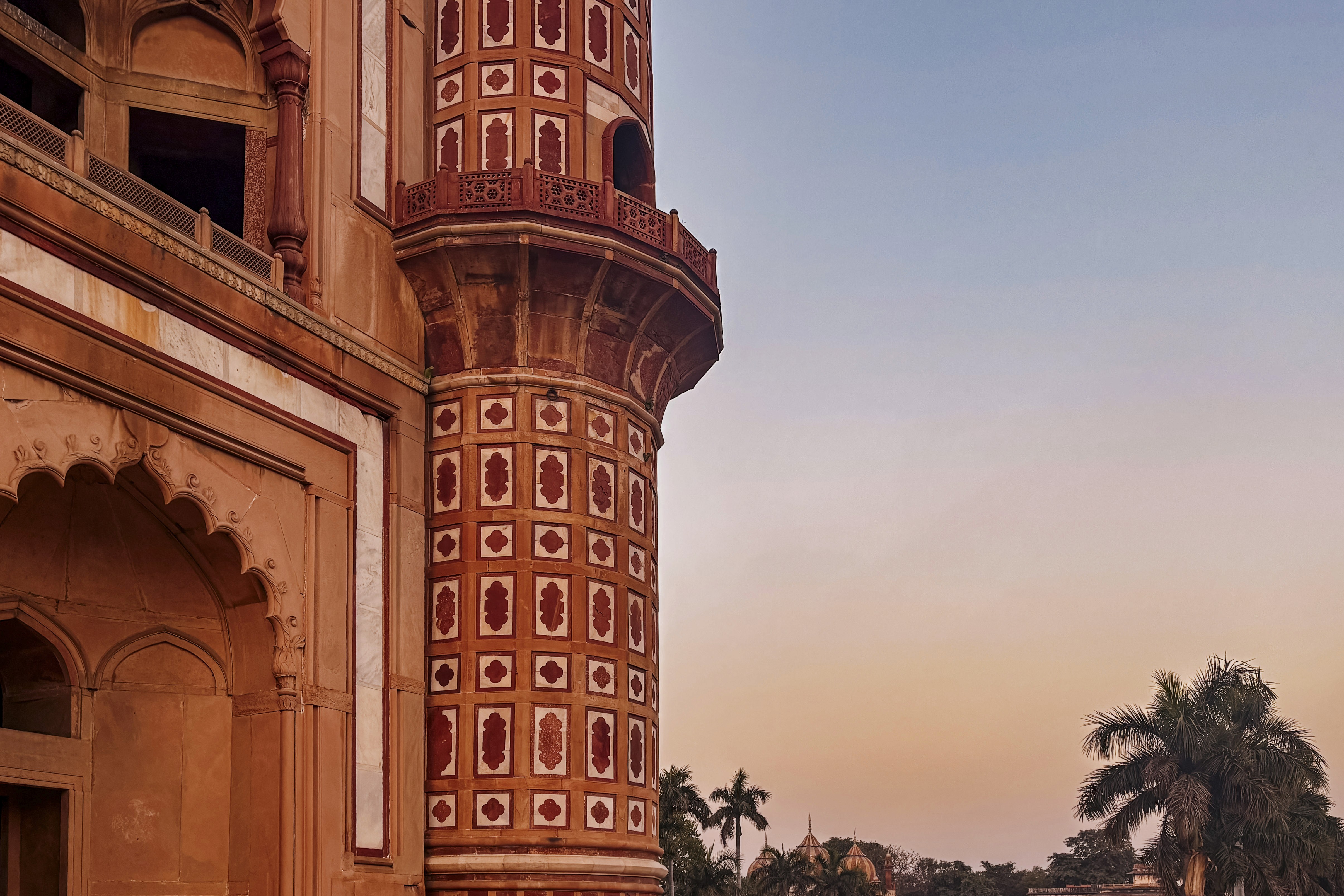
One of the most significant landmarks in contemporary India, Delhi’s Red Fort is both a national symbol and a former seat of the empire. Built in the 17th century, the vast red sandstone complex served as the residence of the Mughal emperors and the political centre of their rule.
Yet beyond its image as a monument of imperial authority, the fort was also a space of courtly culture. In the 18th century, under the 13th Mughal emperor Muhammad Shah, Urdu poetry flourished in Delhi, often expressing homoerotic longing within accepted literary conventions.
In this milieu, gender-variant courtiers were not peripheral figures but part of the social and political fabric of the court.
Just across from the fort’s walls stands Sunehri Masjid, built in 1751 and formally attributed to Qudsiya Begum, wife of Muhammad Shah. Historical accounts indicate that its construction was overseen by Javed Khan, a powerful khwajasarah (the Pakistani term for hijra) and close confidant of the queen. Khwajasarahs were not marginal attendants but administrators, military officials and trusted political intermediaries embedded within the Mughal court. The mosque’s presence near the imperial complex offers architectural evidence of the authority they once exercised at the heart of Delhi.
These days, as worshippers gather in the mosque and tourists stream through the Red Fort, these histories remain largely unspoken.
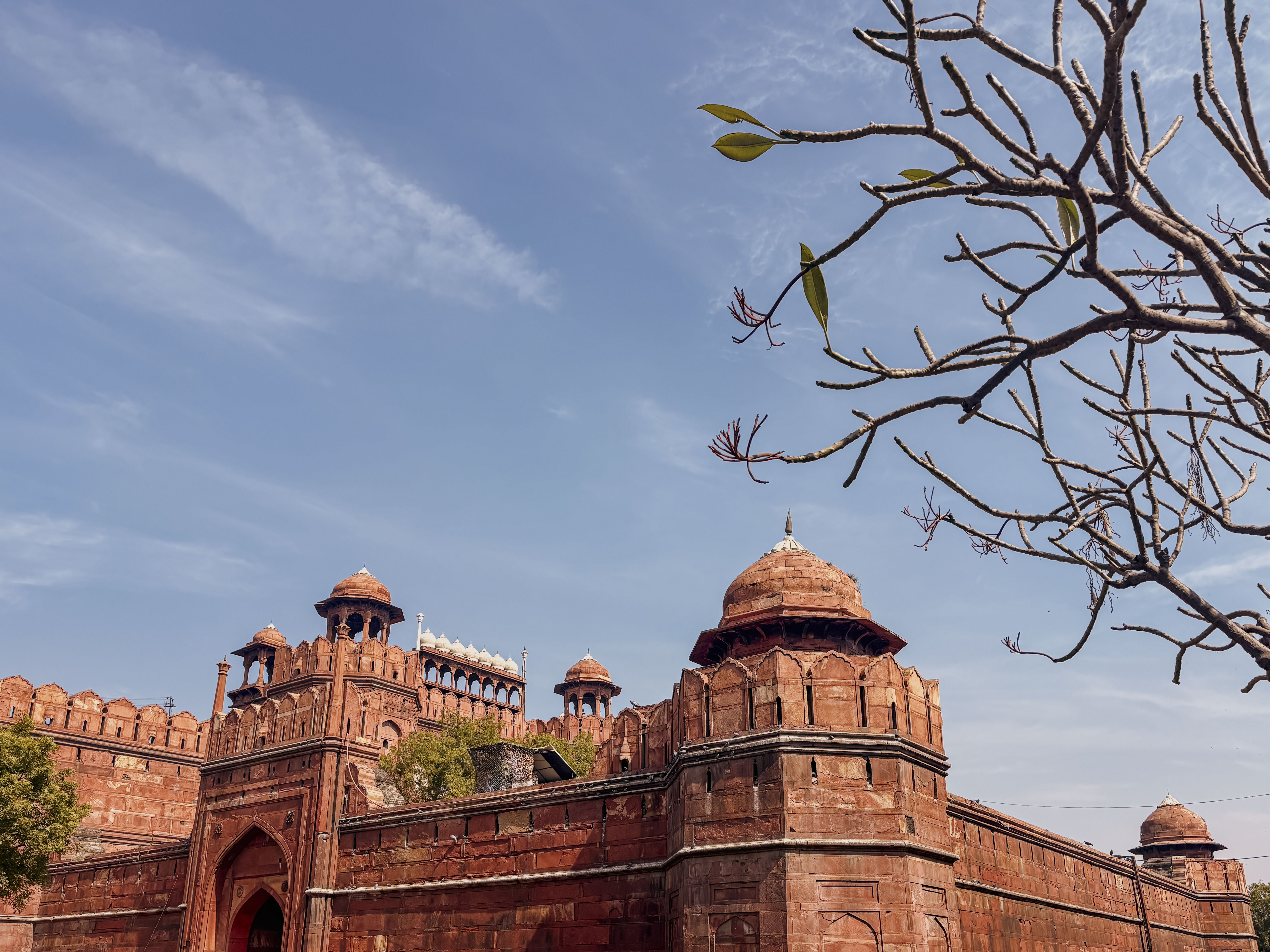
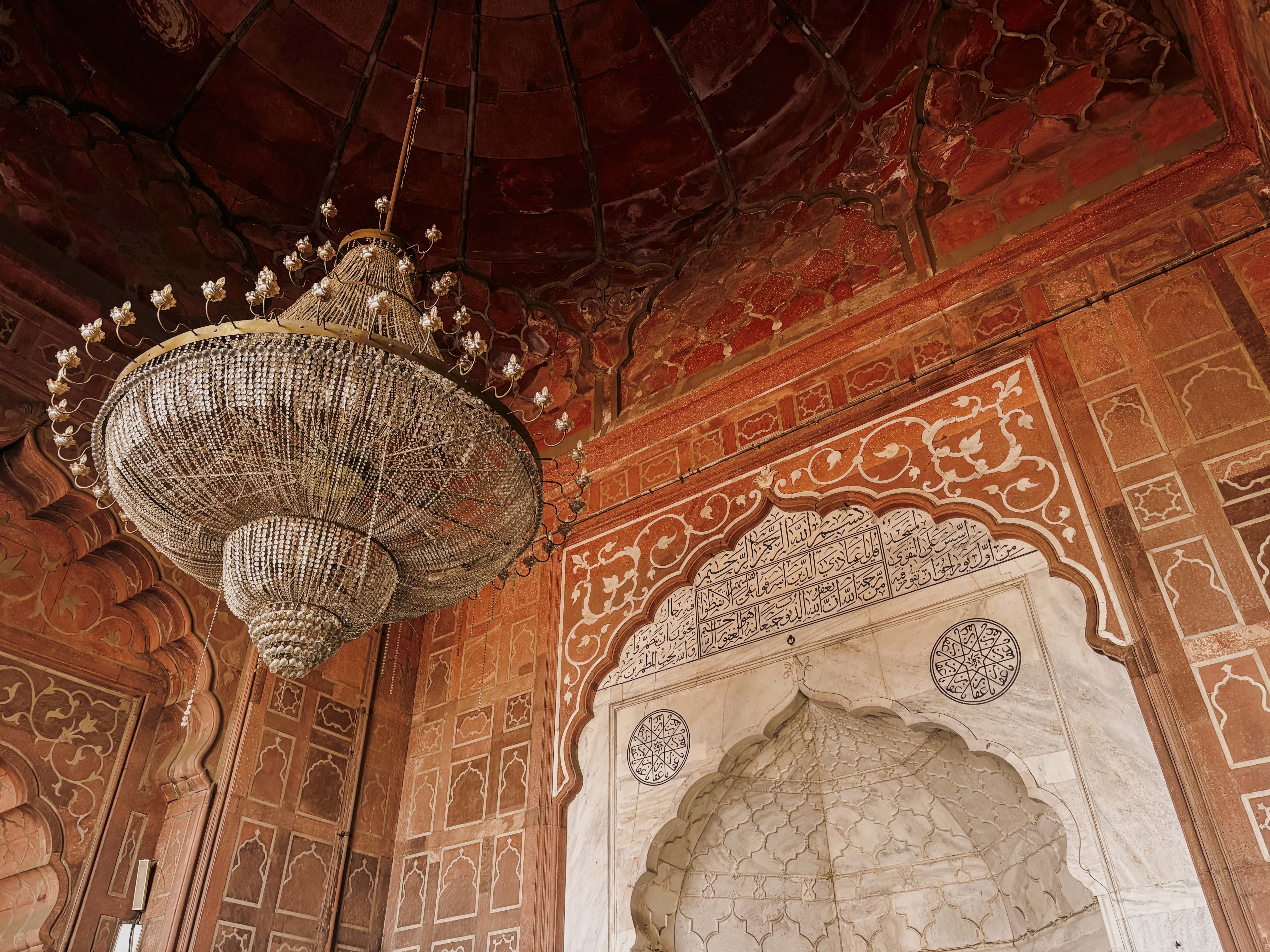
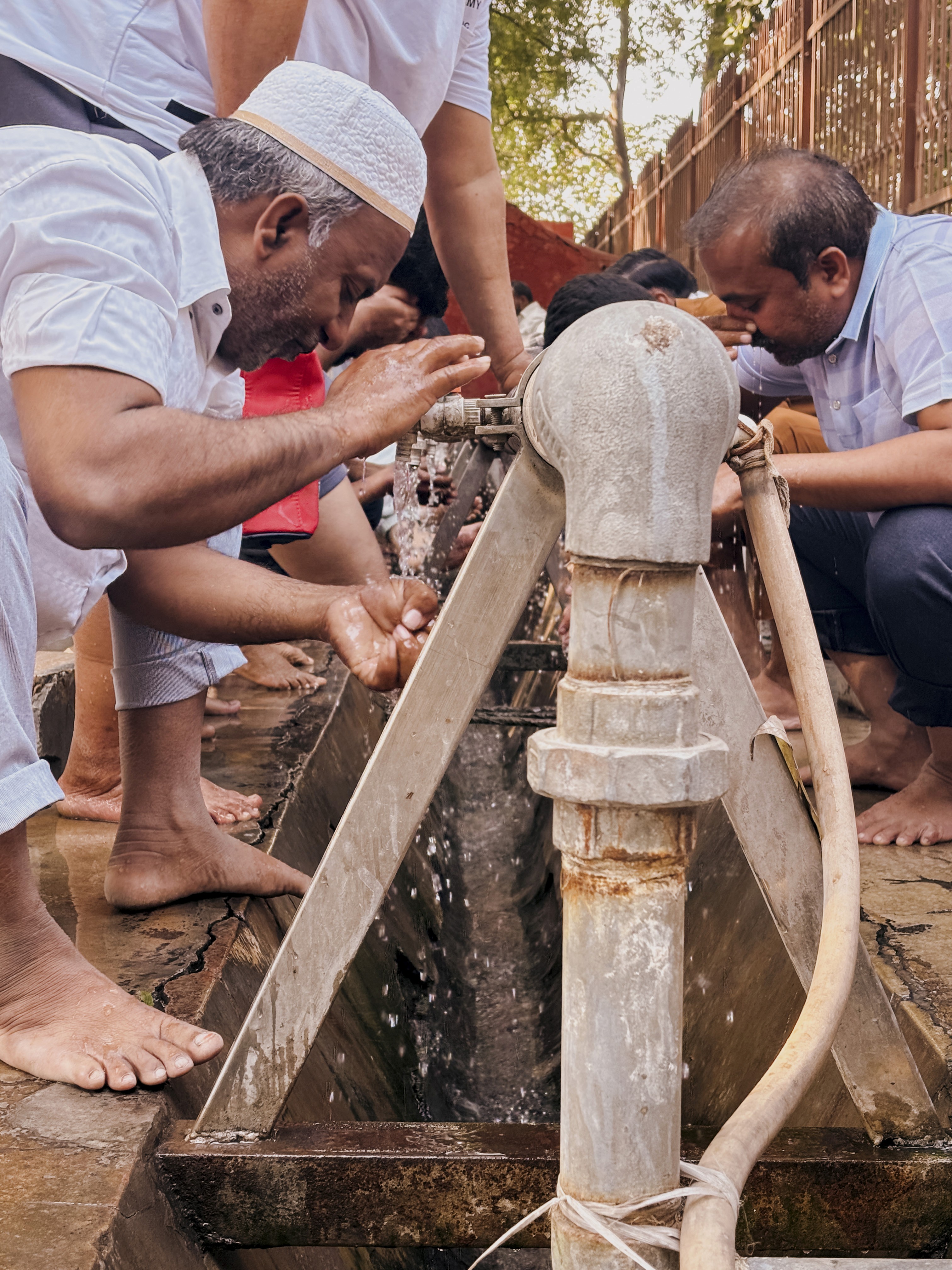
Photos: Anuj Behal
Hazrat Sarmad Shaheed’s shrine
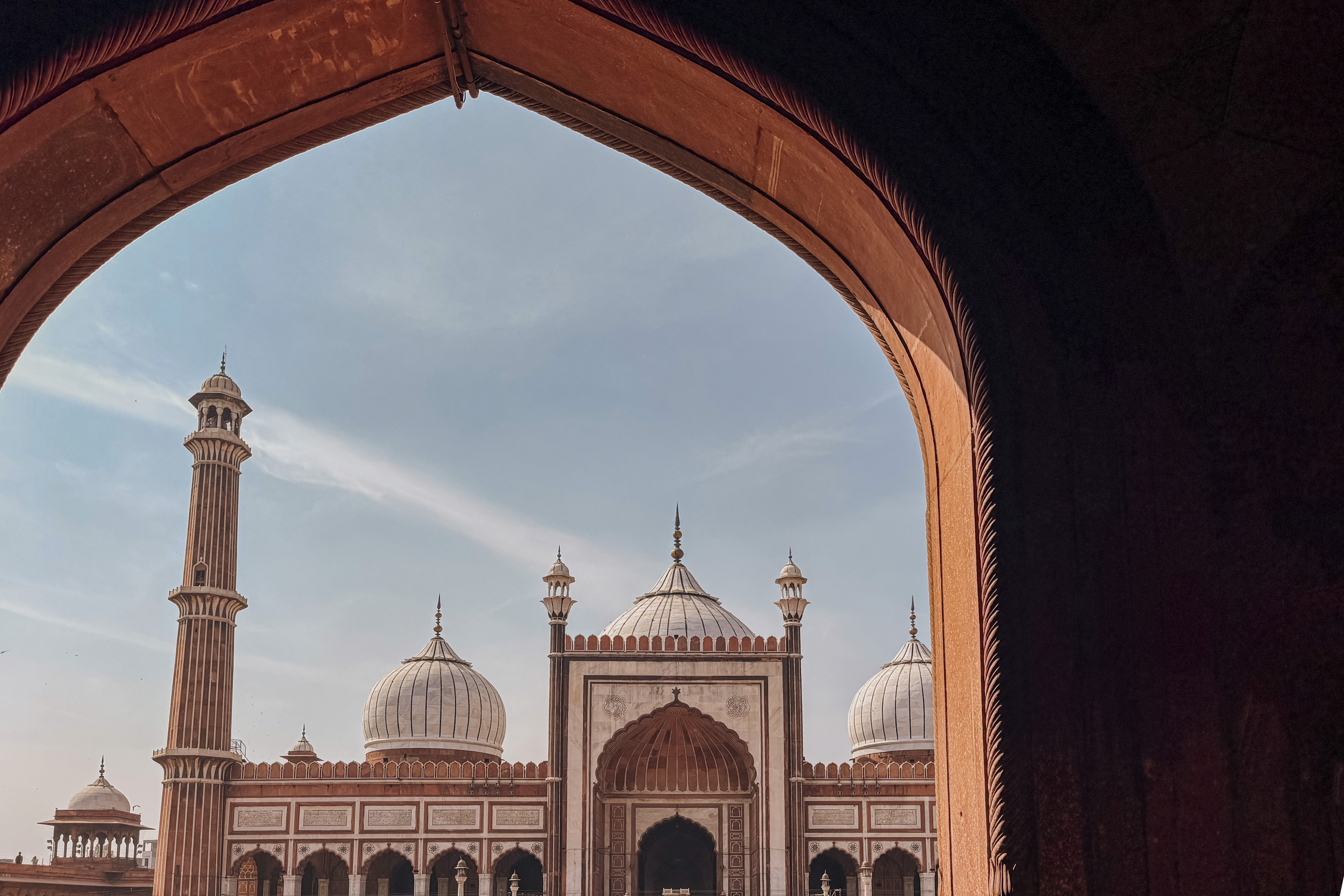
In the shadow of Jama Masjid, one of the largest mosques in India and a defining monument of Old Delhi’s skyline, lies a small, almost easily missed grave draped in red cloth. It belongs to Sarmad – the 17th-century mystic, poet and iconoclast whose life and death have echoed through the city’s spiritual imagination for centuries.
Born an Armenian Jewish merchant who later embraced Sufi mysticism, Sarmad arrived in Mughal India and gradually shed not only his former faith but also the conventions of society. He wandered Delhi unclothed, reciting Persian verses that blurred devotion and desire, defying orthodoxy with an uncompromising spiritual intensity. His close bond with Abhay Chand, a Hindu youth who became his disciple, has been read by many as a relationship that transgressed religious and social boundaries.
In a city where imperial power and religious authority were deeply intertwined, Sarmad’s refusal to conform made him both magnetic and dangerous.
He was eventually executed in 1661 under Emperor Aurangzeb, reportedly for heresy after refusing to complete the Islamic declaration of faith in court. Legend holds that even after his beheading executed on the steps of Jama Masjid, his body rose and continued reciting poetry – a story that transformed him from condemned dissenter into enduring saint.
Today, his shrine draws devotees across faiths, including members of Delhi’s queer and transgender communities, who see in Sarmad a figure of spiritual defiance and radical love.
Dargah of Hazrat Nizamuddin Auliya
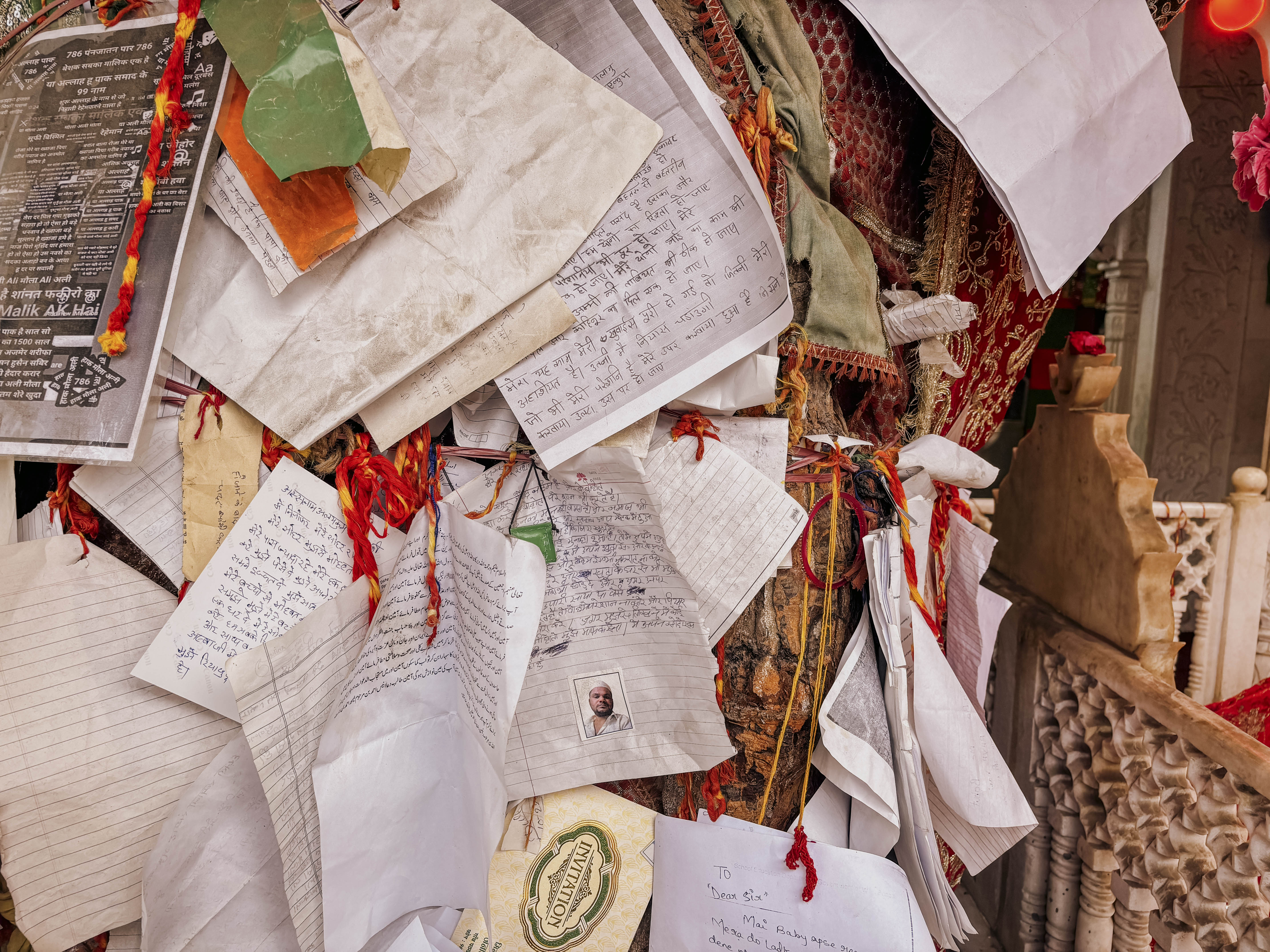
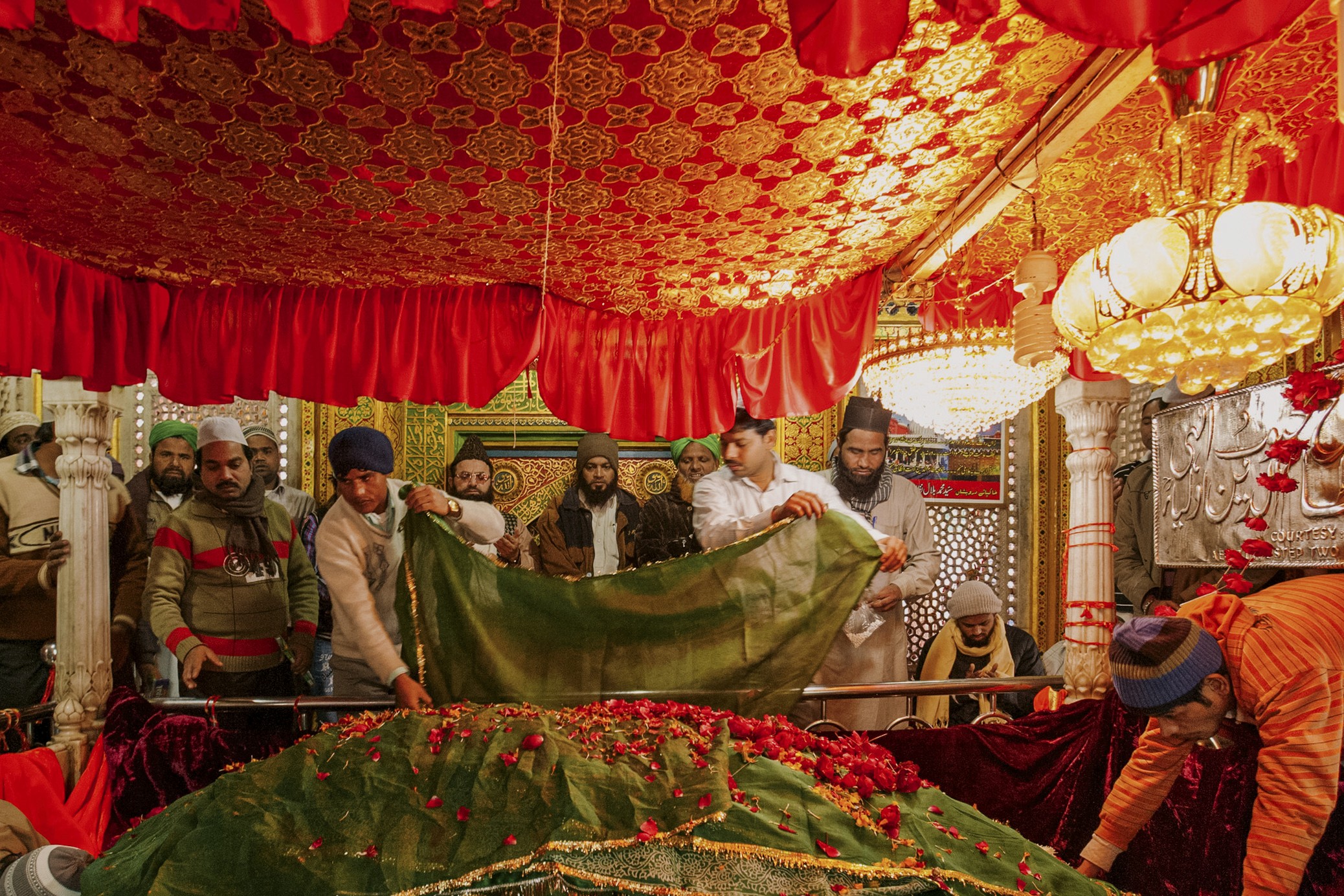
In South Delhi stands the Dargah of Hazrat Nizamuddin Auliya, one of the most revered Sufi shrines in India. Built around the tomb of the 14th-century Chishti saint, the dargah (tomb of a Muslim saint) has for centuries drawn devotees across faiths, languages and social divisions. Unlike the rigid hierarchies often associated with formal religious institutions, the space has long been shaped by the Chishti order’s emphasis on love, inclusion and spiritual equality.
Nizamuddin Auliya’s teachings centred on compassion over orthodoxy and devotion over dogma. His khanqah (Sufi hospice) was known for feeding the poor and welcoming those on society’s margins. Among those closest to him was the celebrated poet Amir Khusrau, his devoted disciple, whose verses gave language to the ecstasy and paradox of divine love.
When Nizamuddin died in 1325, the loss is said to have devastated Khusrau; he passed away just months later. Today, their graves lie within the same shrine complex, in close proximity – a spatial echo of the intimacy that marked their spiritual companionship.
The dargah that grew around the saint’s resting place became a site of prayer, music, poetry and mystical expression, where qawwali (Sufi devotional music) continues to resonate through its marble courtyards each evening.
Over time, the dargah has also become a space where those excluded elsewhere seek refuge – including members of Delhi’s queer and transgender communities, who find in Sufi traditions a vocabulary of love that transcends rigid binaries.
Photos: Anuj Behal
A city read differently
Beyond monuments and shrines, Delhi’s queer histories are also embedded in more ordinary geographies. Some are explicitly political. Regal Cinema in Connaught Place witnessed one of the first public LGBTQ protests in 1998, marking a rare moment of visible dissent in the capital. The Indian Coffee House and People’s Tree, meanwhile, became informal meeting grounds in the late 1990s and early 2000s, nurturing conversations that would shape Delhi’s emerging queer movement.
A few metres from the Jama Masjid metro station lies a small park that hosts one of Old Delhi’s oldest akharas (place of practice), where wrestlers gather every Sunday to compete.
To most visitors, it is simply a traditional wrestling ground. Yet it has long functioned as a gay cruising site – frequented, particularly, by working-class men from the area seeking intimacy in a city that offers them few private spaces.
For the writer Aditya, this layering is central to understanding queer Delhi. “Queerness in the city is inseparable from its everyday spaces,” he says. “It is not always about isolated monuments or clearly demarcated sites. It is about how people read and inhabit spaces differently over time – how a park, a cinema, a shrine can carry parallel histories.”
In this sense, Delhi’s queer map is less a fixed trail of landmarks and more a shifting interpretation of the city itself, where visibility and invisibility coexist within the same streets.
One of the most direct ways to encounter these layered histories is through specially curated queer heritage walks. Initiatives such as the Delhi Queer Heritage Walk, led by the transgender heritage conservationist Batool Ali, trace a map of the city rarely found in guidebooks.
The tours move through historic monuments and subcultural hotspots alike, sometimes even opening doors into transgender households in Old Delhi.
At a time when outlier presences are increasingly pushed to the margins of public life, they reclaim space that has long existed within the city’s fabric. By reframing familiar places through a queer lens, the walks invite participants to see Delhi as a palimpsest of overlapping identities.
Leading these walks is both archival and political for Batool. “We want to centre queer perspectives in our own history. Many of us grow up feeling displaced within our biological families – even when we succeed, there’s often a quiet sense that we’re not the heterosexual daughters or sons our families expected.
“Through these monuments, I want people to feel a little less displaced; to see that people like us have always belonged here. Queerness is not a Western import; it is deeply rooted in our own desi history.”
For participant Sunny Sandhu, a British Indian visiting Delhi for a few months, the walk offered something unexpectedly grounding. “You often go to popular gay clubs or nightlife spaces in cities around the world, which can sometimes feel a bit hedonistic,” he said. “But experiencing queer history and life so closely feels different – it fills you with a sense of belonging in another way.”