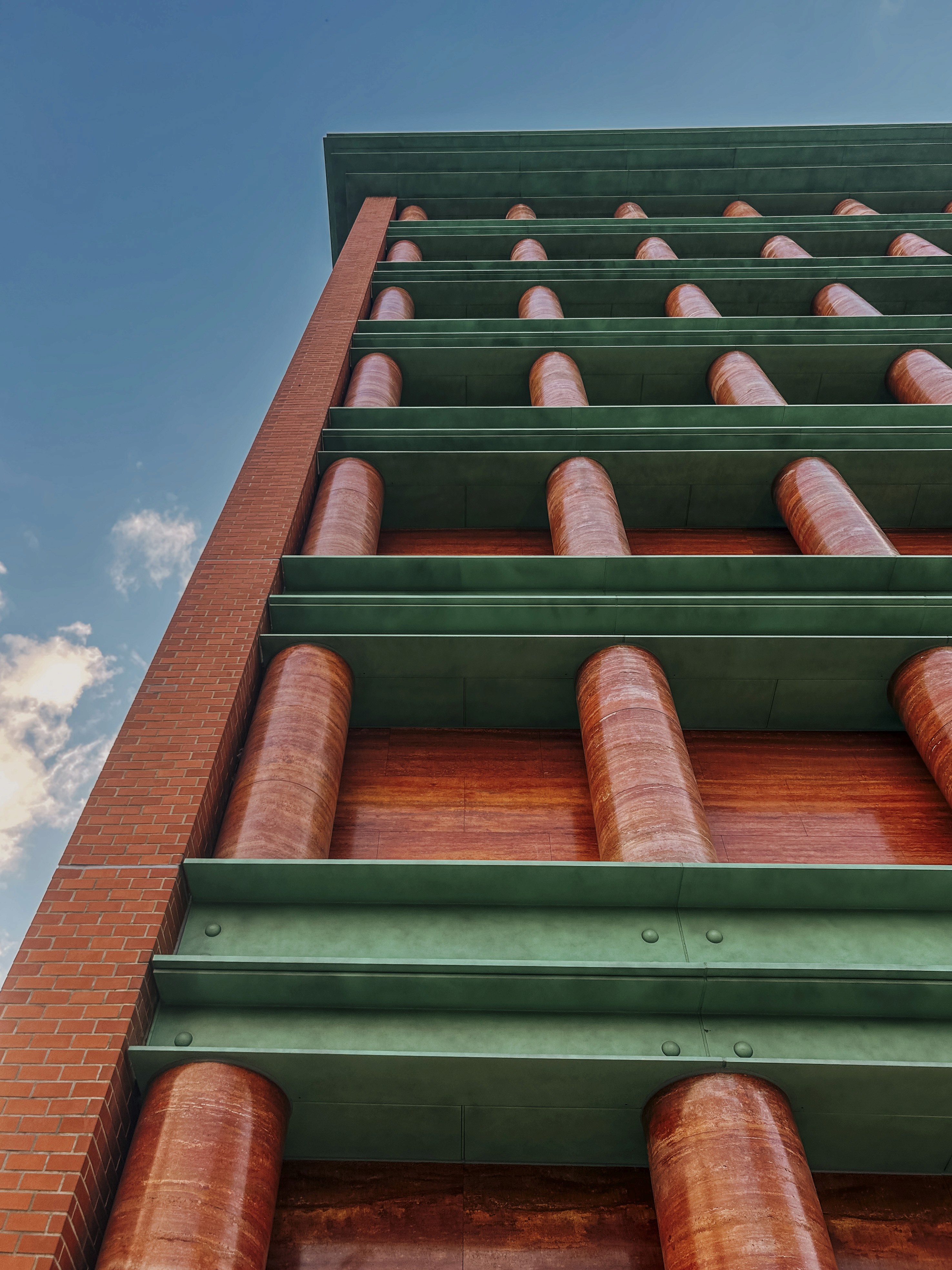
It was an image of Aldo Rossi’s Hotel Il Palazzo that brought me to Fukuoka.
✦
A magnetic vision of a building straddling antiquity and futurism, with rust-red Iranian limestone columns and Grinch-green copper lintels on the façade. Designed by the late-Italian architect (1931-1997), it’s a beacon of boldness in a district crowded with multiple shades of grey.
The hotel is one of the city’s wonders of Postmodernism – a late-20th century movement defined by an irreverent mishmash of styles, bold colours and playful forms that wagged their collective finger at the seriousness of Modernism. This period dovetailed with Japan’s bubble economy in the 1980s, when Fukuoka city’s lackadaisical urban character propelled the government to attract foreign architects to contribute to its international standing.
In real life, Hotel Il Palazzo is nothing short of amazing. In its heyday, in fact, it was the place to party.
The late-architect Shigeru Uchida designed the punchy interiors, and Ettore Sottsass, Shiro Kuramata and Gaetano Pesce – stalwarts of Milan’s progressive Memphis Movement – each designed a bar in the annex blocks. Unfortunately, these are now gone.
In 2023, Uchida Design Studio redesigned the hotel’s interiors and improved accessibility by shifting the entrance from the podium to a street-level neon-blue portal. And last September, an eight-seater, womb-like French restaurant called L’ Unique labo opened in one of the annexes.
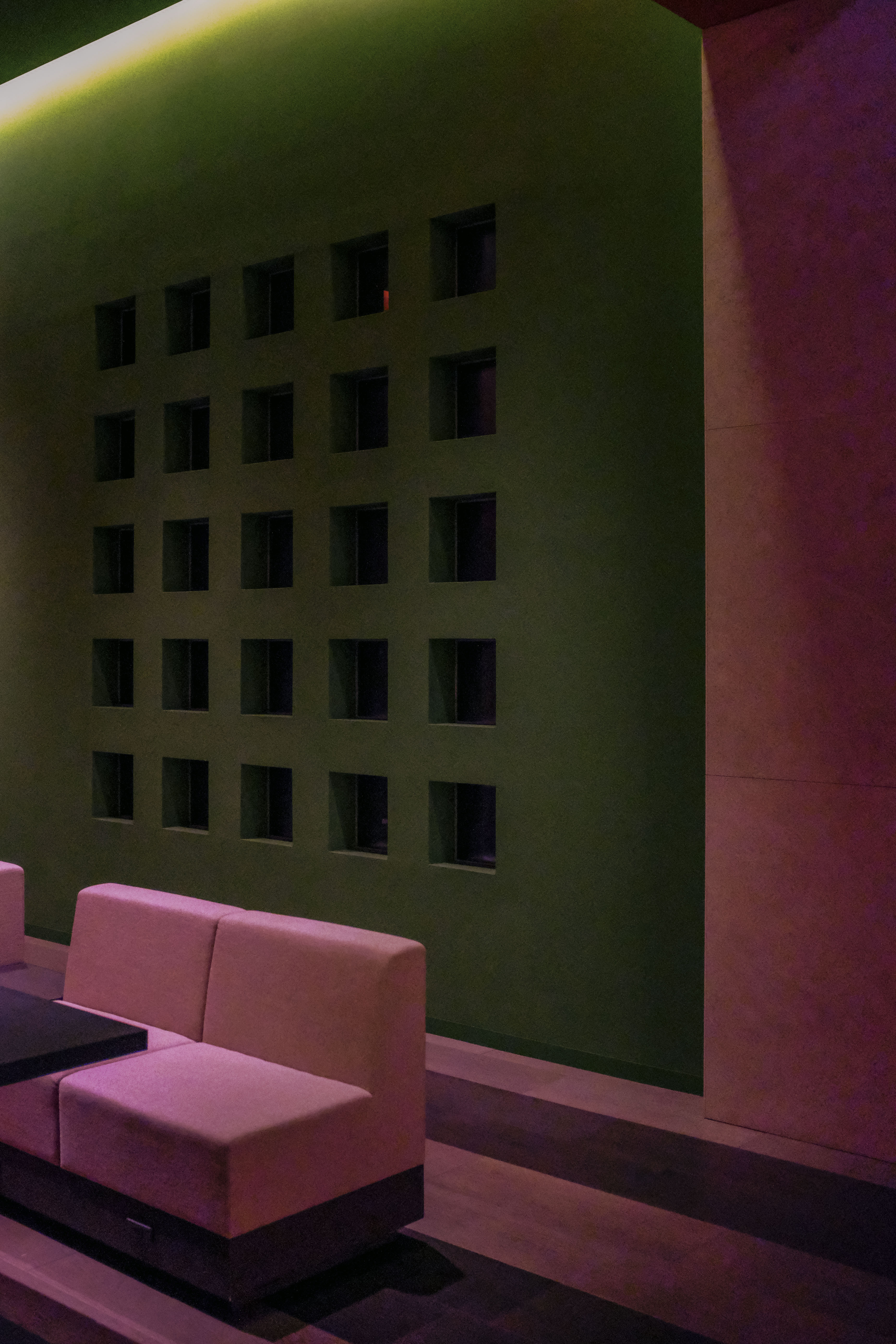
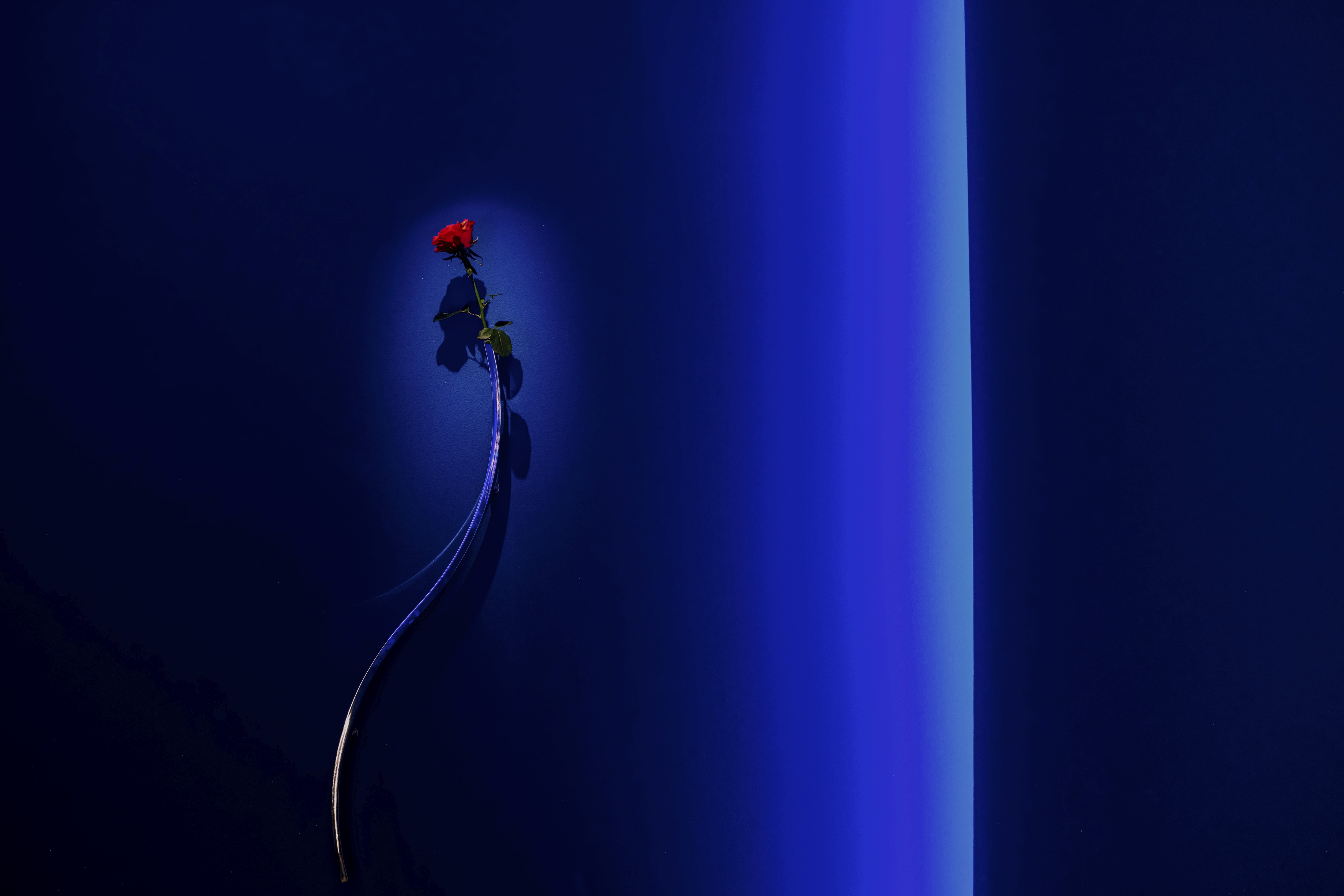
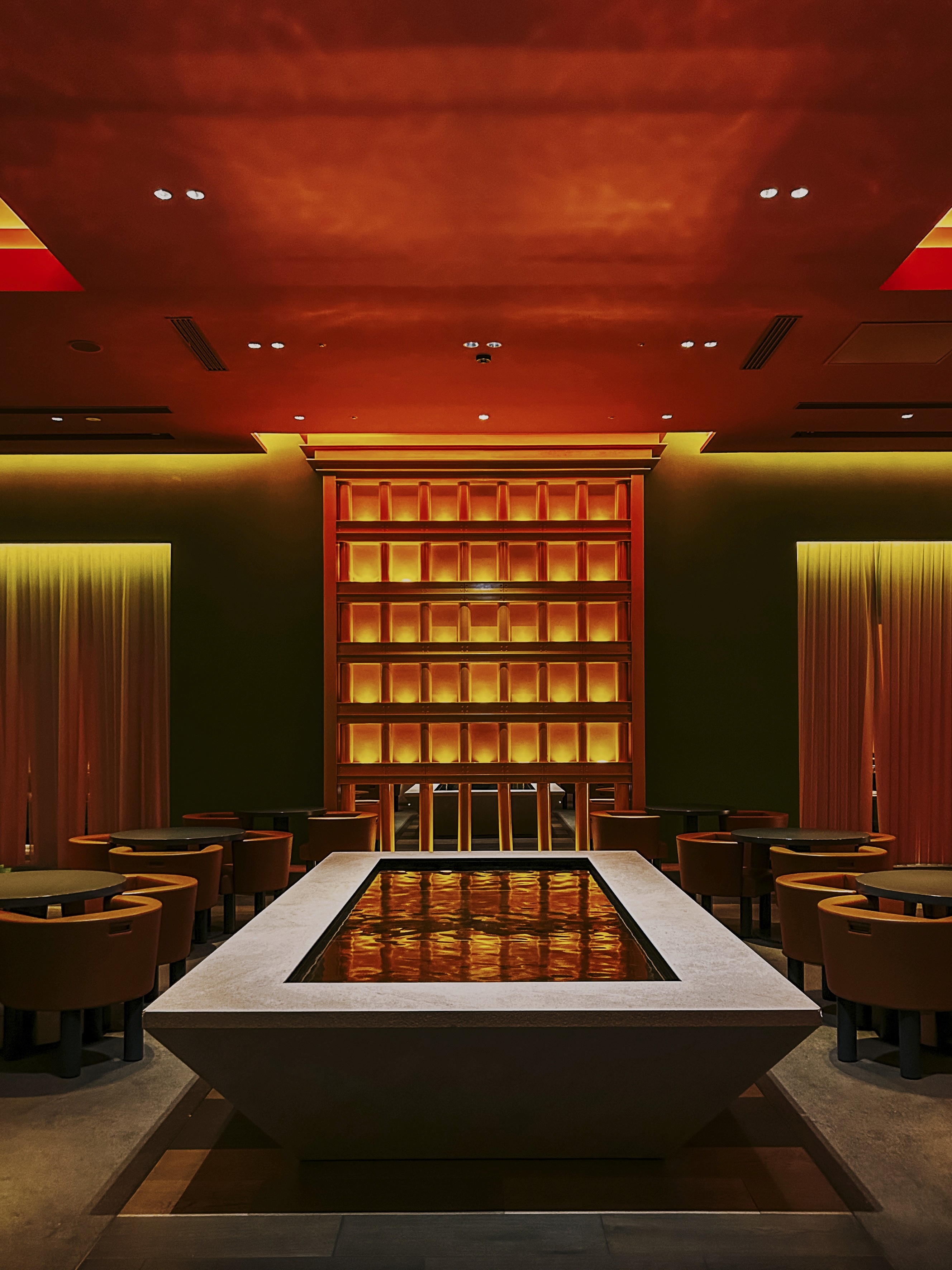
Photos: Luo Jingmei
Poster child for green architecture
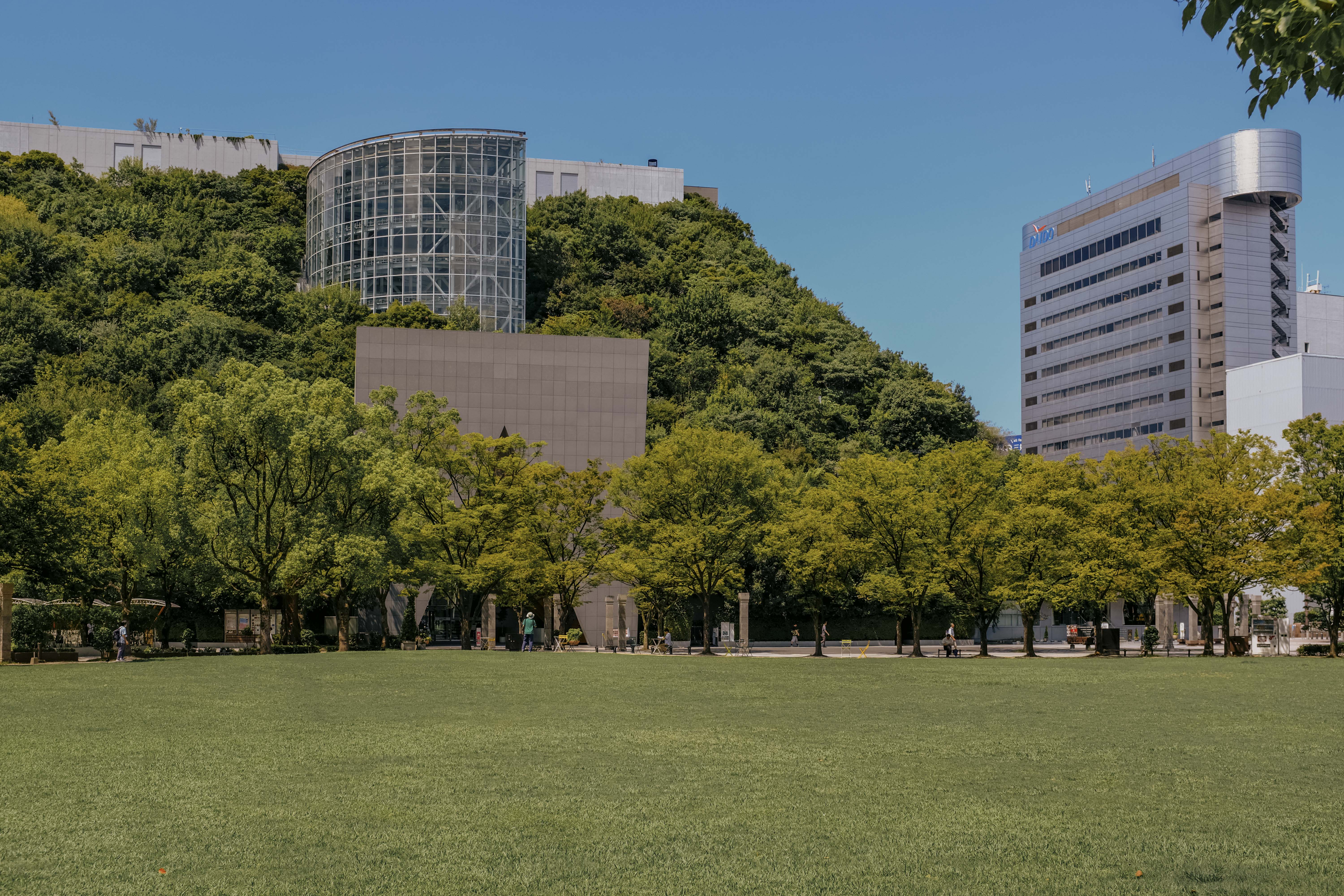
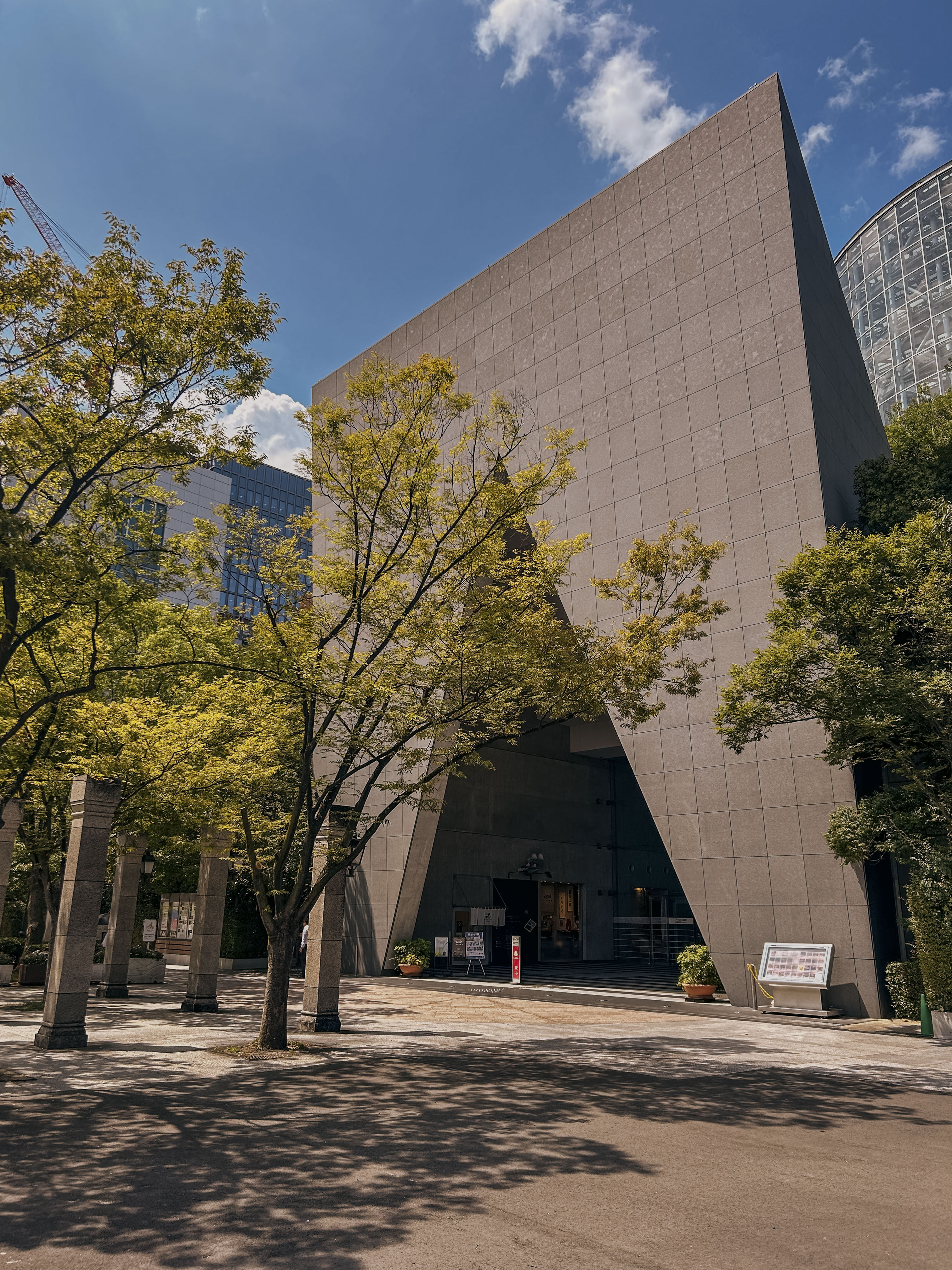
In my quest for more postmodern architecture, I headed to Acros Fukuoka, a conference and performance venue with a vertical tiered garden. Designed by Argentinean architect Emilio Ambasz 30 years ago as a trailblazer in sustainable building, it remains as relevant as ever today.
It was the height of summer, but the upward journey was surprisingly shady, as Ambasz had shrouded this side of the building with abundant trees.
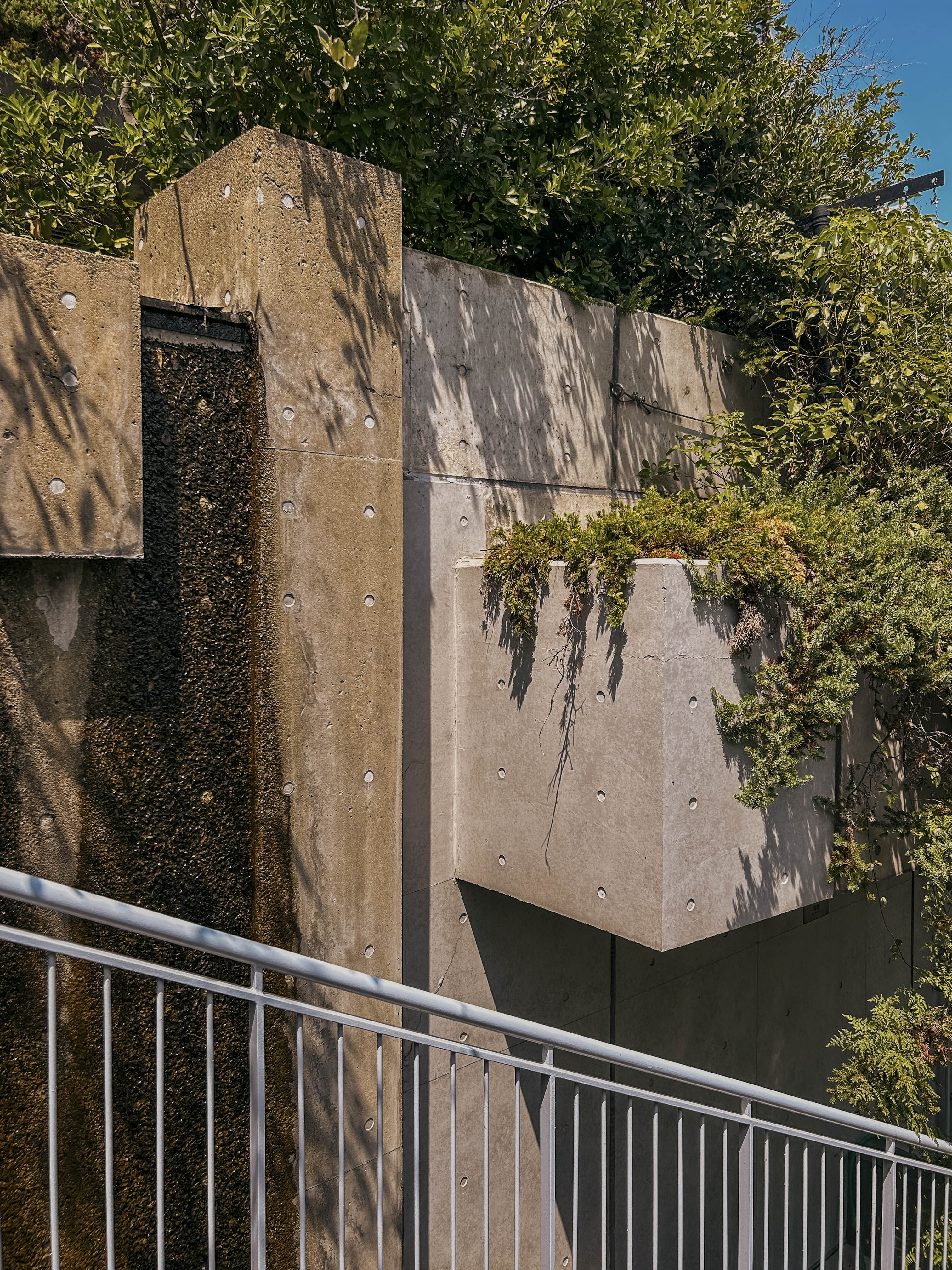
The sound of flowing water led to me discover that he had also integrated waterfalls into the structure, where geometric shapes carved into the concrete walls directed water this way and that, and then into a linear pool that disappeared into the busy foliage.
As I passed through, I could see office workers busy at their desks – Ambasz had envisioned the gardens to provide respite to the working day, and designed windows for views to the greenery. What a wonderful place to work in, I thought, as I reached the 13th-storey landing and took in a panorama embellished with the park’s tree canopy.
On some days, the rooftop observatory – accessible via 809 steps – is open, although I advise that this only be undertaken in cooler weather.
Photos: Luo Jingmei
Psychedelic city
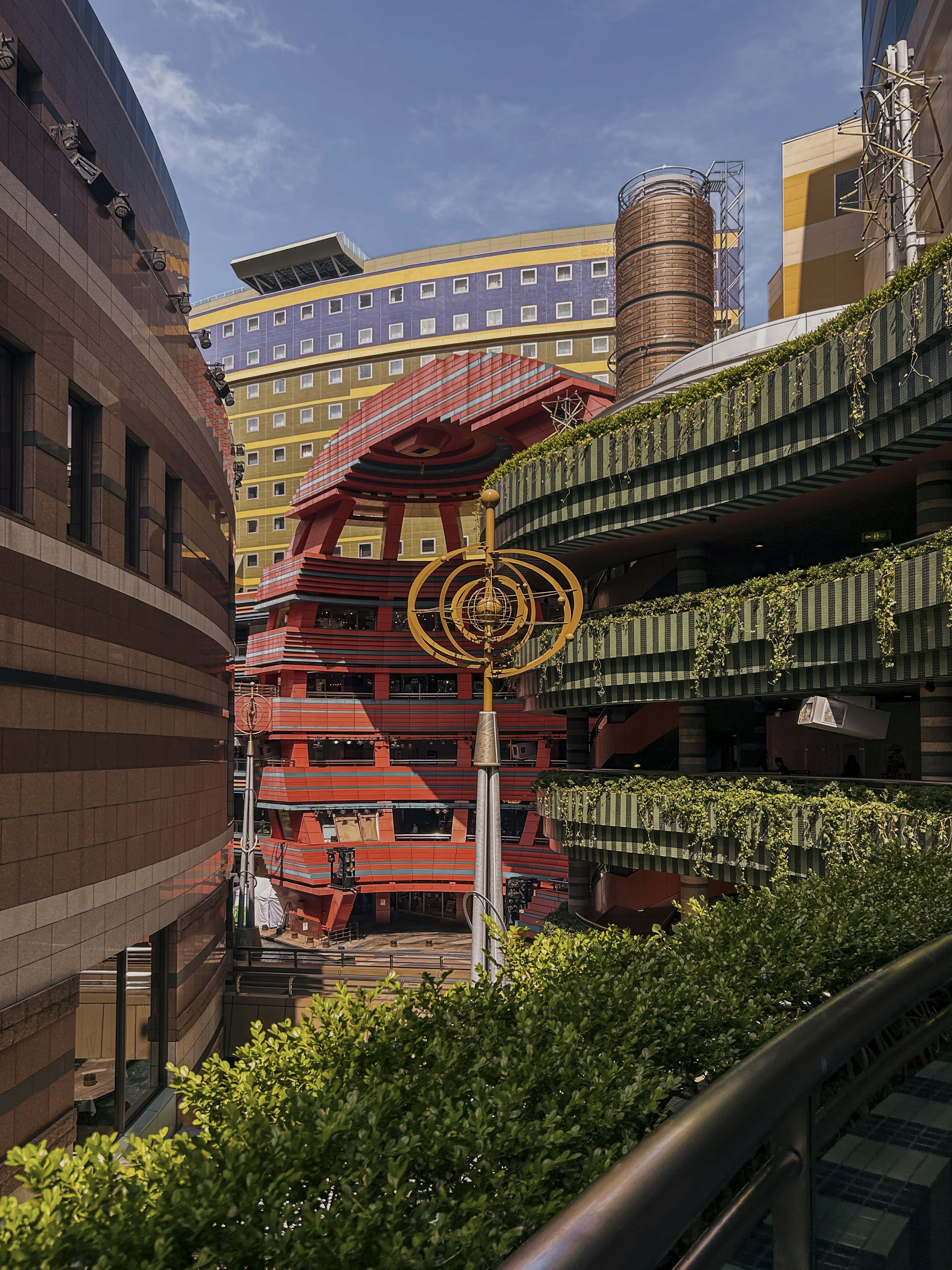
A visit to Acros Fukuoka can be easily paired with one to Canal City Hakata, half an hour away – a bundle of chromatic blocks dominating the vista from the bridges criss-crossing Naka River.
The mega entertainment-and-retail complex designed by American architect Jon Jerde (1940- 2015) was Japan’s largest private development of its time. In it also resides the Grand Hyatt Fukuoka, for which Jerde created modernist interiors of timber-veneer walls in a mid-century modern style.
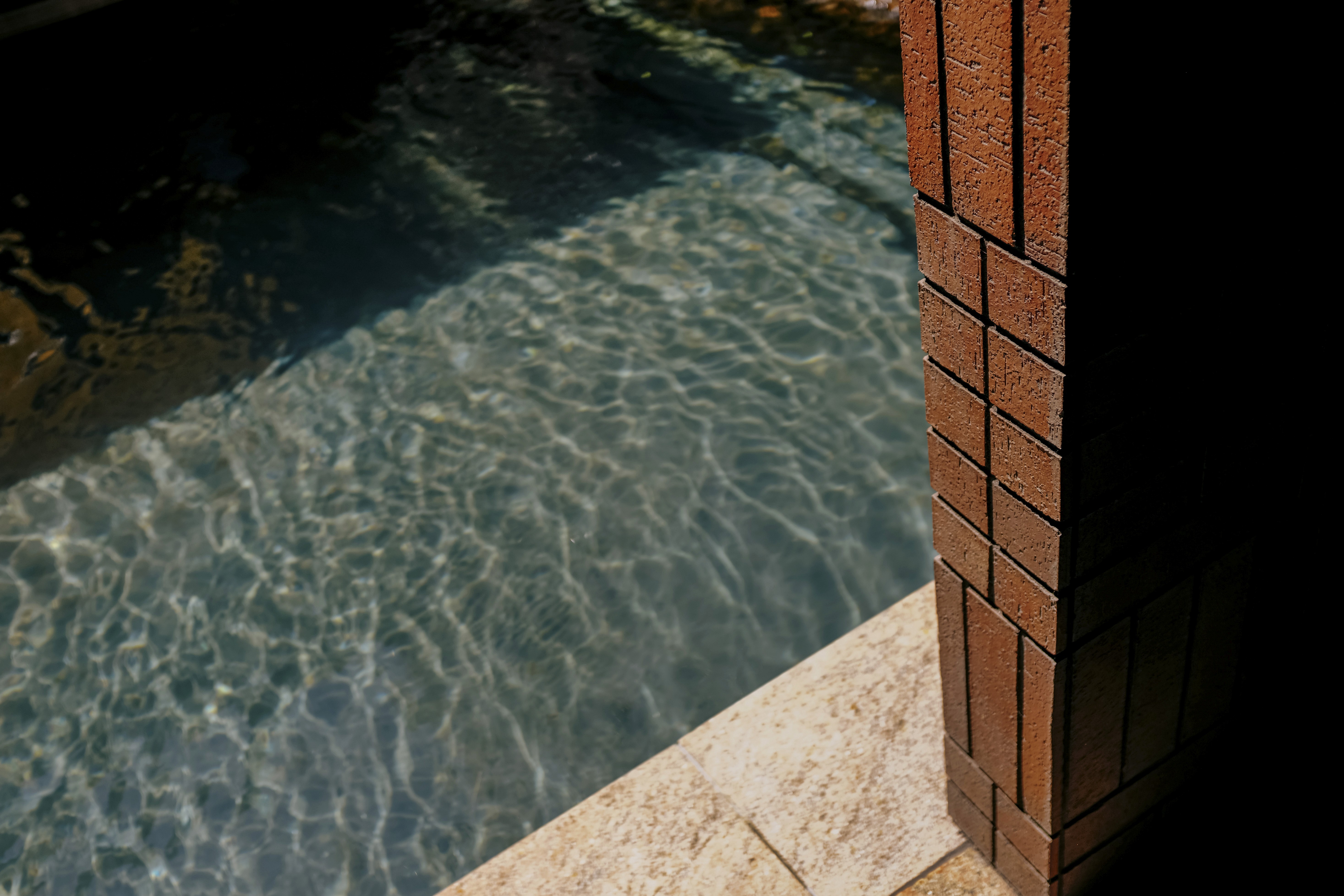
A mini canal runs through the development’s open-air central spine, complete with fountains that shoot jets of water five storeys high. It’s old-school entertainment, but nevertheless an attraction that continues to keep visitors glued to the spot when the water dances.
(Tip for parents: there are awesome projection shows in the evenings when the fountain synchronises to Gundam robots battling across Fukuoka City.)
On the upper levels, breezes cool open walkways and plants hug winding, green-striped canyon-like walls. The place has a retro vibe, anchored by an atrium where chequered columns hold up a mock-Pantheon roof, unabashed in its grand scale and black-and-vermillion brilliance.
Photos: Luo Jingmei
Retro architecture and blazing sunsets
Later, my journey led me to Momochi Seaside Park, which is 15 minutes from the city centre by car. The artificial beach was created for the 1989 Asia Pacific Expo and was part of an urban development plan that also included nearby buildings like the Fukuoka City Museum designed by another famous Japanese architect, Fumihiko Maki.
One can head up the glassy, 234m-tall Fukuoka Tower completed in 1989 by Nikken Sekkei for panoramic views.
The building played a part in cinematic history as it was featured in the 1994 cult film, Godzilla vs Space Godzilla, with the latter employing the tower as a conduit for its cosmic energies.
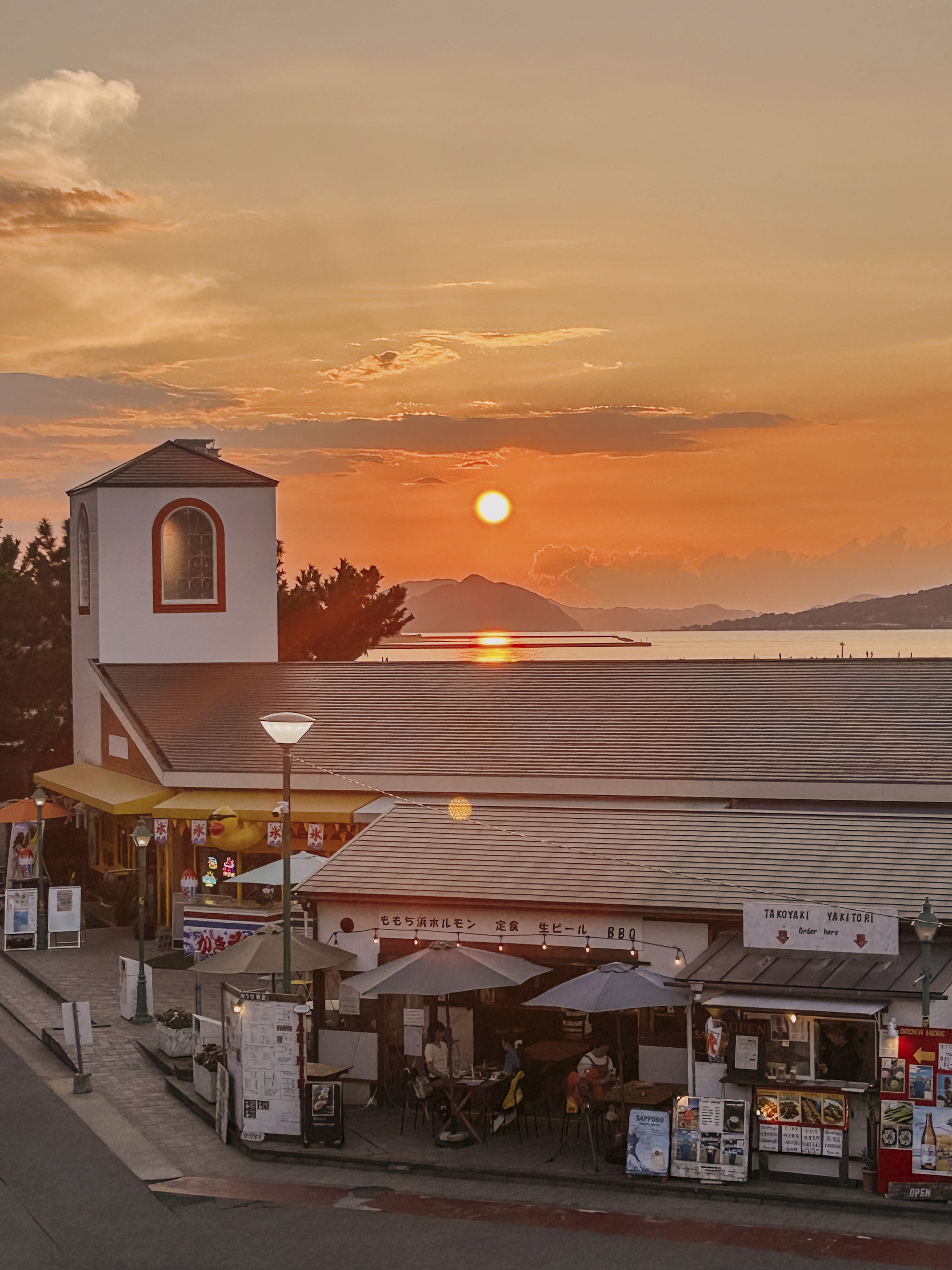
But I decided to enjoy the views at Momochi instead. Here, a diamond-shaped complex built on an artificial pier named Marizon extends out to the sea. The faux Mediterranean-style building containing a wedding hall and some shops presented an enigmatic image on the water.
The park is designed with pleasant pedestrian pathways lined with cafes and restaurants. When I was there, reggae music streamed from one rustic shop advertising beers, sodas and ice cream. Tourists – many of them young couples – had removed their shoes, swapping concrete ground for spotless sand as they strolled along the coastline of palm tree-dotted Hakata Bay.
As 6.59pm approached, everyone looked westward toward the setting sun. The blazing orb coloured the surrounding sky ombre marigold, and its reflection stained the water with a glowing seam. Around it, mountain ranges and clouds blurred into a painterly grey. I watched transfixed, at times rousing myself to take photographs, until the orb turned lemonade-pink and vanished under the horizon, completing the twilight show.