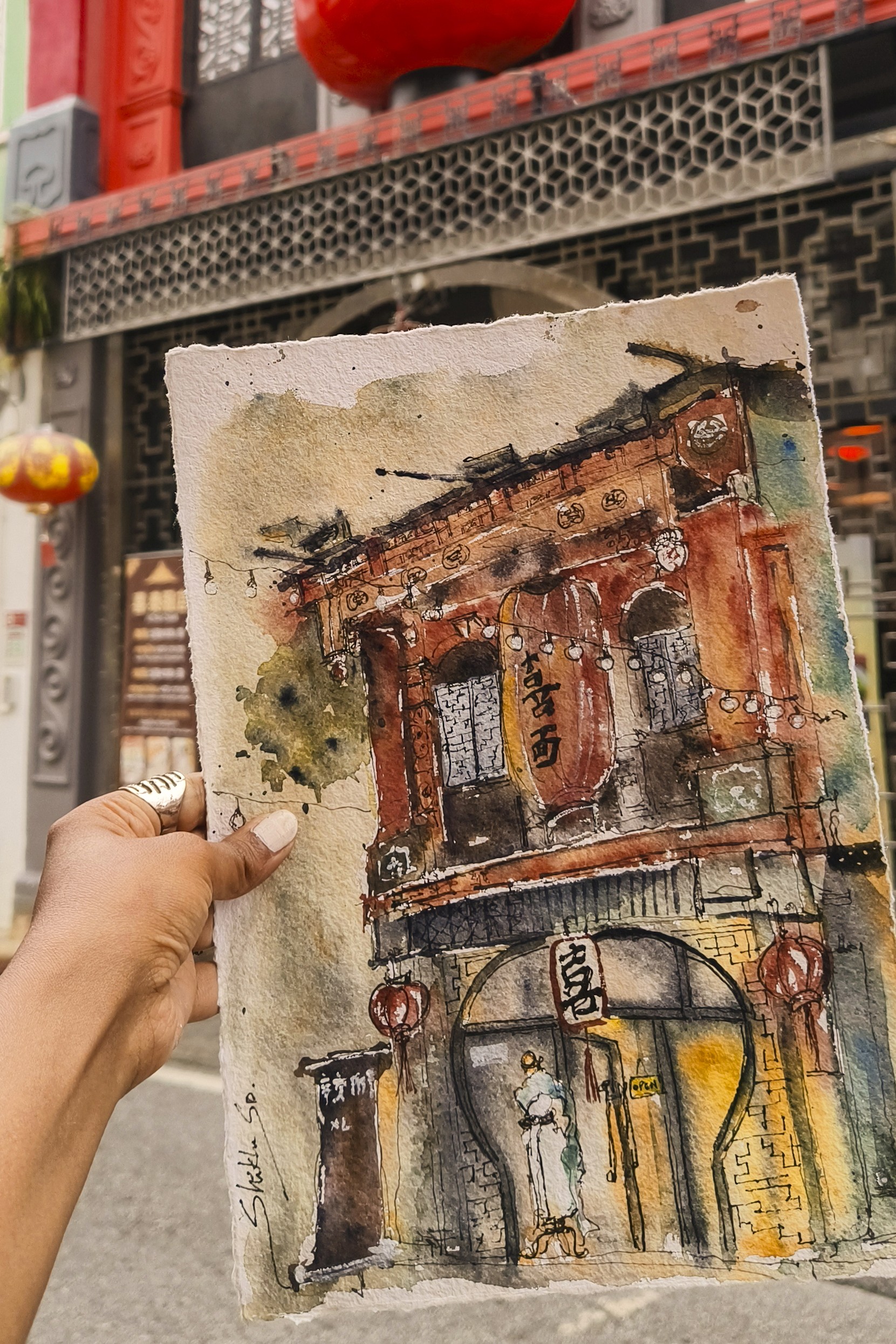
Often celebrated as the “Pearl of the Andaman”, Phuket was never on my radar. Thailand’s largest island had always conjured images of big tour groups, overdeveloped beaches and lavish resorts.
✦
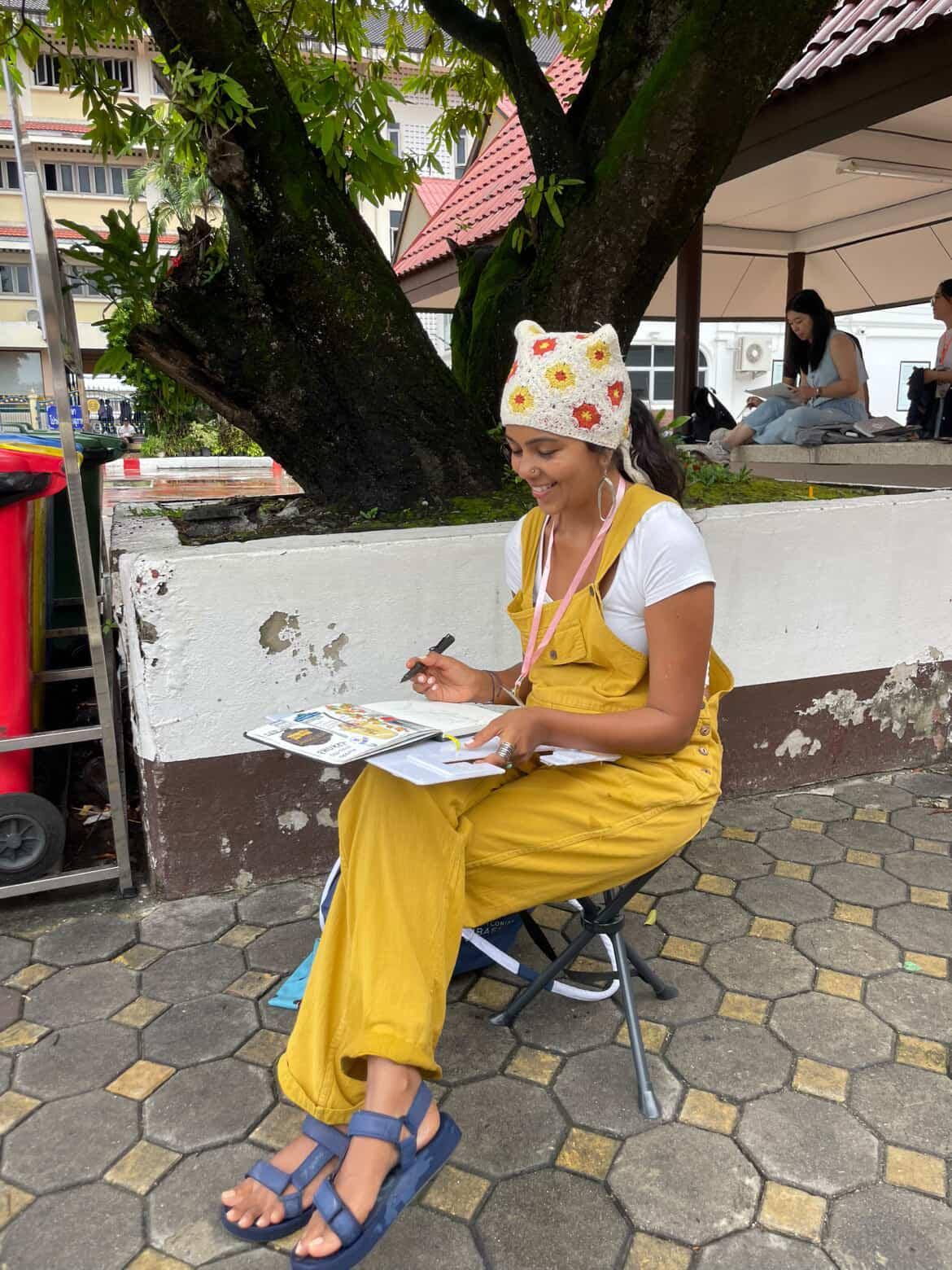
But when an urban sketching event drew me to Phuket Old Town, I arrived with an open mind.
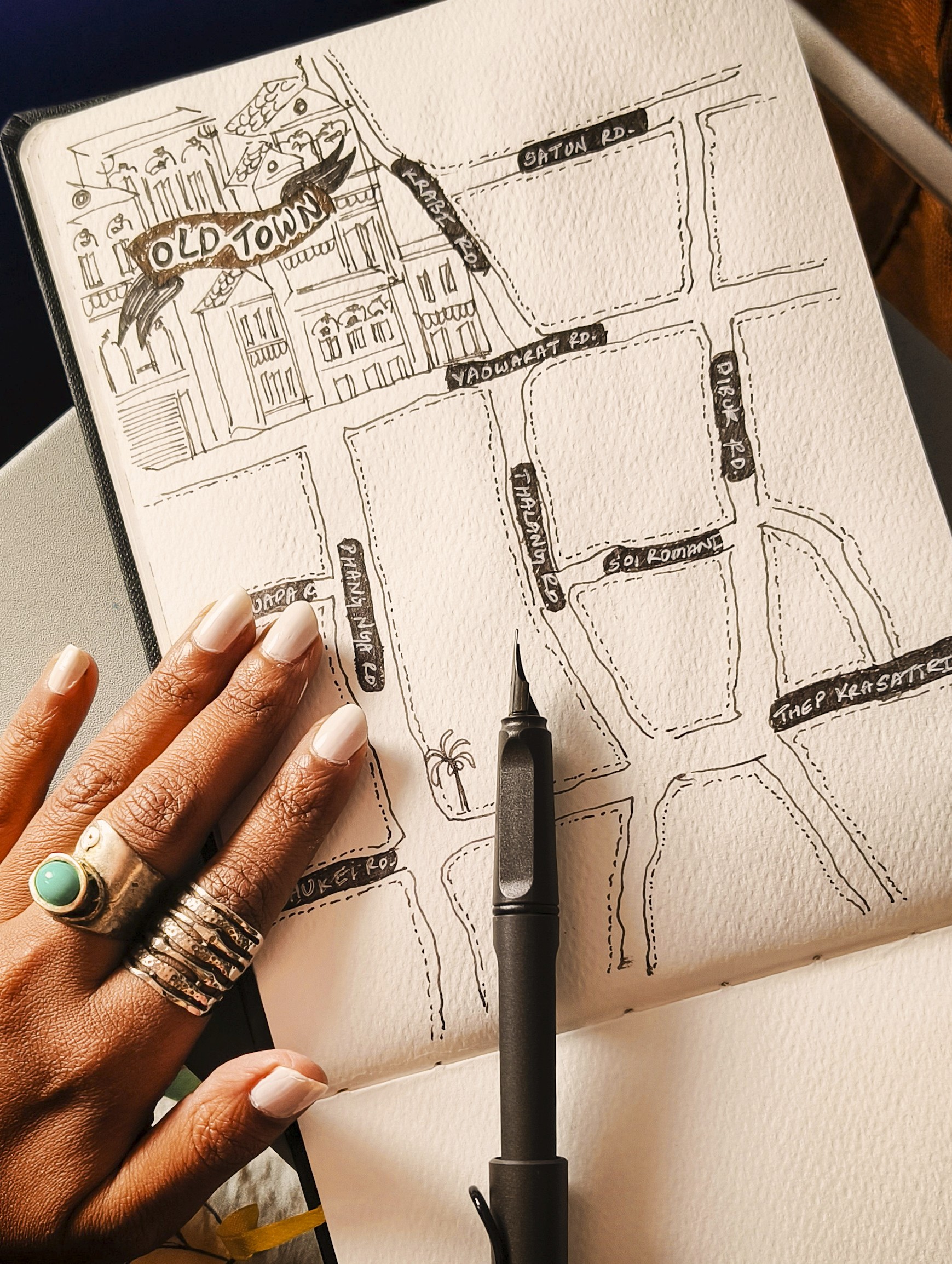
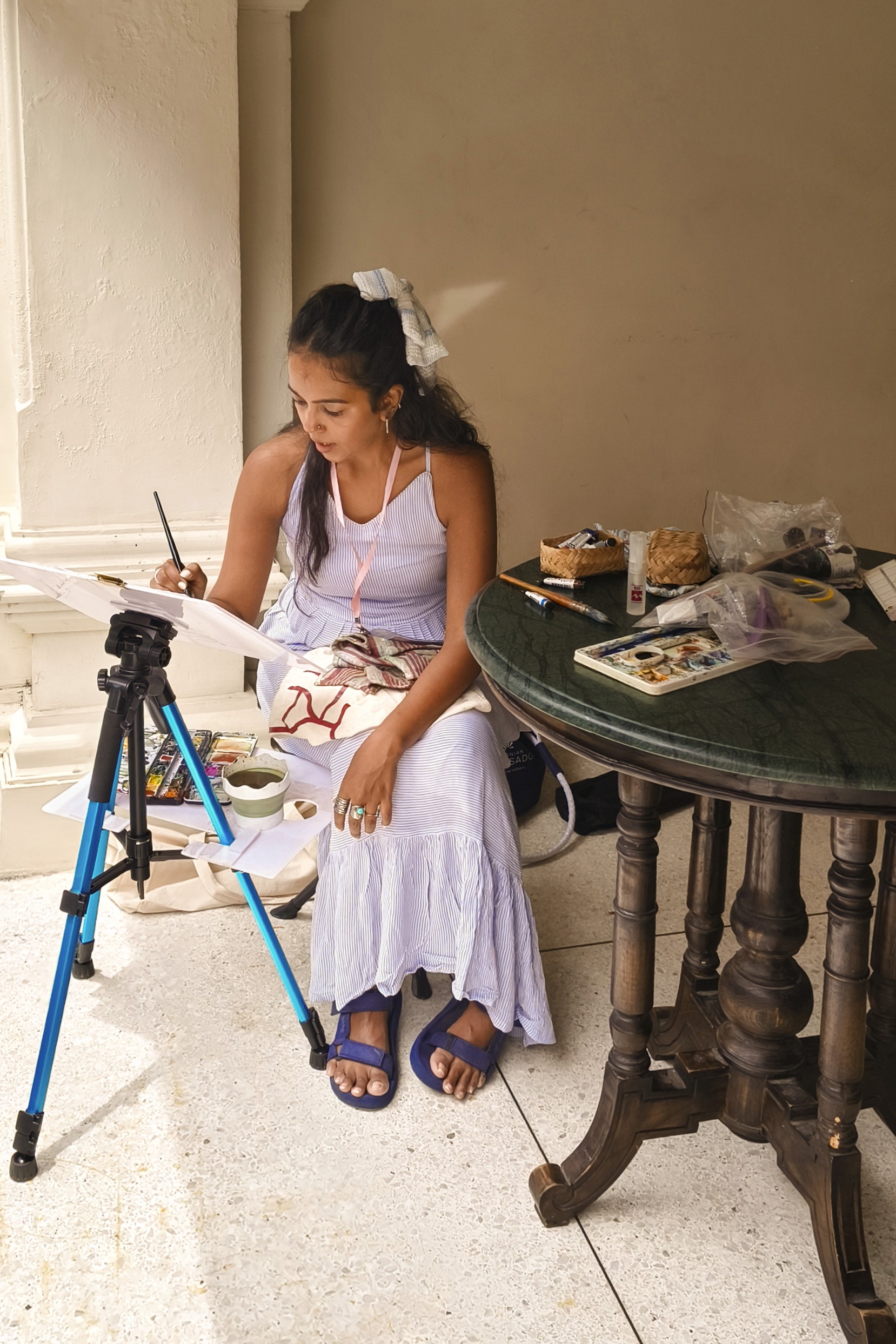
Over six days, I traced the island’s heritage streets and their quieter offshoots – wandering slowly with a sketchbook in hand, letting the place reveal itself one pastel facade at a time.
An architectural adventure
Phuket Old Town stands as one of Southeast Asia’s most distinctive heritage districts, its character shaped by Sino-Portuguese architecture – a fusion of Southern Chinese artistry and European colonial flair.
Here, the streets are a parade of pop-coloured shophouses with arched windows, carved wooden doors, stucco flourishes and tiled walkways.
They hint at Phuket’s tin-mining boom, which, from the 16th century onward, brought waves of Chinese and European merchants who shaped the island’s architecture, economy and cultural fabric long before tourism arrived.
Among the district’s most iconic landmarks is the mint-green Aikwanich Mansion at the corner of Dibuk and Yaowarat roads. With its white-trimmed arches, tall wooden shutters and perfectly symmetrical design elements, this early-20th-century residence – once home to a Chinese merchant family – serves as a visual anchor for the neighbourhood.
Naturally, it’s a magnet for photographers, but afternoons are when artists fill nearby cafés and pavements, sketching the mansion bathed in soft, golden light.
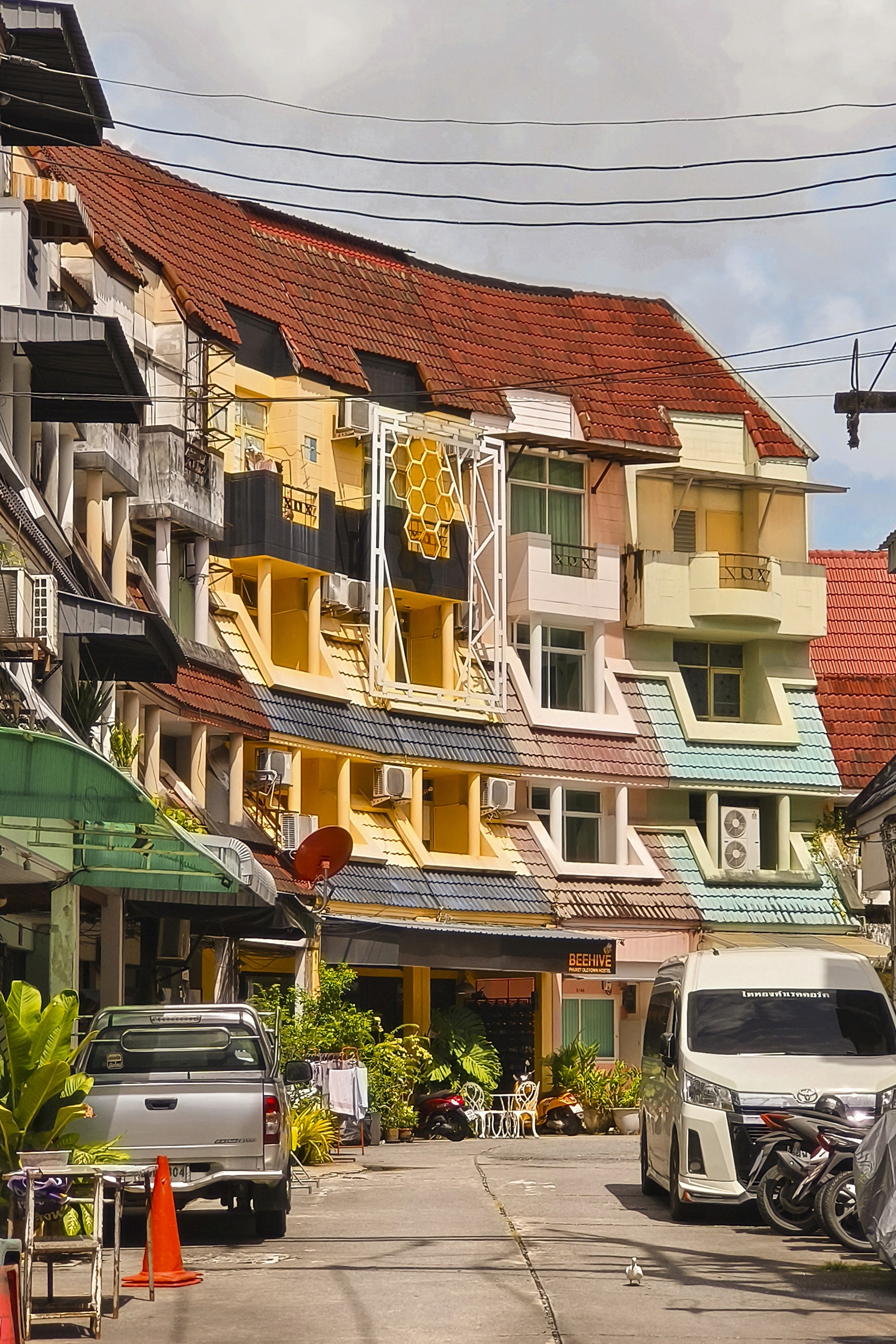
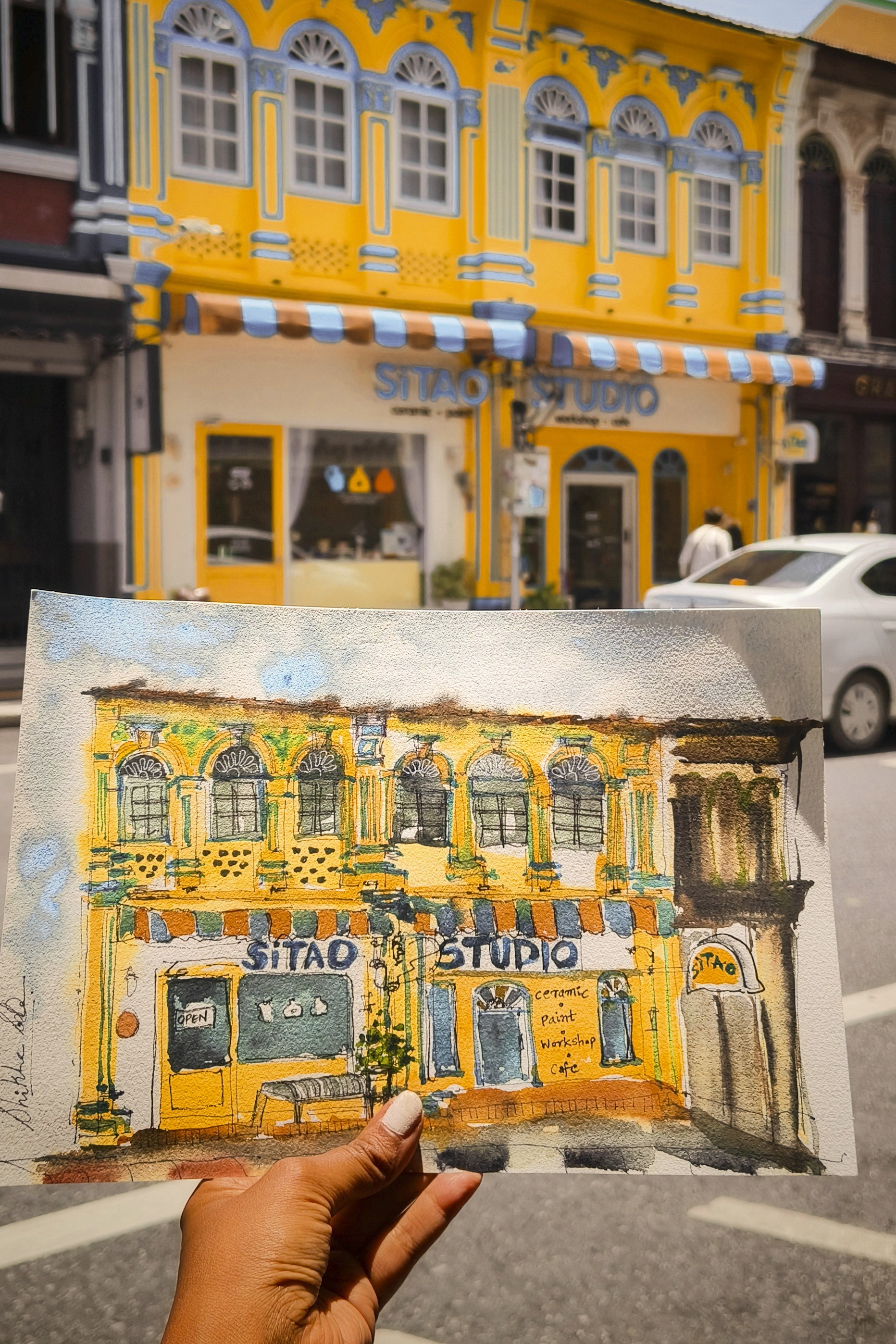
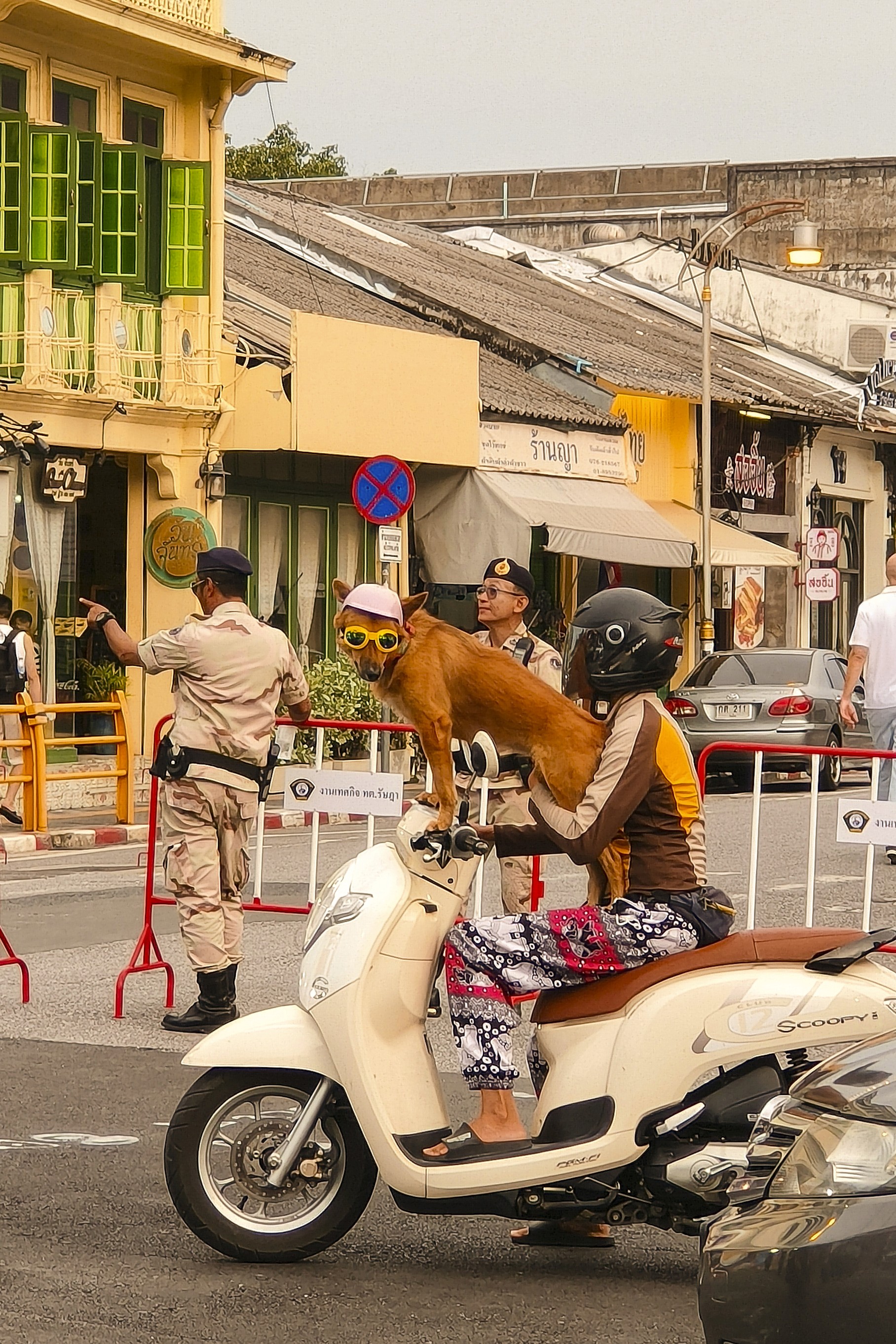
Photos: Shikha Shah
Tracing the Old Town’s heritage loop
From Yaowarat Road – linking Thalang, Phang Nga, and Dibuk roads – history unfolds with each step. Here stands the haunted-yet-elegant Sa-Nguan Mansion, an abandoned, century-old residence once accessed through a long, dark tunnel. Today, it adds mystery to the streetscape and stands as a reminder of the Chinese settlers who arrived in Phuket with next to nothing and forged their way to a mansion.
Thalang Road, the beating heart of the Old Town, is lined with buildings splashed in strawberry pink, lemon chiffon, turquoise and seafoam green. With their vintage verandas, louvred shutters and ornate upper floors, it’s no wonder this is one Phuket’s most sketched streets.
Each building is narrow in front yet stretches deep inside – classic Old Phuket architecture.
Just off Thalang lies Soi Romanee, a 125m-long street once known as the city’s red-light and gambling district. Today, it’s an address for cute ice-cream shops, designer boutiques, timeless Chinese pharmacies and ample photogenic corners. Go early if you want the lane to yourself before selfie enthusiasts and influencers descend.
A convenient next sketch stop is Phang Nga Road, which is filled with colonial-era facades and historic financial buildings. At the corner it shares with Phuket Road stands the butter-yellow former Standard Chartered Bank, one of the town’s earliest European-style structures and now a museum of Peranakan culture, a treasure chest of customs, cuisine and art.
An open-air art gallery
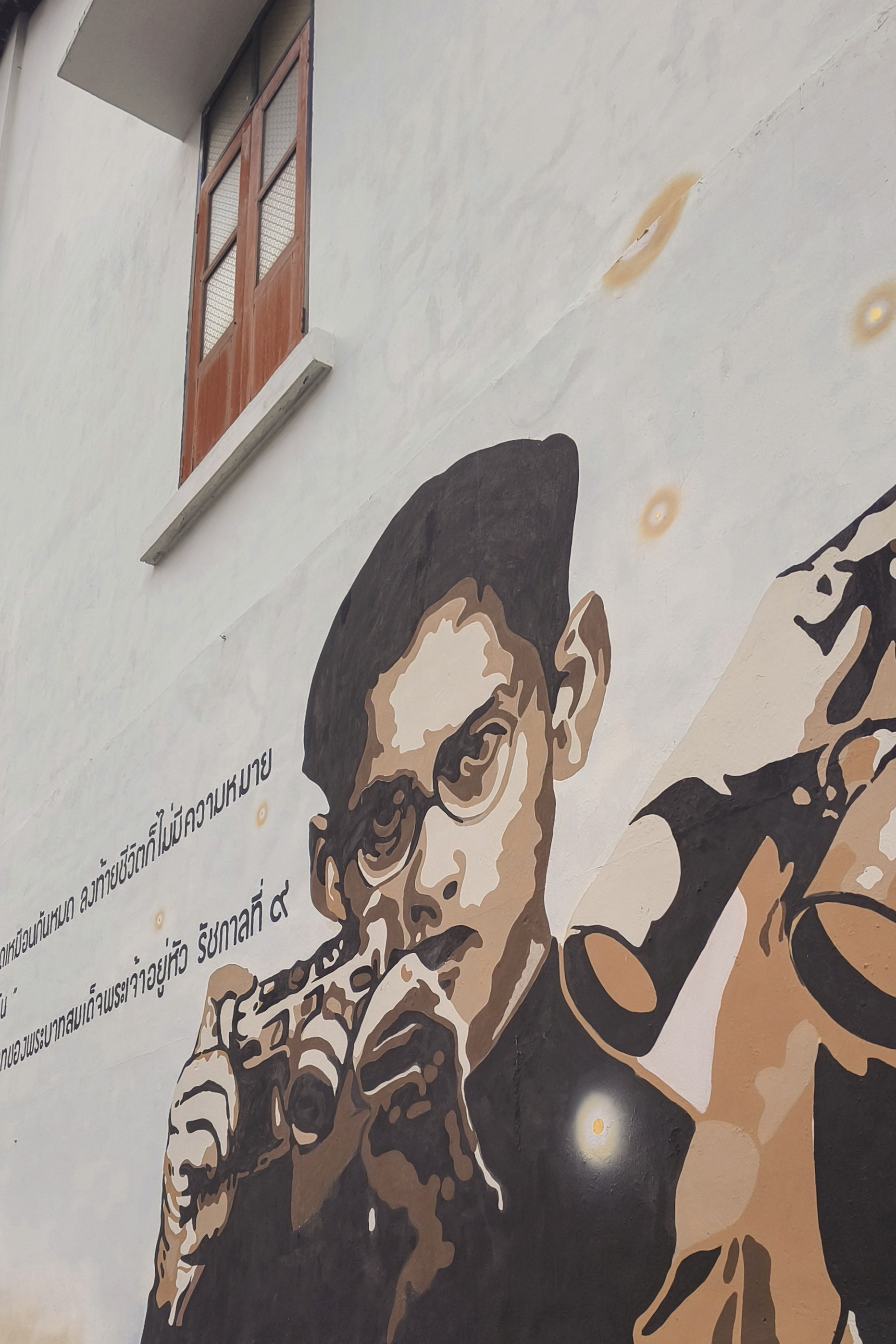
As you wander, keep an eye out for the quirky murals tucked into alleys. As part of the Food Art Town (FAT) Project, 12 leading Thai graffiti artists – including Alex Face and Rukkit Khuanhawate – have filled the neighbourhood with artwork celebrating local food culture and everyday life. Their pieces spotlight local traditions, from Peranakan wedding blessings and multicultural breakfast rituals, to puppet performances for deities and local coffee culture.
One of the most moving murals stands directly across from Aikwanich Mansion, an emotive tribute to His Majesty King Bhumibol Adulyadej.
Depicted in various roles, including a photographer, officer and observer, the king appears above the clouds, radiating compassion. It’s a powerful sight.
Photos: Shikha Shah
Of shrines and spirituality
Amid the kaleidoscope of Phuket Old Town’s colour and chaos, graceful temples and intimate Chinese shrines serve as spiritual enclaves that reflect the Hokkien roots of the island’s early settlers, inviting passers-by to pause and take in their elegant beauty.
Tucked behind a narrow alley is the Sang Tham Shrine with its ornate archway. Step inside to see altars brimming with fresh flowers and flickering candles. A short stroll away, you’ll find Jui Tui Shrine, with its spiralling incense coils, vivid gold-and-red decorations, and watchful guardian statues.
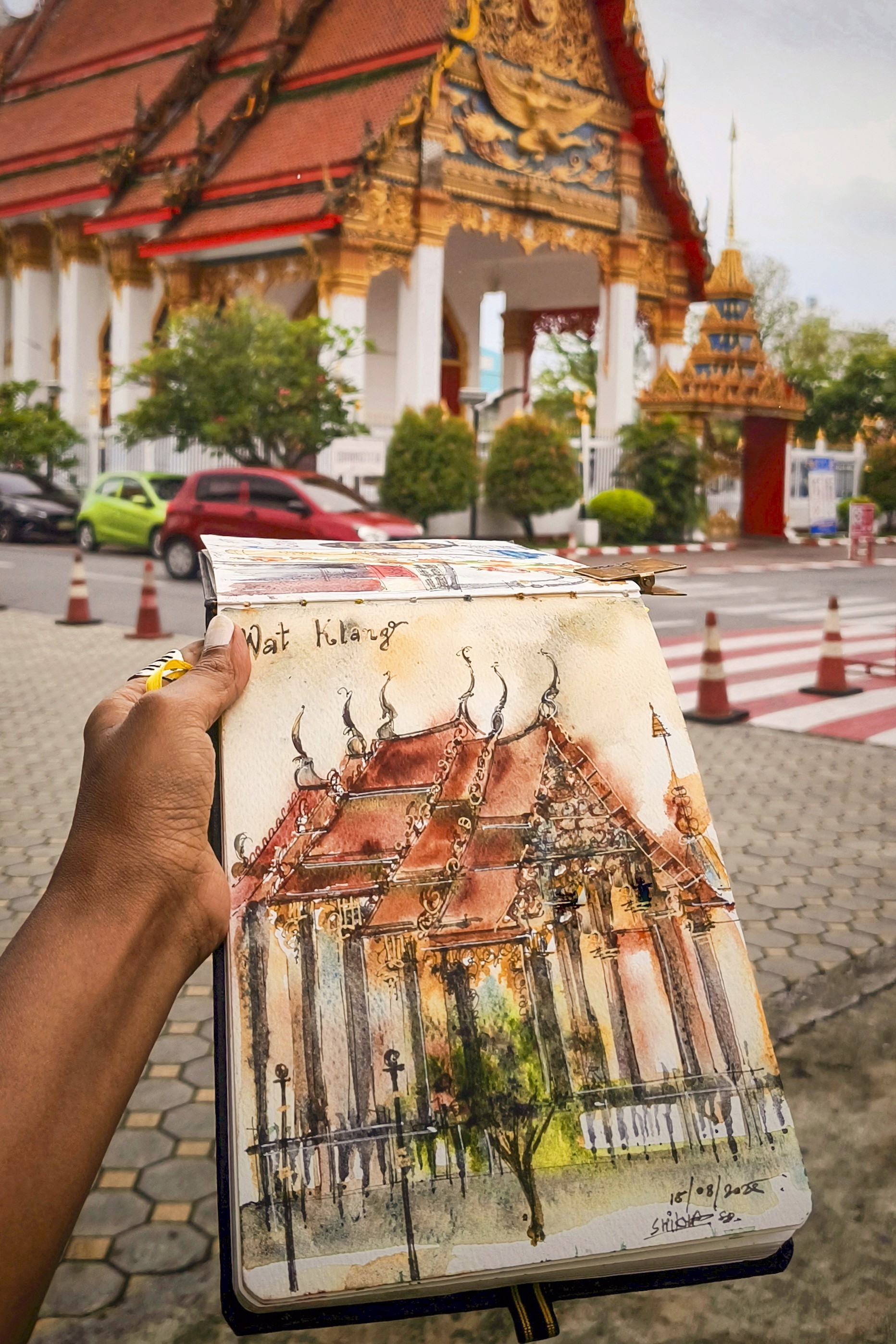
One rainy afternoon, I found myself at Wat Mongkol Nimit on Thep Krasattri Road, an important community temple and monastic school built in 1880 and once known as Wat Klang.
Its triple-tiered red roof tipped with chofa (beak-shaped ornaments) and vibrant blue gables with intricate gold motifs are a harmonious blend of classic Thai Buddhist design and subtle Sino influences.
As I sketched the façade, a profound meditative stillness settled over me, even as monks moved across the courtyard and school children laughed nearby.
A food scene as colourful as its streets
Phuket’s food scene is a playground especially for those willing to experiment. Here, eateries, markets and food halls are everywhere, and freshness and bonhomie are practically guaranteed.
A stylish import from Surat Thani, WA! Café on Yaowarat Road sits directly across from the Aikwanich Mansion and serves Japanese-style desserts in its clean, minimalist interiors. Its signature treats include the Mont Blanc cake, with delicate strands of chestnut purée in flavours like mango, matcha, purple yam and Thai tea.
At the intersection of Yaowarat and Thalang Roads, Mue-Yium Café is a relaxed, vintage-inspired stop perfect for a light lunch, cold beer or mid-walk breather.
Decorated with old radios, toys and antique sewing machines – a nod to the shop’s past life as a tailor – it offers one of the best people-watching, creativity-inspiring corners in the Old Town.
Raya serves soulful, home-style Thai dishes in a warm, century-old Sino-Portuguese mansion adorned with green stained-glass windows. Founded in 1994 by banker-turned-cook Kularb Jesadawal, it previously earned a Michelin Bib Gourmand award and continues to attract everyone from Thai royals to travelling gourmands.
Housed in a candy-pink Sino-European shophouse on Soi Romanee, Torry’s Ice Cream is the brainchild of Phuket-born Khun Torry Wongwattanakit. The sunlit space – with Peranakan tiles, wooden furniture and vintage charm – sources local ingredients from Phuket farmers and turns them into irresistible treats.
Photos: Shikha Shah
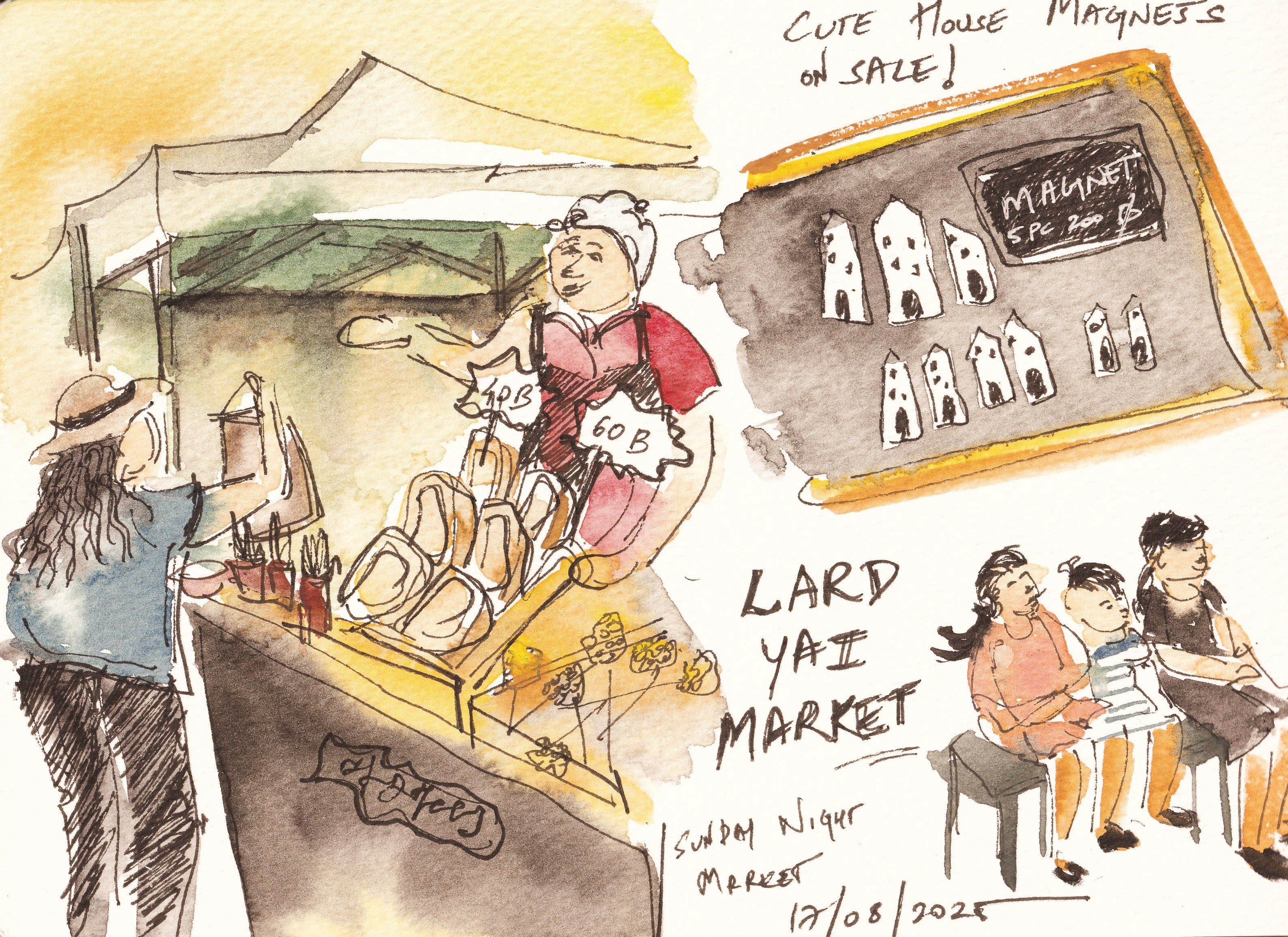
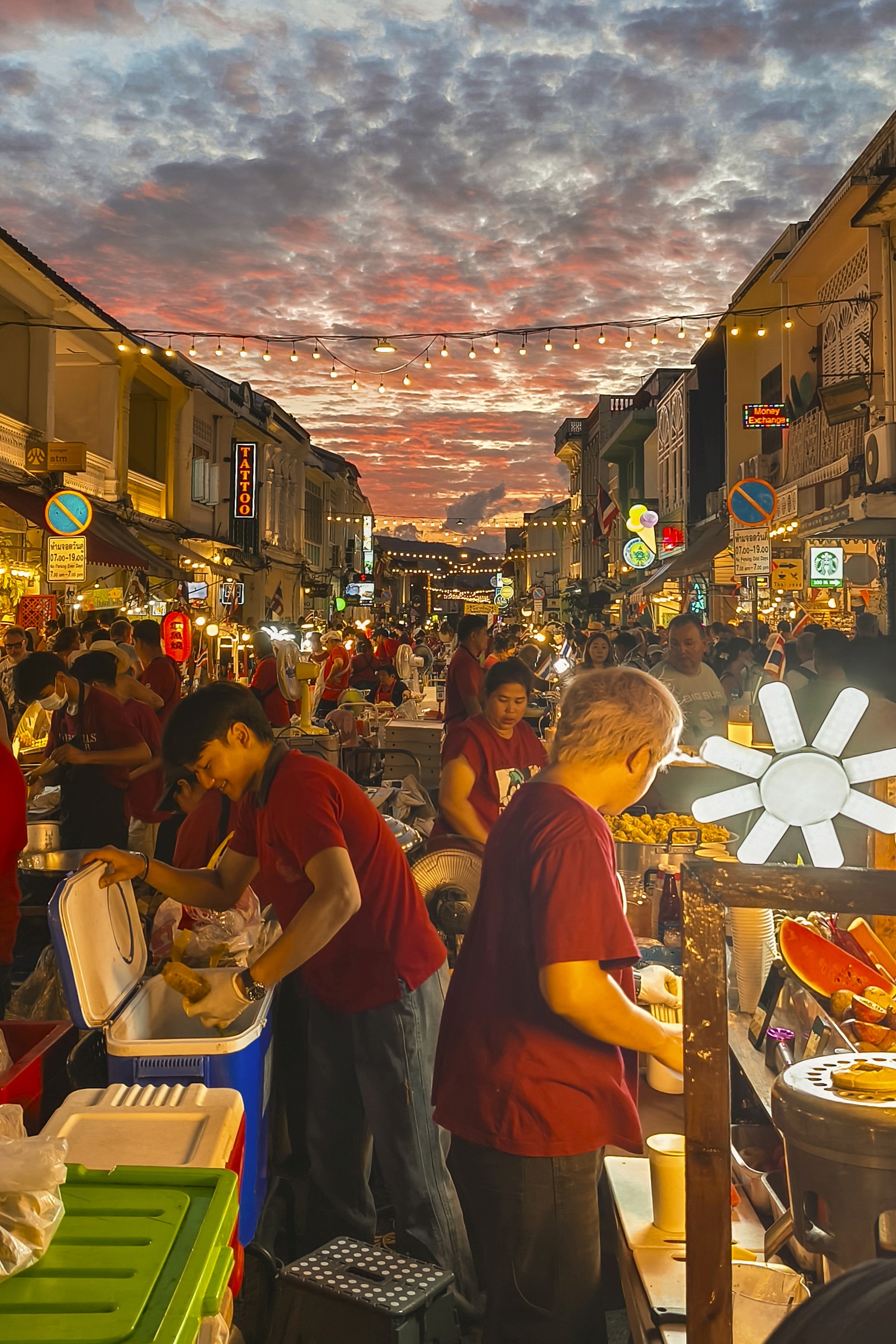
If you’re in Phuket on a Sunday evening, head to Lard Yai Night Market along Thalang Road. Packed with locals and visitors alike, it’s a lively carnival of sights, sounds, smells and community energy.
Local kids’ performances and impromptu street acts layered over the rhythmic clatter of vendors create a soundtrack to a fascinating shopping experience.
Tables overflow with handmade jewellery, vintage curios, and original paintings and prints inspired by Phuket’s landscapes, street scenes and culture. Live portrait sketchers and children’s craft corners add a creative layer.
But the real star of Lard Yai is the food. If you’re not in the mood for a sit-down meal, this is the perfect place to graze, wander, shop – then do it all again on repeat. Under warm lights, countless stalls serve everything from noodles, dumplings and grilled seafood to coconut pancakes, banana roti and icy fruit drinks. Coconut smoothies are everywhere, ready to cool you down as you move with the bustling flow of the crowd.
The market stretches all the way to the Hai Leng Ong Statue (Golden Dragon Monument), marking the entrance to Queen Sirikit Park.
A reward for the curious
About 13km from Phuket Old Town, Tha Ruea Roong Siam Pier is where you can see fishermen unloading their catch from longtail boats rocking gently with the tide, and take in the scent of the sea drifting in on the breeze.
What truly draws the eye is the riot of colours splashed across the boats, many decorated with hand-painted motifs rooted in maritime tradition. Behind them, weathered wooden structures, worn by salt, sun and monsoon winds, stand on crooked stilts, upholding the stories of the families who have worked these waters for decades.
Sketching here was incredibly energising. Each vessel – with their aged timber, bold markings and flags in the breeze – felt like a character and offered endless shapes and textures to capture.
It struck me that, despite its popularity, Phuket still offers pockets of calm: a quiet bench, a shaded alley, sleepy corner cafés. Sketching its streets truly transformed my experience – letting me linger, notice the small wonders hiding in plain sight, and tune into the quiet poetry of Phuket’s daily life. It revealed a version of the island many overlook, simply because they never pause long enough to see it.