It had been a decade since my footsteps last traced the winding lanes of Kolhapur’s gullies, but the city seemed scarcely altered.
✦
The scent of tanned leather used to make the chappals (sandals) the city has long been famous for, and the sound of the cobblers’ rhythmic, syncopated hammering that marked my previous visit, still hung in the streets. Women wore saaj necklaces (a traditional Maharashtrian adornment), while century-old khanavals (family-run eateries) remained the go-to spots for local meals.
Still, within the folds of that familiar landscape, I sensed something had shifted. Fresh pride seemed to emanate from every cobbler’s workshop as an inordinate number of tourists, cameras in hand, crowded in to watch the leatherworkers.
All because of the “Prada episode” – the moment when the Italian luxury brand sent models down its runway last June wearing Kolhapuri-style sandals without acknowledging their inspiration, prompting accusations of cultural theft.
Photos: Veidehi Gite
A centuries-old craft
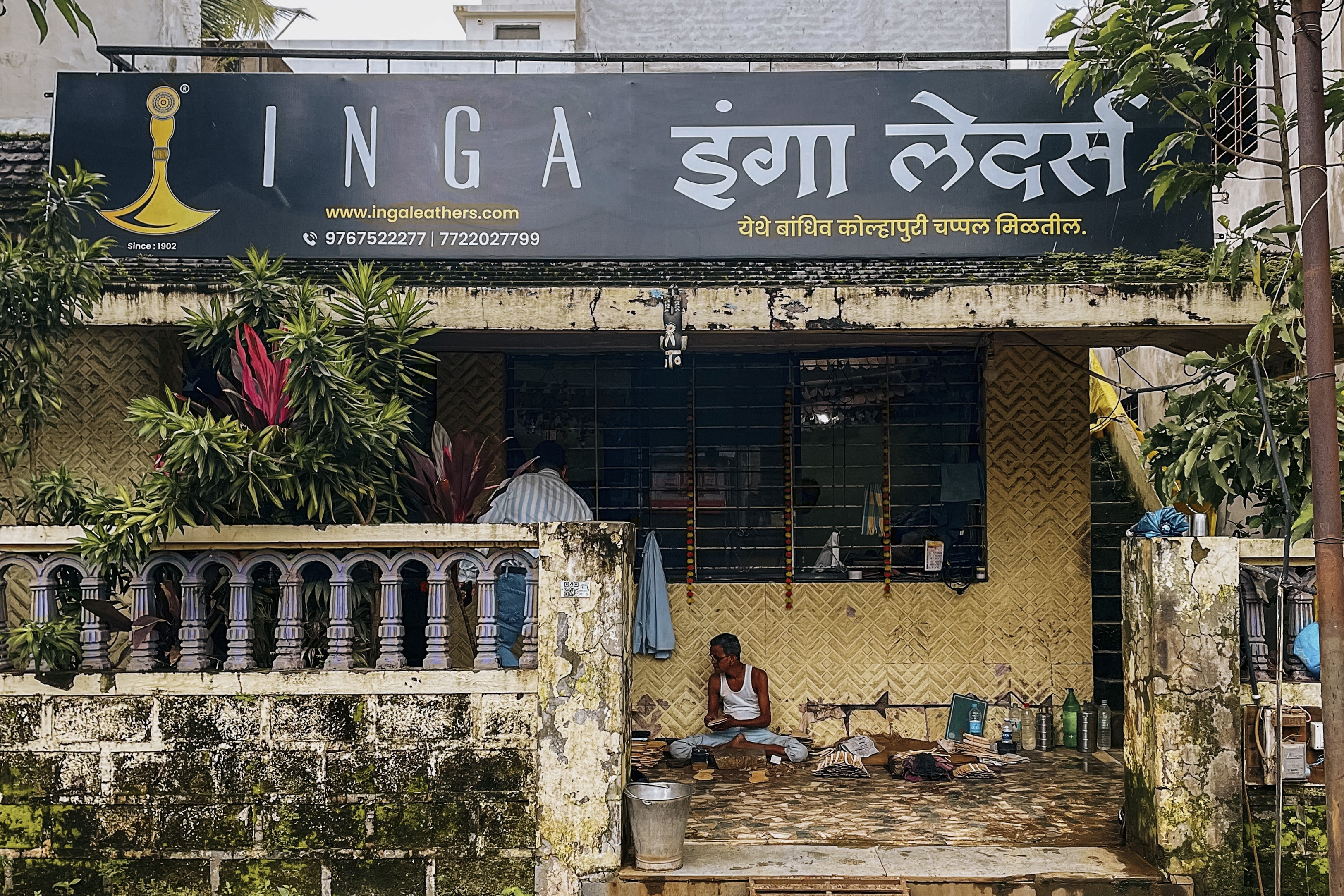
With the ancient craft in the global spotlight, I decided to learn more about the Kolhapuri chappal, and ended up at Inga Leathers at 39B Ward in Varsha Nagar, a cream-tiled building that houses one of Kolhapur’s oldest leather workshops.
Inga, which was visited by Prada’s technical team in July, has been resolutely making authentic Kolhapuri chappals for over a century.
The space bore the marks of age: fading paint, mossy patches, a chipped lavender railing, and marigold garlands strung above the window – typical of small businesses in India, often displayed for auspiciousness.
A narrow staircase wound upwards between tangled vines and hanging tarps, with the monsoon's damp breath clinging to the workshop walls.
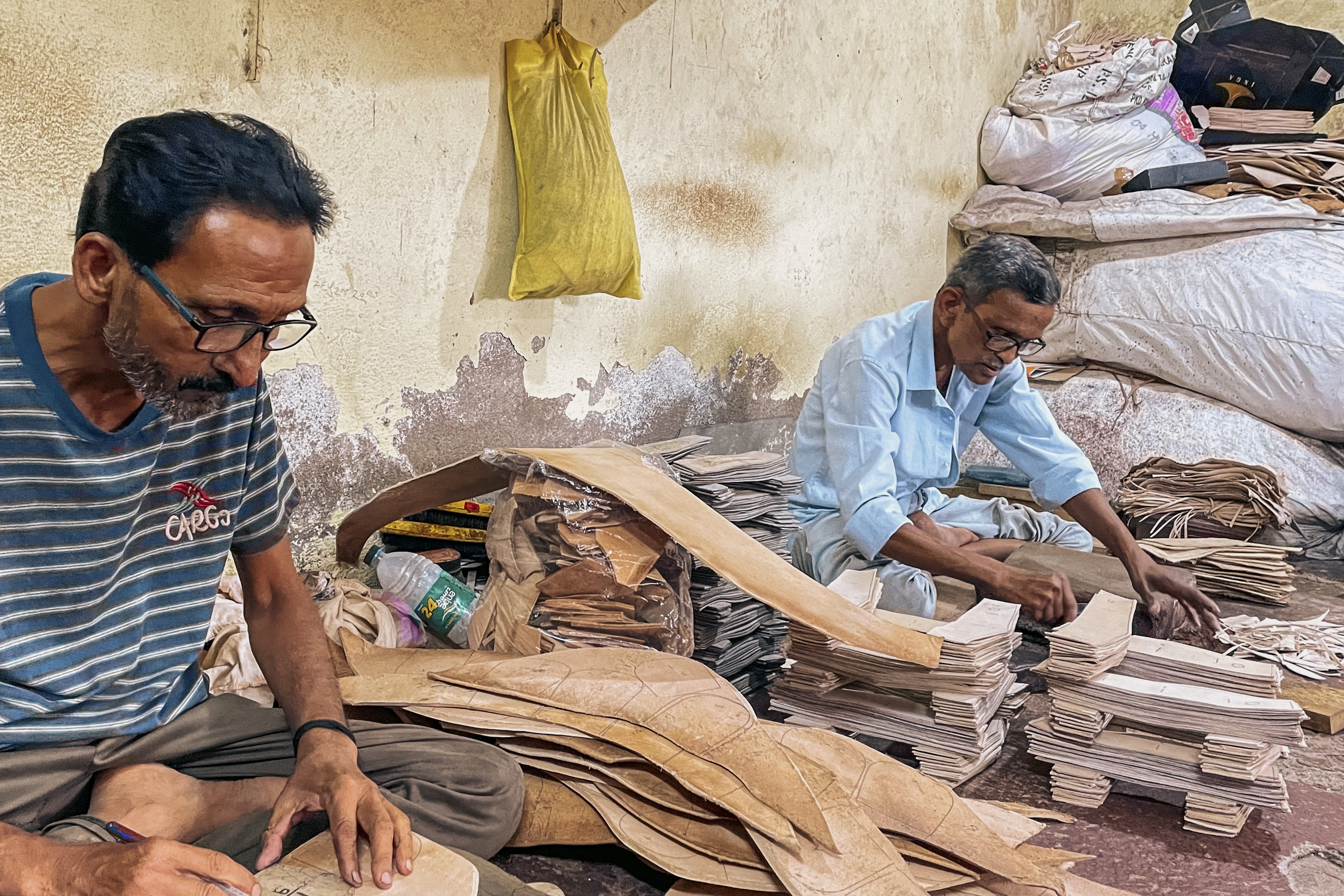
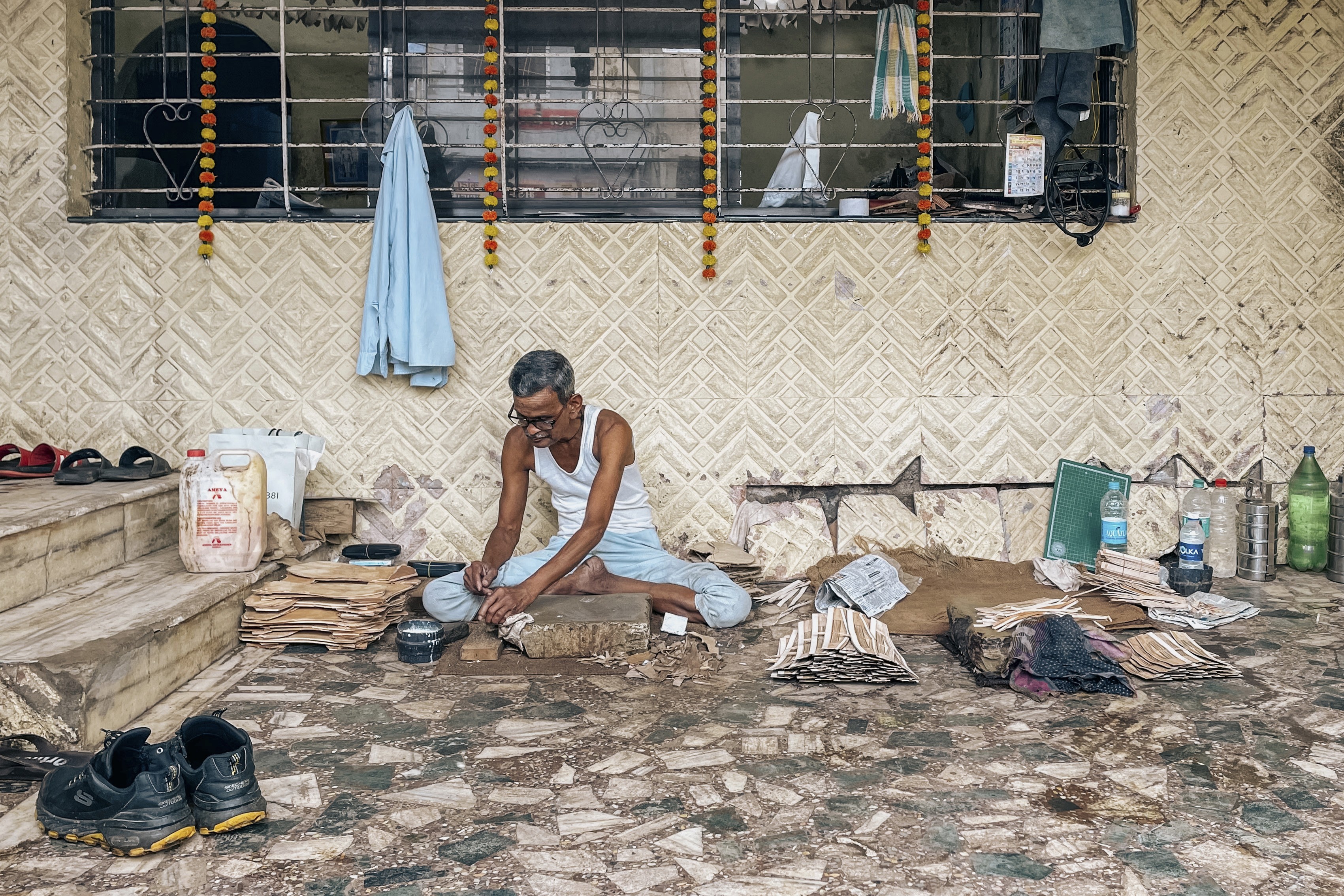
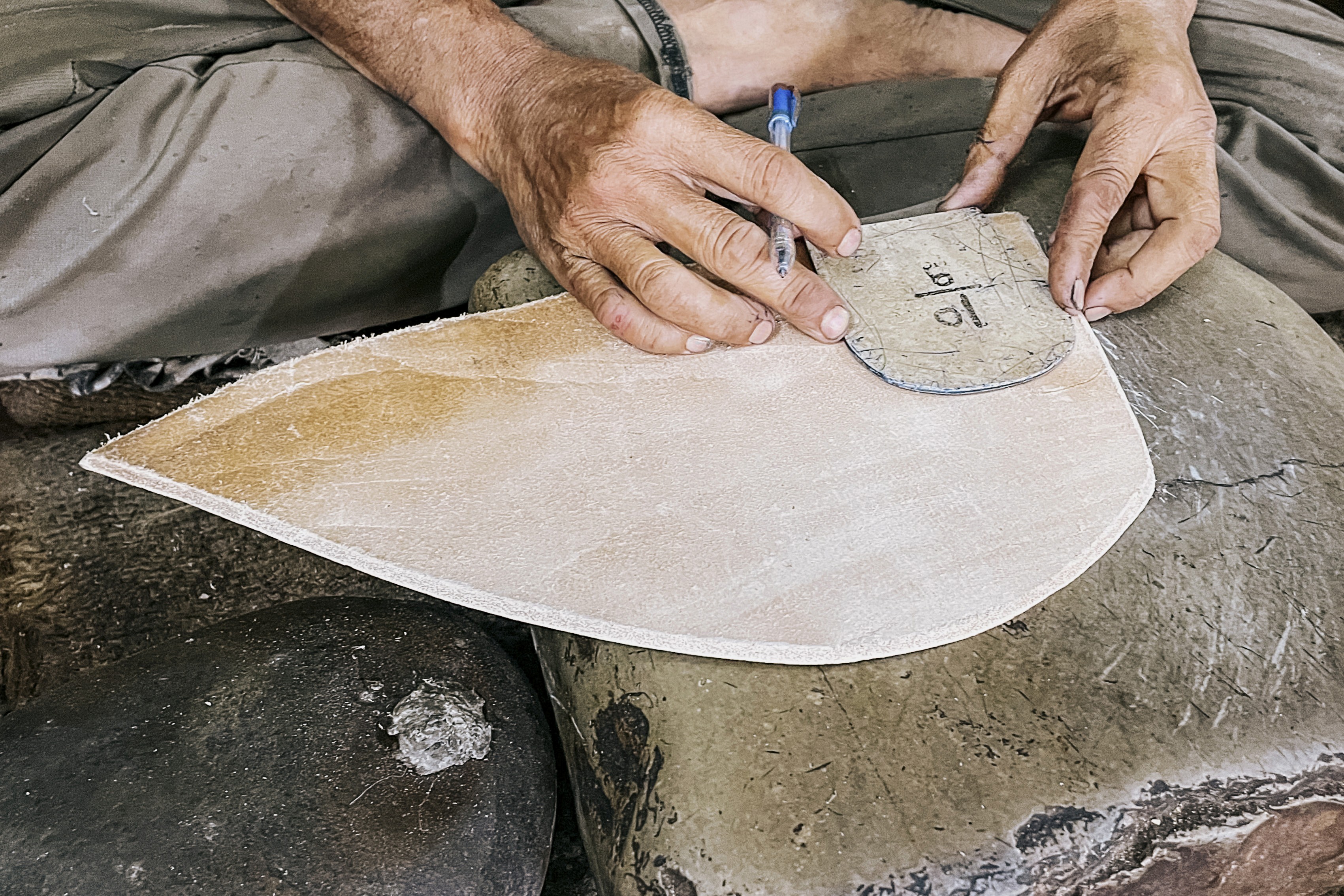
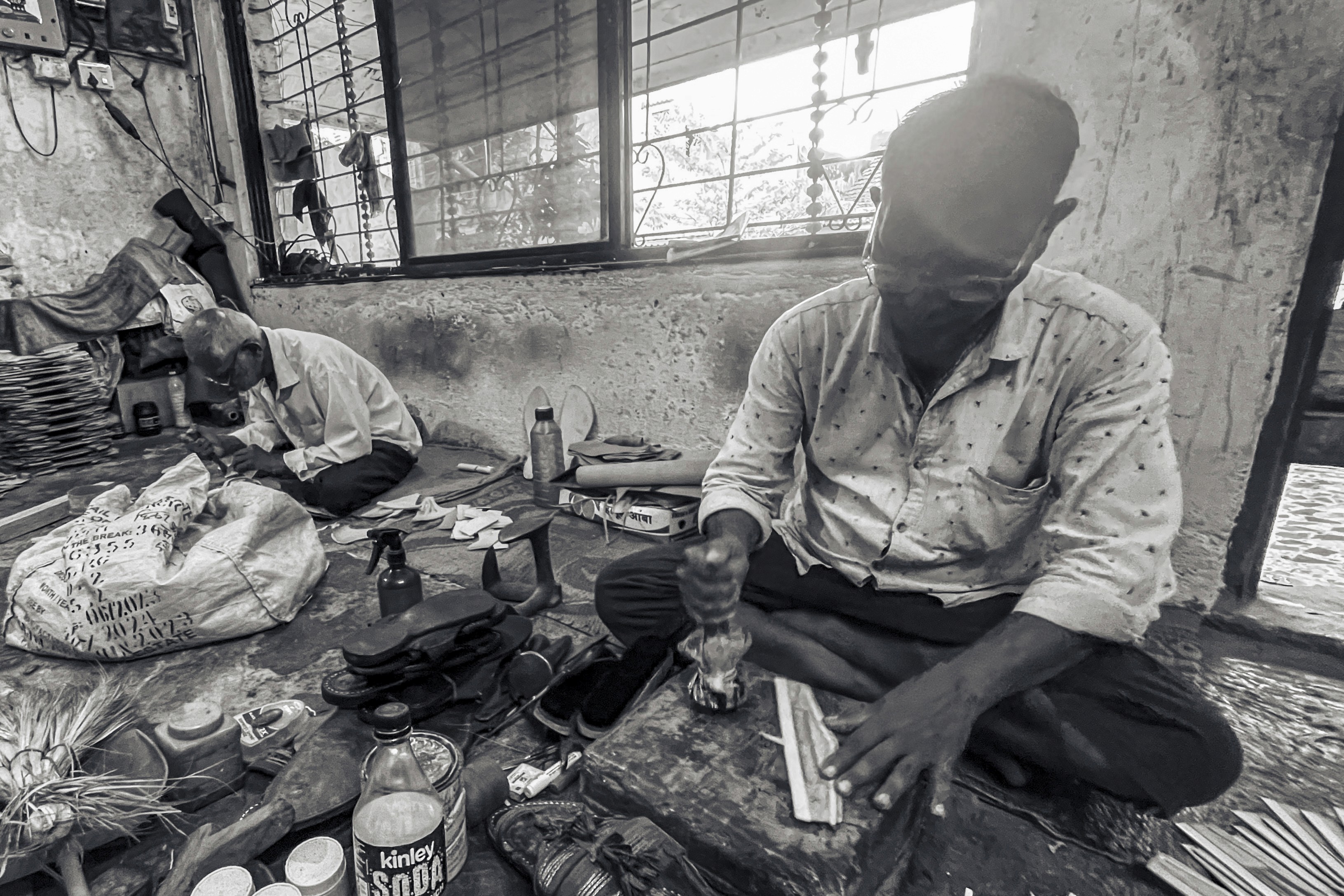
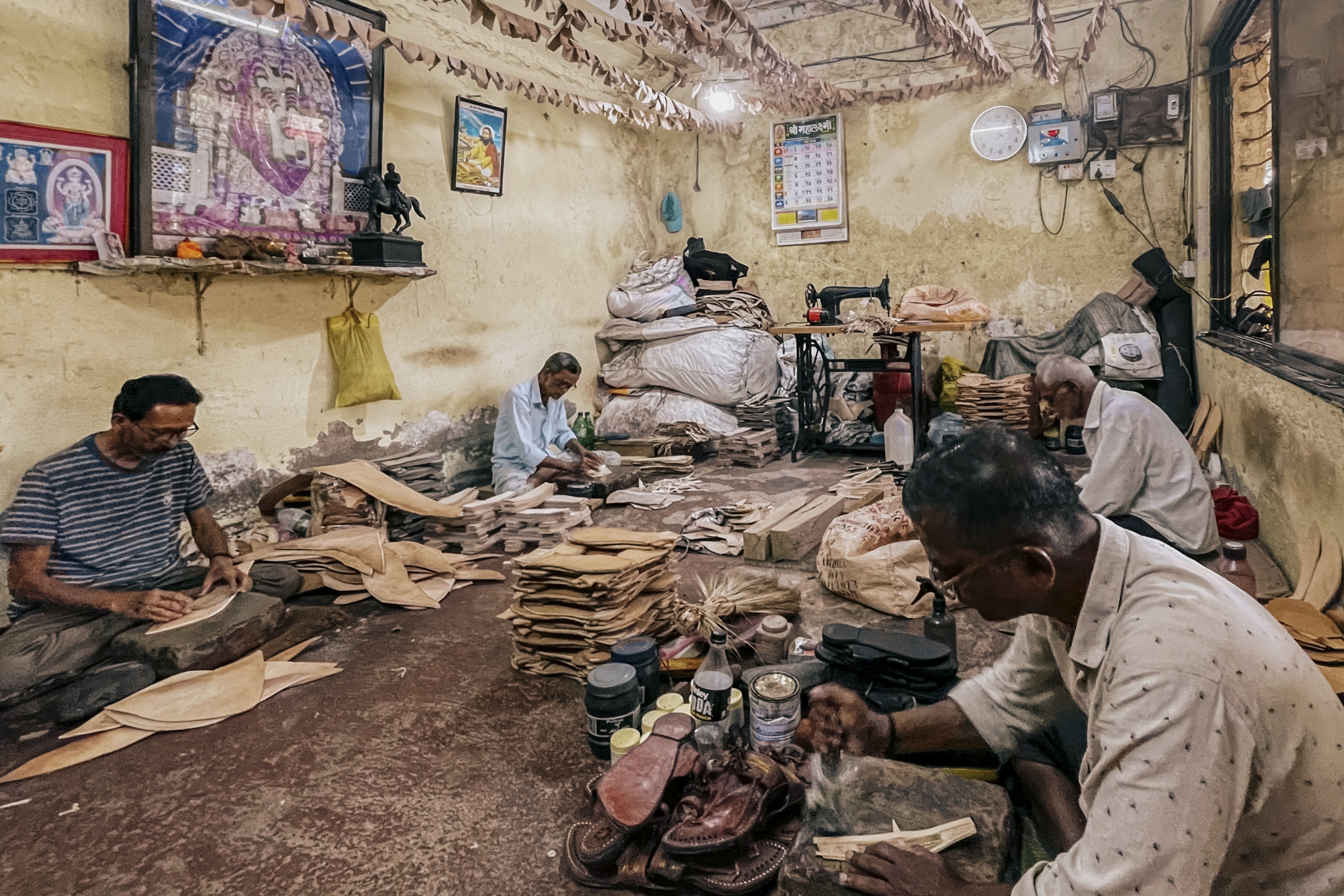
On the verandah, a tanner sat cross-legged in a white baniyan vest and light blue trousers, a small hammer and chisel laid out at his side. His hands moved with the fluid grace of long practice, working leather into patterned soles that would one day tread distant roads.
Around him, other artisans focused on their own steps in the intricate process: one sliced neat strips of leather, whilst another hunched over a half-finished chappal, his needle flashing through the thick, stubborn buffalo hide.
Photos: Veidehi Gite
Evolution and community involvement
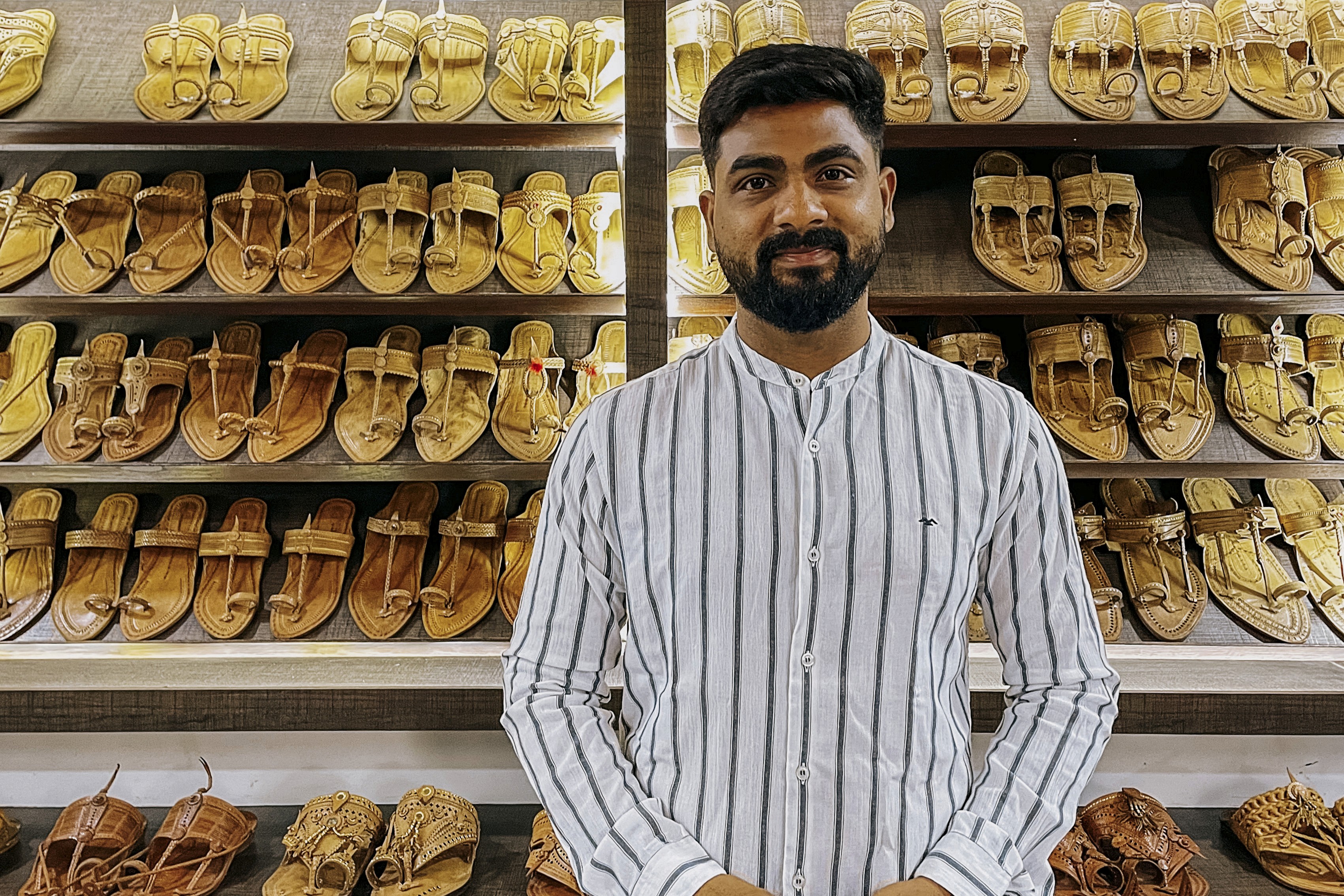
Later, I met Shubham Arun Satpute, the fourth-generation heir to this family business. His great-great-grandfather started it in 1902 in Sadoli, about 15km from the current site, before the family moved in 1960.
According to Shubham, Kolhapuri chappals have roots that stretch back to the Satavahana era (approximately 230 BCE to 220 CE), although the name "Kolhapuri” only took hold in the early 20th century as Kolhapur became a trading centre.
Cobbler families preserved the skill across generations, and by the early 1900s, various regional styles had emerged: Kapashi, Kachkadi, Bakkalnali and Pukari – each an evolution of the original hardy, vegetable-tanned, nail-free sandal.
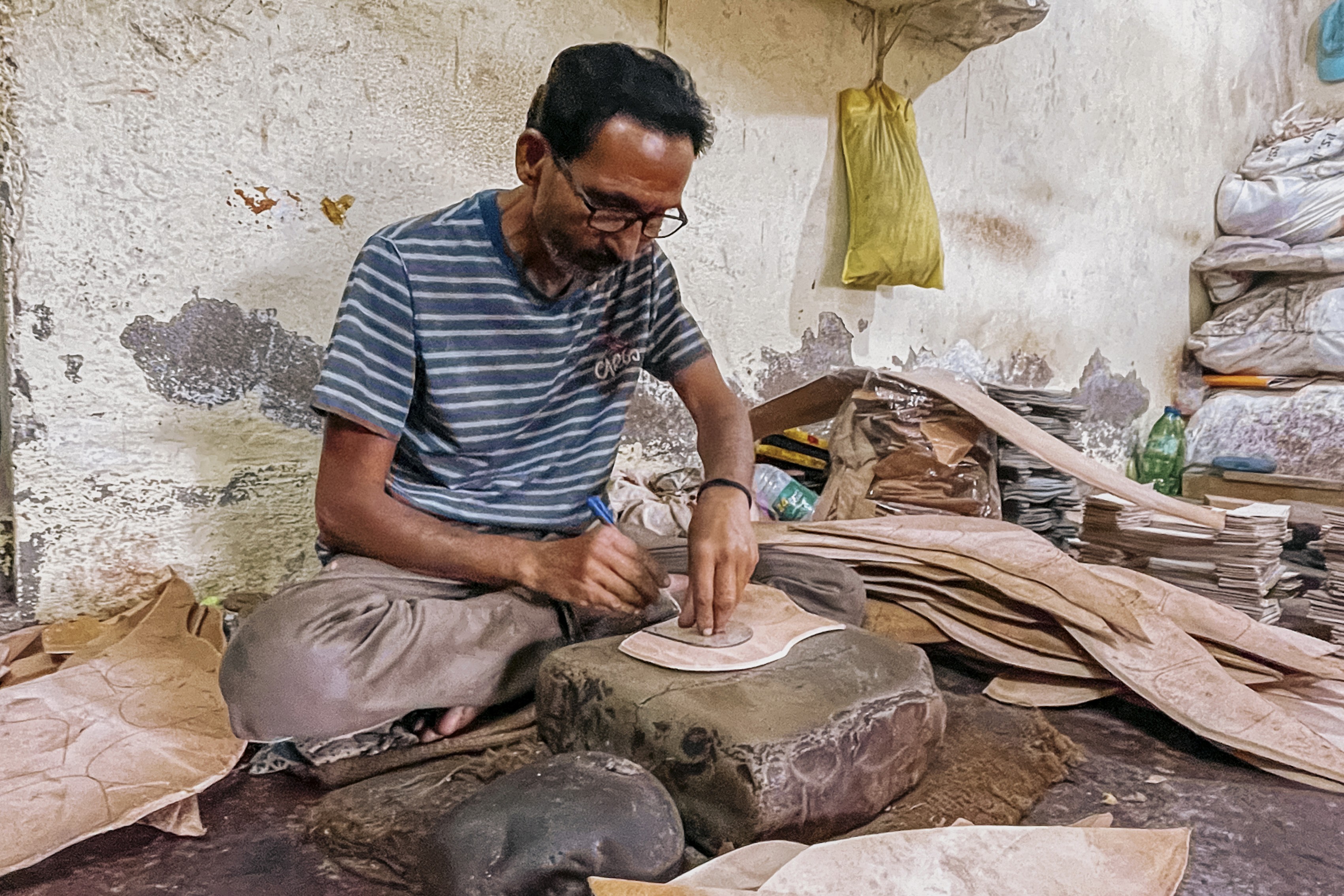
Even today, it’s an industry that sustains entire communities. One community, for instance, removes the skin from the animal; another buys the removed skin and converts it into finished leather.
The making of the sandals involves another process. The leather used first undergoes a unique preservation method called bark tanning, a type of vegetable tanning that uses bark from the babool (Indian gum) tree and myrobalan nuts. This takes 15 to 22 days, with only the skin of dead animals used since cows and buffalos are considered sacred in much of Indian society.
Photos: Veidehi Gite
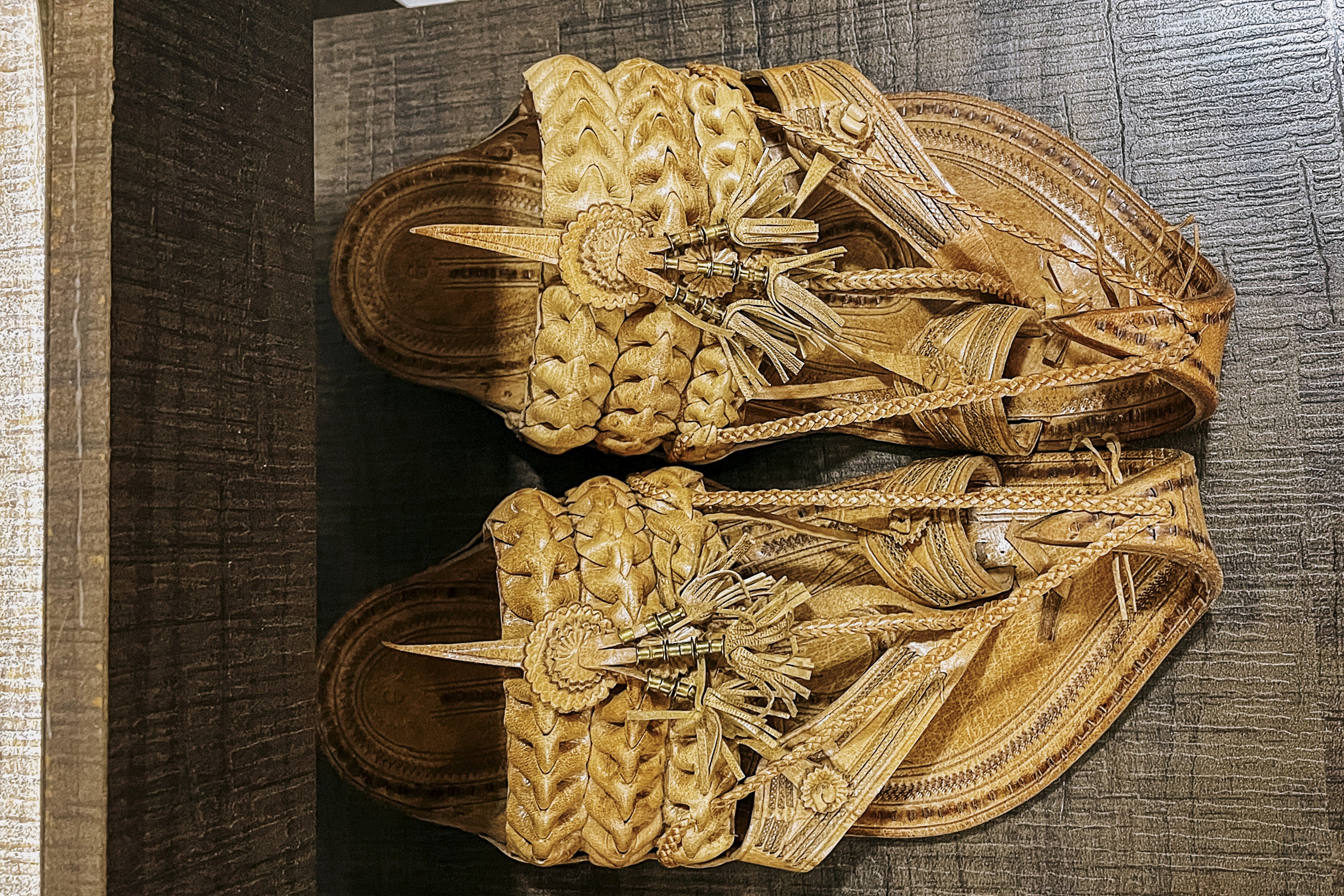
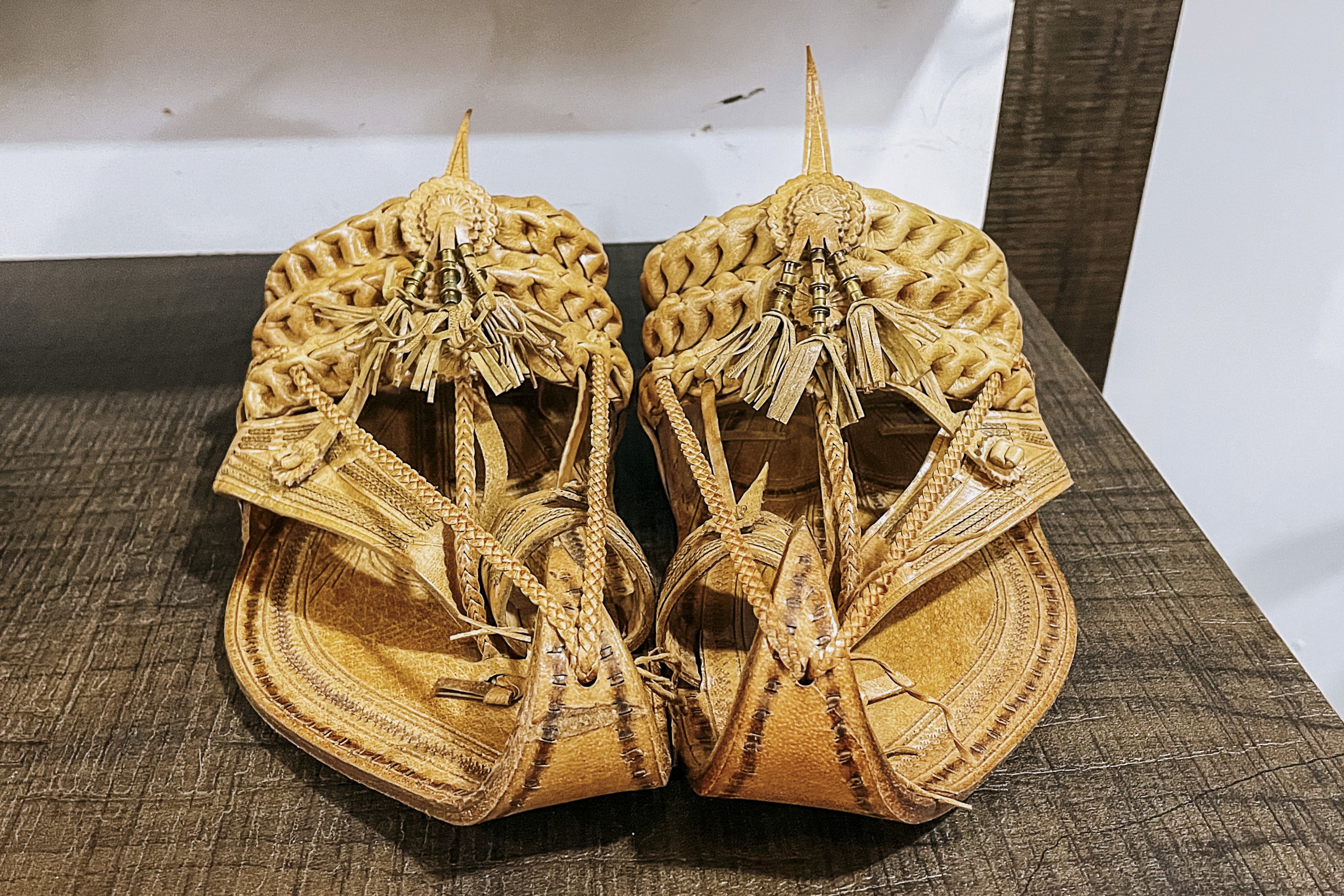
I learned that the presence of “ears” – at the sides of each sandal – is what distinguishes an authentic Kolhapuri from regular leather sandals (Prada’s didn’t have this).
Then there’s the distinctive dark leather, a hue brought about by the tanning agent. In addition, “the more the stitching, the more the stamping, the more the detail, the more the braiding, the more the cost”, Shubham said.
A single Kolhapuri chappal takes at least one to one-and-a-half days to make, with more intricate designs needing four to five days.
Yet even though the Prada controversy may have brought global attention and greater demand to the region, Inga manufactures only 2,000 pairs annually, handcrafted by 18 shoemakers. Like many other shoemakers in town, its owners are careful to ensure that every pair upholds its standards, because this isn't just a business for the family. After 123 years, it has become living heritage.
Here in Kolhapur, still, things continue at their own pace, one carefully stitched sandal at a time.